
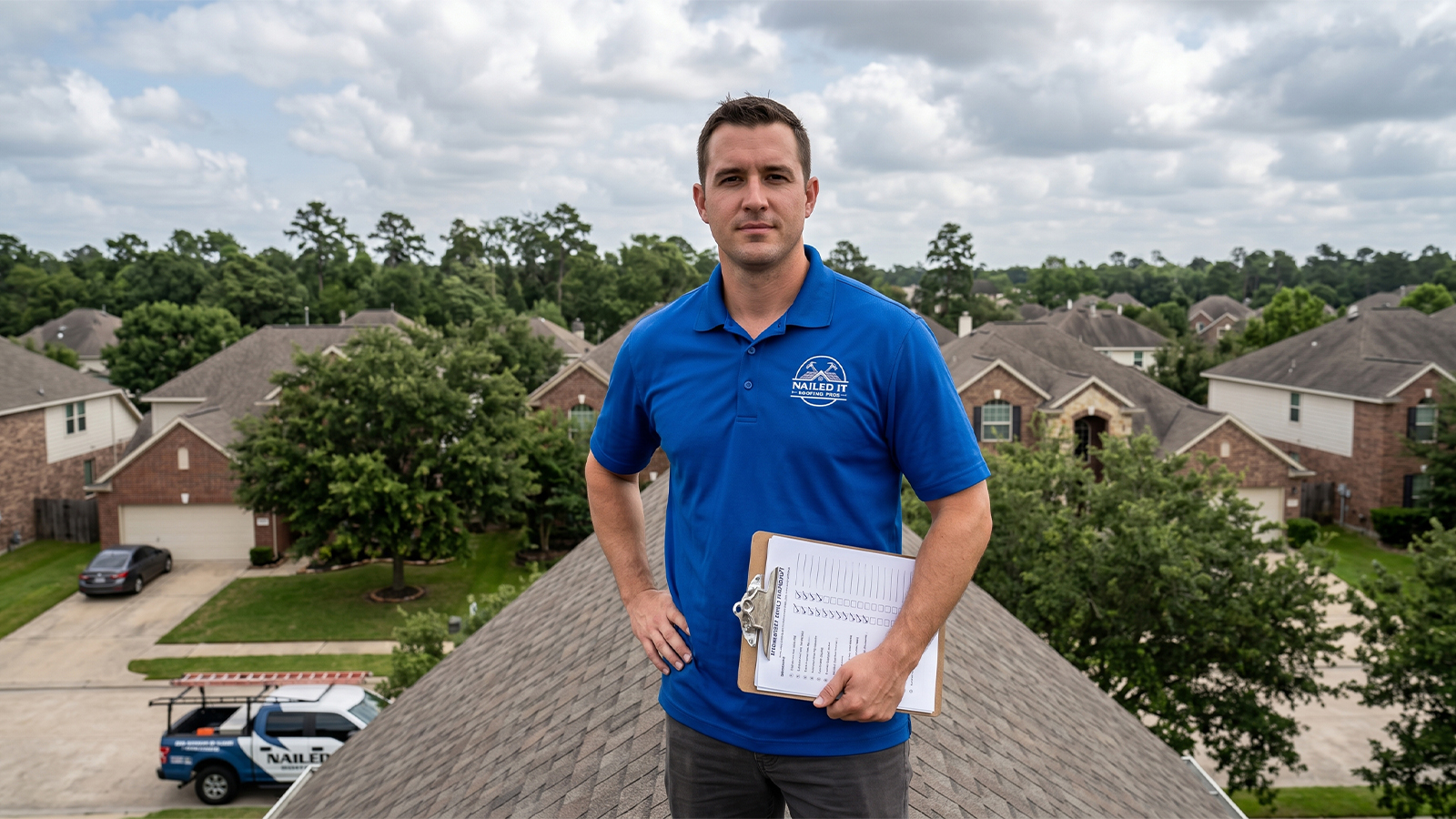
If you were in the Houston area when Beryl came through in July 2024, you know what a Category 1 storm can do. Power out for days. Streets flooded. And roofs that looked fine from the driveway coming apart under the rain.
A pre-season roof inspection is one of the highest-value hurricane prep steps a Greater Houston homeowner can take right now, and the window to act before roofing schedules tighten is already closing.
The gap between a roof that holds and one that fails often comes down to what you do before the season starts — not after you’re already searching for a hurricane damage repair contractor in Houston in the dark.
Key Takeaways
- Hurricane season in Houston arrives earlier than most homeowners plan for — a professional roof inspection before peak season is the highest-value action you can take right now.
- What you can see from the ground covers only a fraction of what matters — hidden shingle damage, soft decking, and failed flashing are invisible without a trained eye.
- Skipping a professional inspection before hurricane season creates documentation gaps that insurance adjusters use to deny post-storm claims — approximately 47% of Texas homeowner claims were closed without payment in 2024.
- A small repair caught now can prevent tens of thousands of dollars in structural water damage within 48 to 72 hours of a major storm.
- Nailed It Roofing Pros offers a free pre-hurricane season roof inspection for Greater Houston homeowners, including a written condition report you can file with your insurance provider.
Why Houston Homeowners Can’t Afford to Skip Hurricane Season Roof Prep
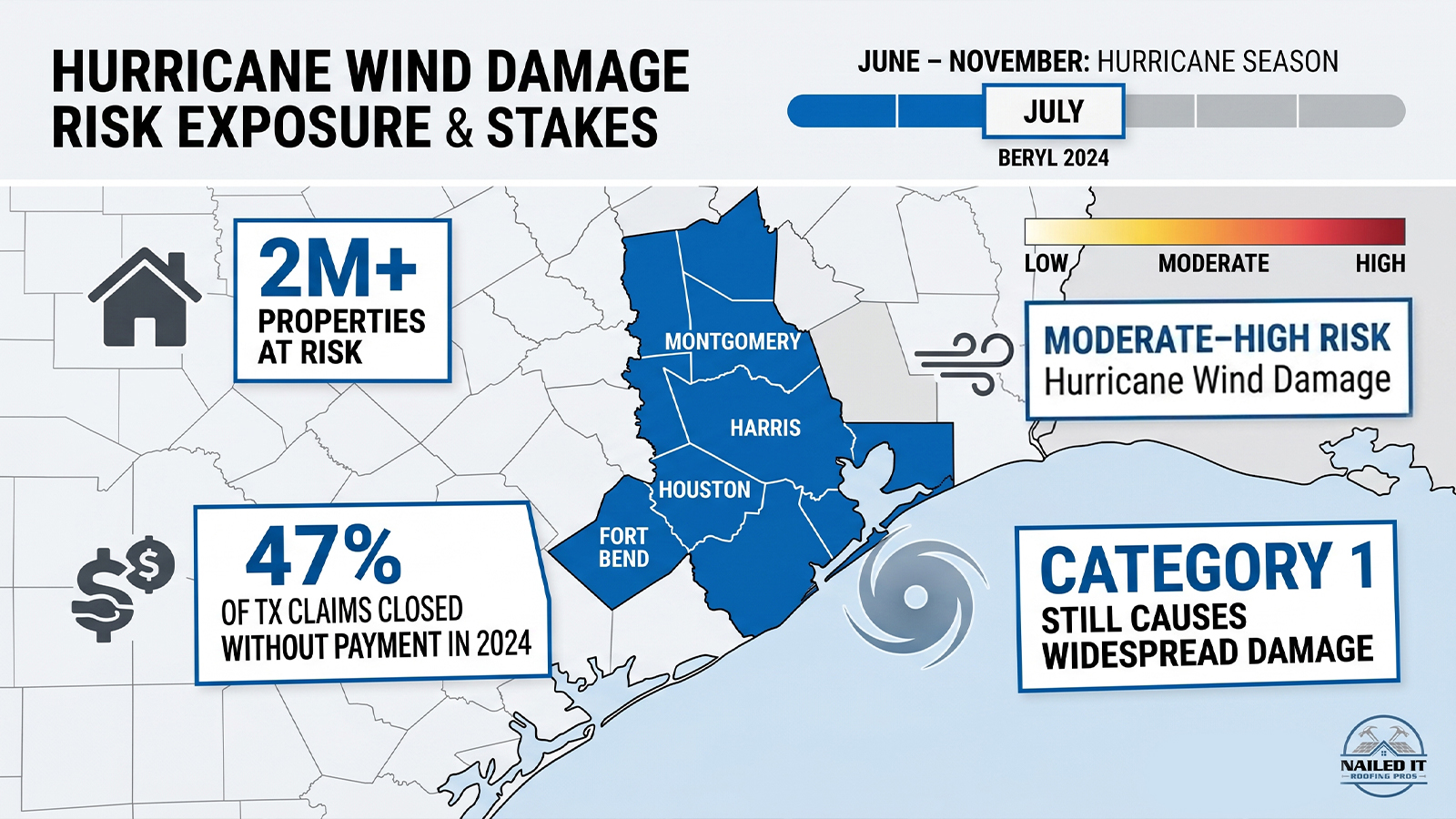
Greater Houston sits in one of the most storm-exposed metro areas in the country. The Gulf of Mexico is close enough to rapidly intensify hurricanes before they reach Harris, Montgomery, and Fort Bend counties, and the region’s flat terrain offers no natural buffer. According to CoreLogic, more than 2 million residential properties in the Houston area carry moderate-to-high hurricane wind damage risk.
Beryl made that real in 2024. It came ashore as a Category 1 hurricane — and that word “only” should never follow “Category 1” in a Houston conversation. Beryl knocked out power to roughly 2.7 million Texas homes and caused widespread roof damage across the region before most homeowners had finished thinking about whether their roof needed attention. It arrived in early July. Hurricane season runs June through November, but storms follow no schedule.
What made 2024 especially damaging was cumulative impact. A derecho ripped through Greater Houston earlier that year, leaving widespread wind and hail damage that many homeowners never had assessed. When Beryl arrived, a significant number of roofs were already compromised. Your roof is the first line of defense against every storm that reaches your neighborhood. Every other system inside your home depends on it holding.
Hurricane Preparedness Starts With Your Roof, Not Your Grocery List
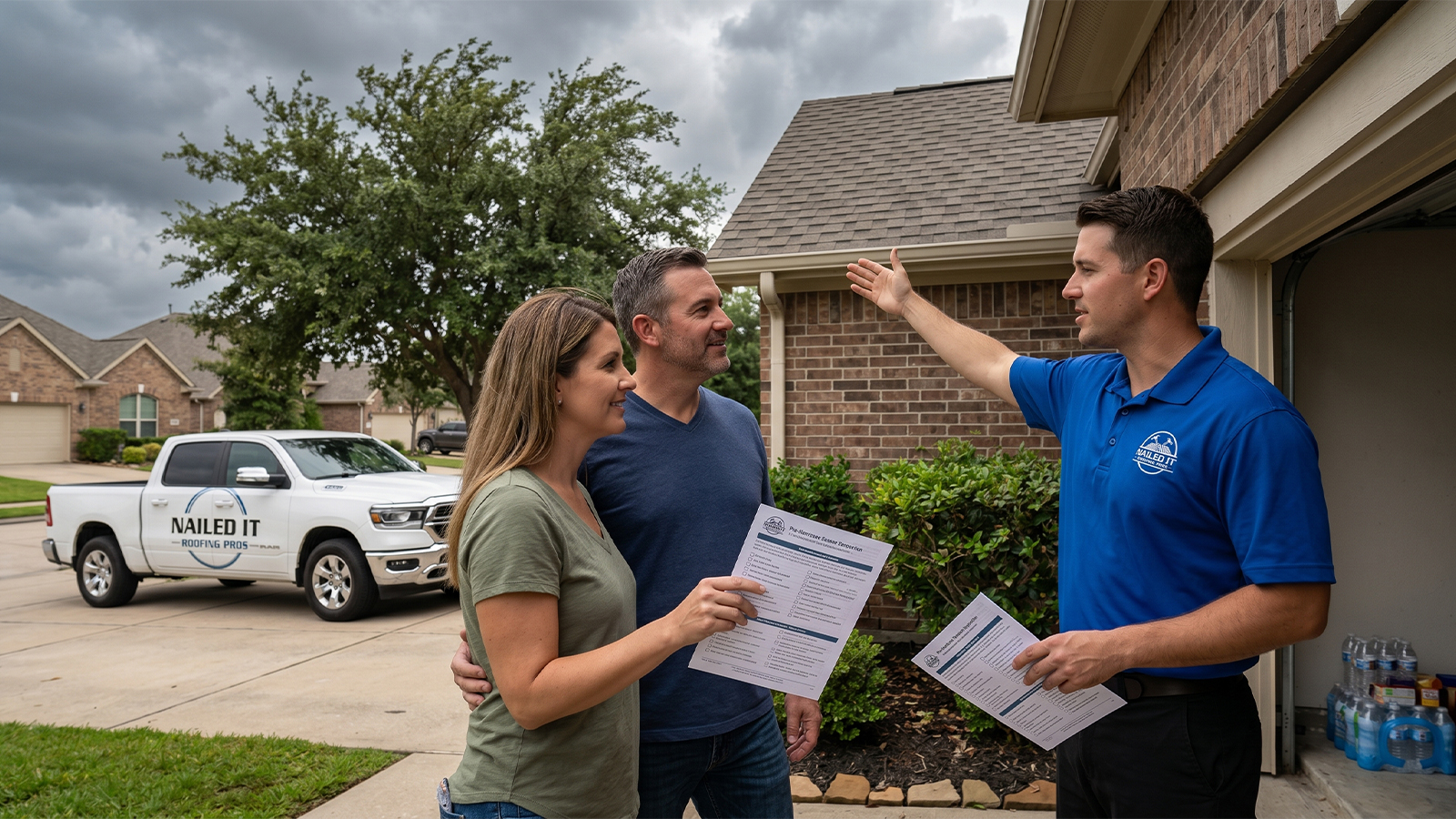
Most people think about hurricane preparation in terms of water supplies and evacuation routes. Those things matter. But none of them account for what happens when your roof fails during a storm and heavy rain starts entering through the ceiling the way it did across Houston during Harvey.
A missed repair that allows water intrusion during a hurricane can trigger $15,000 to $30,000 in structural damage and mold remediation within 48 to 72 hours. Houston’s humidity accelerates mold colonization faster than nearly any other U.S. market.
There is also an insurance dimension that the grocery-list approach never addresses. According to a 2025 Rice University Kinder Institute report, Houston-area premiums have climbed more than 40% over the past decade. In that environment, insurance claims are reviewed closely, and homeowners benefit from having clear documentation of their roof’s pre-storm condition. Preparedness that does not include a documented inspection leaves money on the table when you need it most.
What You Can Do Before the Season Starts — And Where DIY Ends
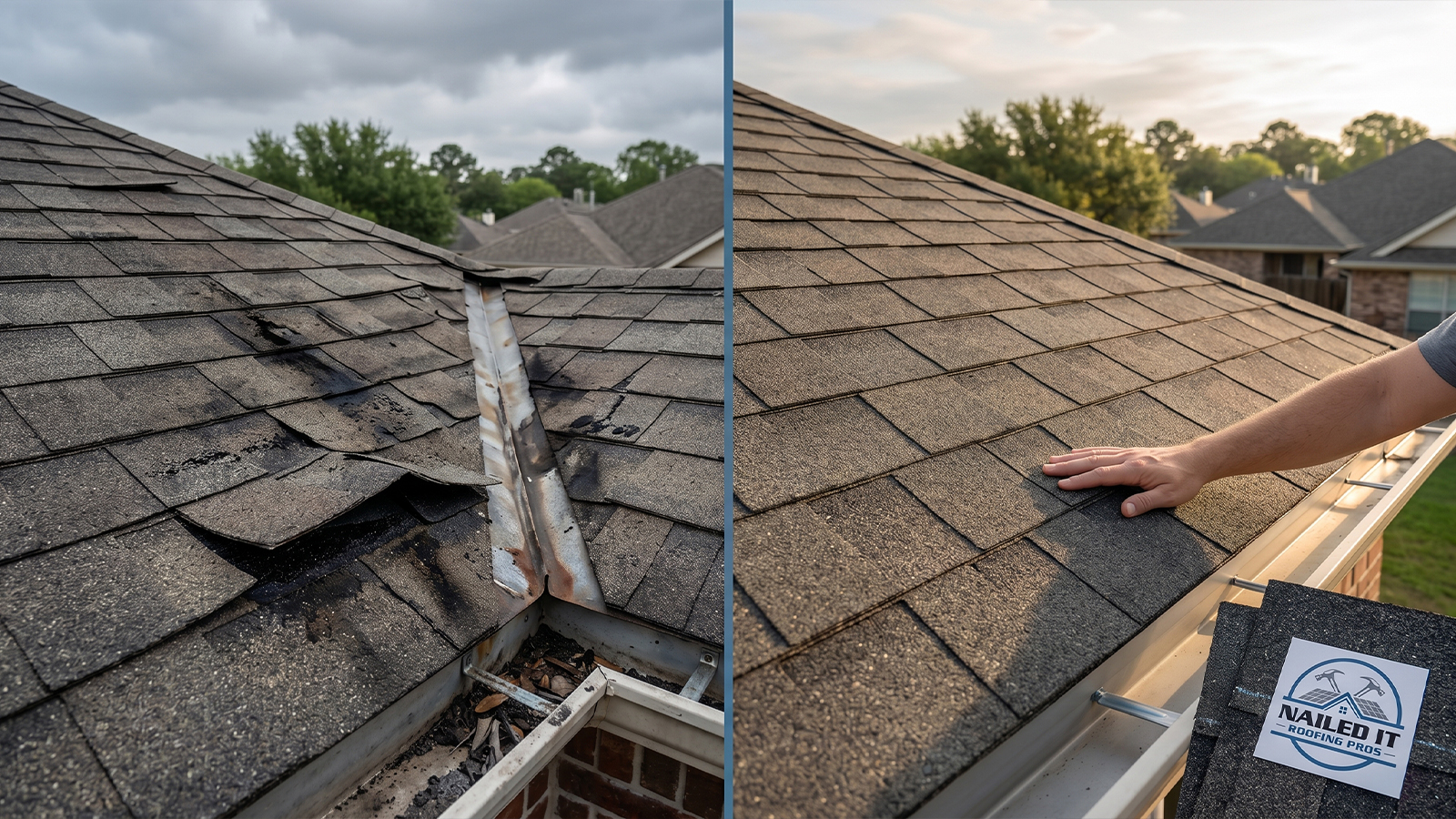
There are steps every homeowner in the Greater Houston area can take without a contractor. A walk around the perimeter of your home can reveal obvious shingle displacement, sagging sections, or visible gaps along the edge. Clearing clogged gutters before heavy rain season is not optional — clogged gutters during a rain event create backflow that drives water under the roofline and into the fascia, one of the most preventable sources of interior water damage during hurricane rainfall. A check of the attic for moisture staining, soft wood, or visible daylight near the ridge can surface problems before they become emergencies.
That walkthrough is a legitimate starting point. It is also where the limits of a homeowner inspection become clear.
Hidden moisture intrusion under shingles is the clearest example. A shingle can look intact from the ground while the decking beneath it has been compromised by a failed flashing seal. Micro-cracking from high winds is another common missed finding — the 2024 Derecho created this pattern across Greater Houston, with hairline fractures in shingle surfaces that become water entry points under the heavy rain a hurricane delivers. Flashing around chimneys, pipe boots, and skylights is the most common source of water intrusion during a storm and the most frequently missed item during any homeowner walkthrough. Granule loss on shingles, which directly reduces wind-uplift resistance, disappears entirely from view at ground level. These are the findings a trained inspector surfaces in an hour that a homeowner misses entirely — until the ceiling comes in.
The Roof Inspection That Actually Protects Your Houston Roof
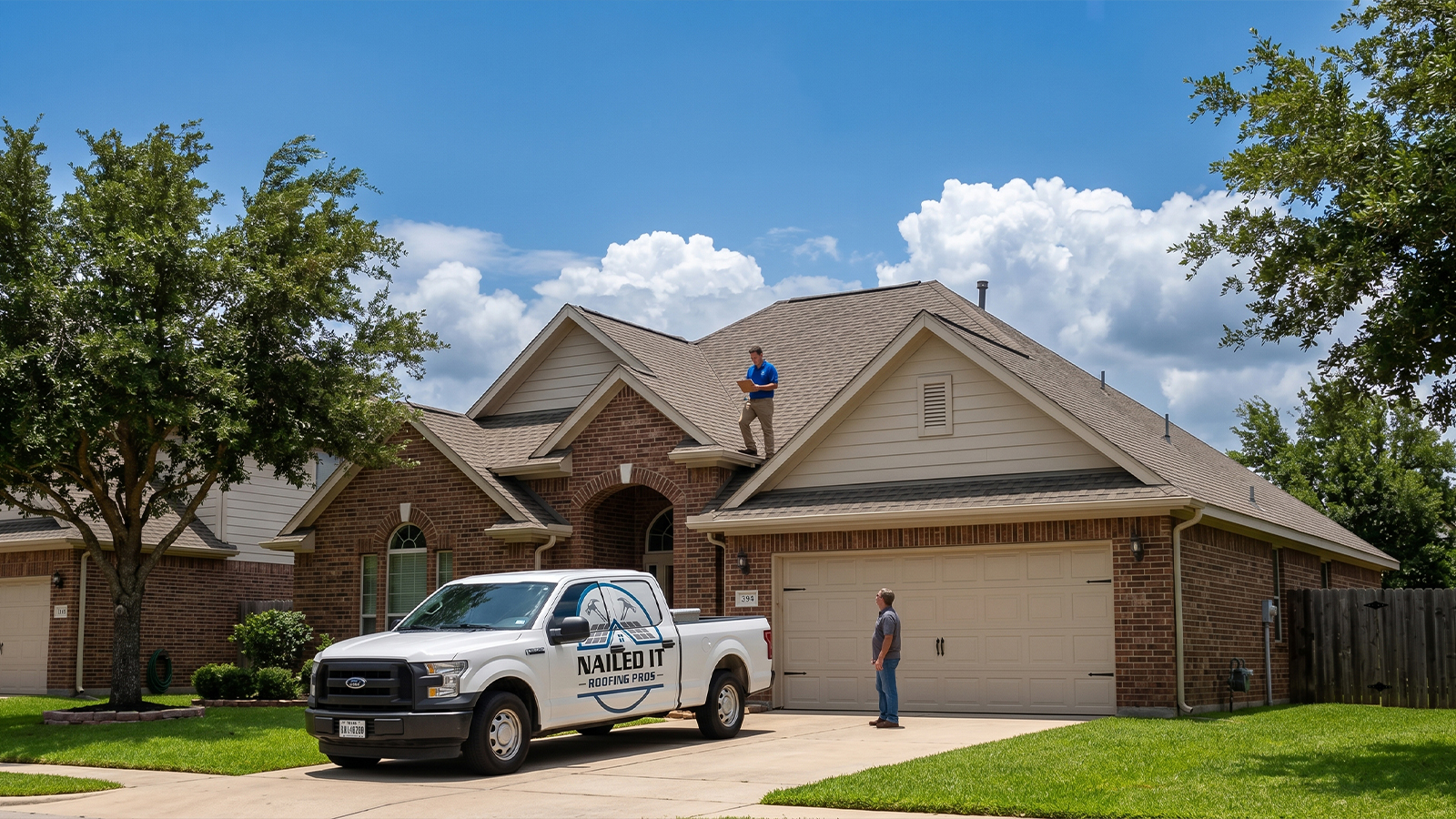
A professional roof inspection is not a contractor walking your yard and saying the roof looks okay. It is a systematic assessment of the decking, shingles, flashing at every penetration point, ridge cap, soffit and fascia, attic ventilation, and gutter attachment. Houston’s Office of Emergency Management has specifically recommended professional roof inspections before each hurricane season — because the consequences of a missed problem are not minor inconveniences.
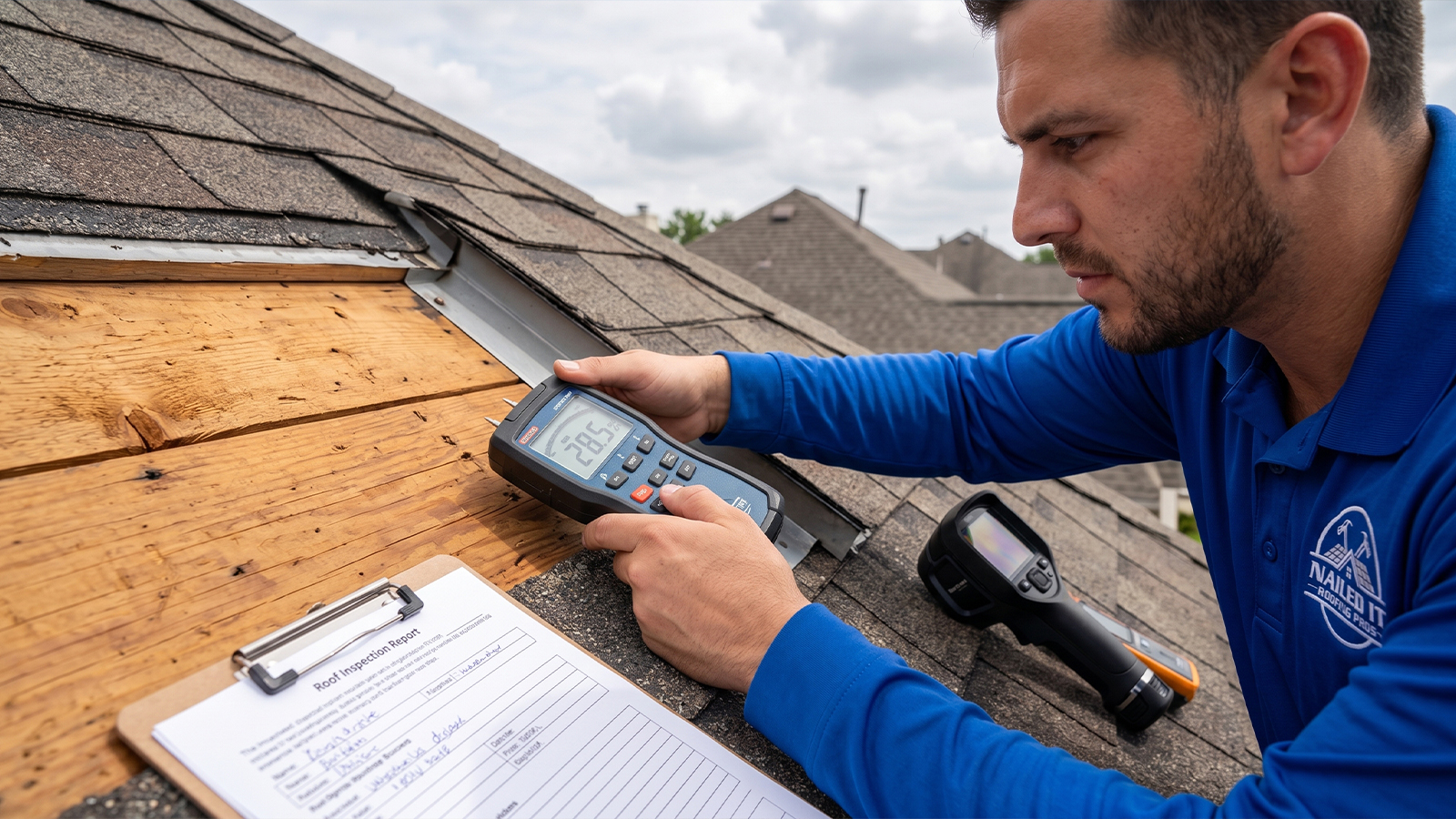
The written condition report is the component most homeowners undervalue. That document is a timestamped record of your roof’s condition before the season begins. When you file a post-storm claim, your adjuster’s first line of inquiry is whether the damage is attributable to the storm or to pre-existing neglect. Without that baseline, you are asking the adjuster to take your word for it.
| What You Are Checking | DIY Ground or Ladder Check | Professional Roof Inspection |
|---|---|---|
| Visible shingle condition | Partial — obvious damage only | Full assessment including granule loss and micro-cracking |
| Flashing integrity | Rarely checked correctly | Sealed, probed, and documented at all penetration points |
| Deck condition | Not assessable from ground | Walked and checked for soft spots and delamination |
| Attic moisture intrusion | Possible if you know what to look for | Systematic check with written documentation |
| Gutter and fascia condition | Visible blockages only | Full attachment, rot, and slope assessment |
| Insurance documentation | None produced | Written condition report with photographs |
| Post-storm claim support | None | Timestamped baseline record for adjuster review |
Insurance Coverage: Why Your Inspection Is a Financial Decision
Approximately 47% of homeowner insurance claims filed in Texas during 2024 were reportedly closed without payment. That is not a worst-case scenario. That is the most common outcome for a Texas homeowner who files a storm damage claim without documentation.
The mechanism is straightforward. Without a pre-storm inspection report, an adjuster can attribute any roof damage to pre-existing neglect rather than to the storm. If your roof had undocumented hail damage from the 2024 Derecho and then sustained additional damage during a hurricane, the carrier has grounds to argue that prior conditions were the primary cause. That argument becomes much harder to make when you have a professional inspection report from three months before the storm.
Texas policies also carry named-storm deductibles separate from standard wind and hail deductibles — typically 1% to 5% of the insured value of the home. On a $400,000 house, that is $4,000 to $20,000 out of pocket before coverage begins paying. In that context, a free inspection that produces documentation defending your claim is not optional due diligence. It is the most financially rational thing a homeowner can do before June.
Houston Hurricane Roof Prep: Don’t Wait Until the Forecast Drops
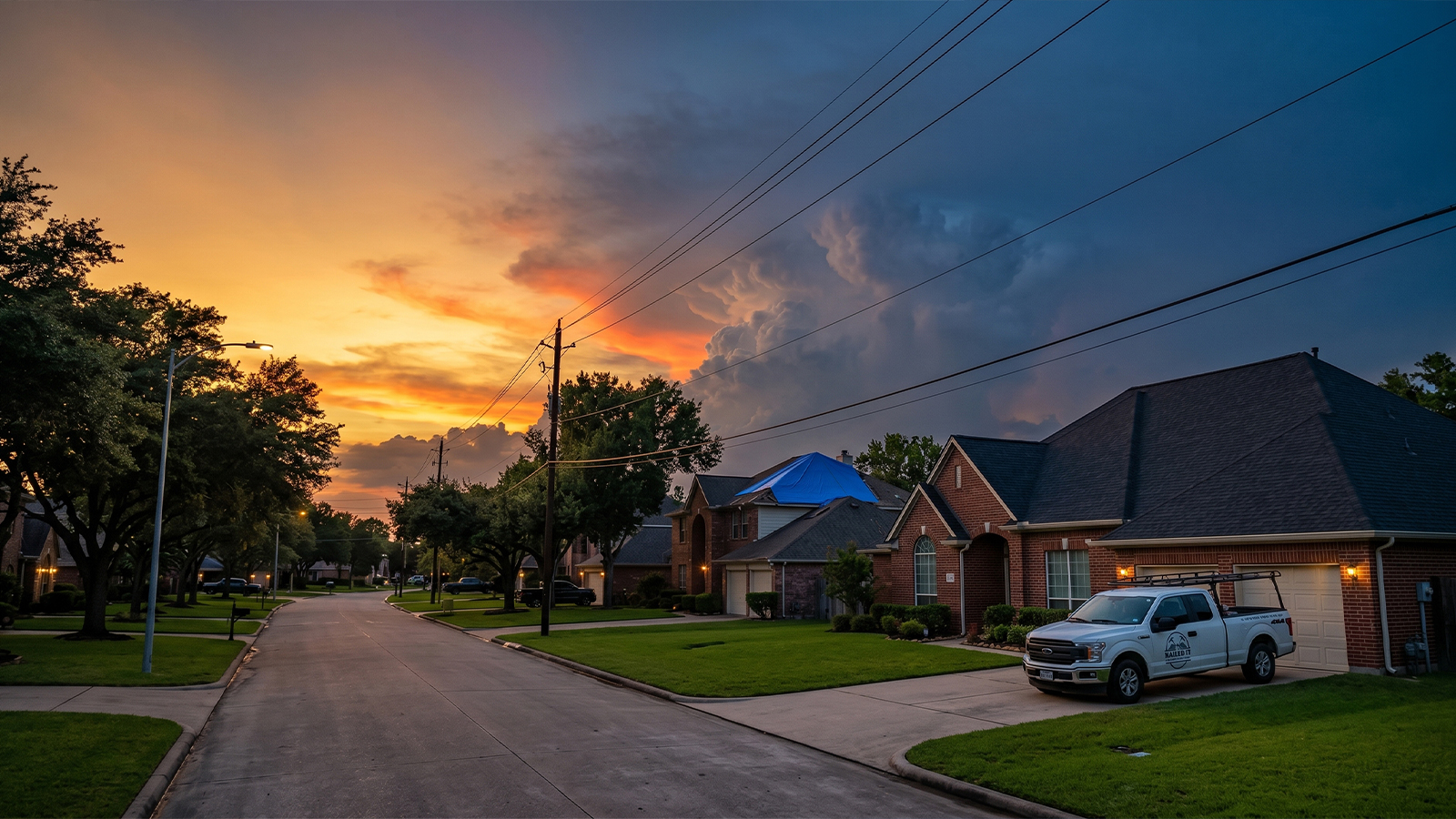
Roofing contractors along the Gulf Coast from Houston to Beaumont book 8 to 12 weeks out once active hurricane season forecasts are issued. The homeowners who come through storm season without major claims are not the ones who got lucky. They are the ones who scheduled their roof inspection before their area code was the one every contractor in the region was hearing from.
Beryl arrived in early July 2024. Homeowners who had scheduled spring inspections were covered. Everyone else was on a waitlist. The prep window in Greater Houston is roughly April through early June. After that, the scheduling math works against you.
Call Nailed It Roofing Pros at (713) 909-0480 now, while spring schedules are still open. The team serves Harris, Montgomery, and Fort Bend counties, has worked through Harvey’s aftermath and Beryl’s repairs, and knows what aging asphalt shingle systems in 1990s and 2000s-era Houston-area homes look like when they are quietly failing.
The free pre-season inspection includes a written condition report you can file directly with your insurance provider. Getting it before hurricane season costs you nothing. Not having it when you need it can cost you everything.
FAQ
When should I prep my roof for hurricane season in Houston?
The prep window is April through early June. Contractors begin booking out 8 to 12 weeks once active forecasts are issued, and Beryl proved in 2024 that a major storm can arrive before mid-July. Waiting until a named storm is forming in the Gulf leaves no realistic path to getting on a roofer’s calendar.
My roof looks fine from the yard — does it still need a professional inspection?
Yes. The findings that matter most — granule loss on shingles, failed flashing seals, soft decking, micro-cracking from high winds — are not visible from the ground or from a standard ladder check. A roof that looks intact from the driveway can have compromised decking and failed flashing that will fail under the first significant heavy rain of the season.
Will my insurance cover hurricane roof damage in Texas?
Most Texas homeowner policies cover wind and rain damage, but two issues complicate claims. First, named-storm deductibles run 1% to 5% of your home’s insured value, so your out-of-pocket exposure before coverage begins can be substantial. Second, without a pre-storm inspection report, adjusters can attribute damage to pre-existing neglect rather than to the storm — a finding that closes the claim without payment.
What did Hurricane Beryl actually do to Houston roofs?
Beryl came ashore as a Category 1 hurricane in July 2024 and knocked out power to approximately 2.7 million Texas homes. The roof damage it caused was compounded by the fact that many Greater Houston roofs had already absorbed wind and hail damage from a derecho earlier that year. Roofs that had been quietly compromised since spring 2024 failed under Beryl’s sustained winds and heavy rain in ways that adjusters later argued were partly attributable to pre-existing conditions.
How do I know if my shingles are still wind-rated for a hurricane?
A shingle’s effective wind-resistance rating degrades with age, hail exposure, and thermal cycling. Houston’s heat-then-sudden-rain pattern accelerates that degradation faster than most U.S. markets. A roof that would meet its original wind rating at installation may be meaningfully below that threshold after 15 to 18 years in the Greater Houston climate, or after two or three hail events without a professional assessment. The only way to know your roof’s current effective rating is a hands-on inspection by a trained contractor.