
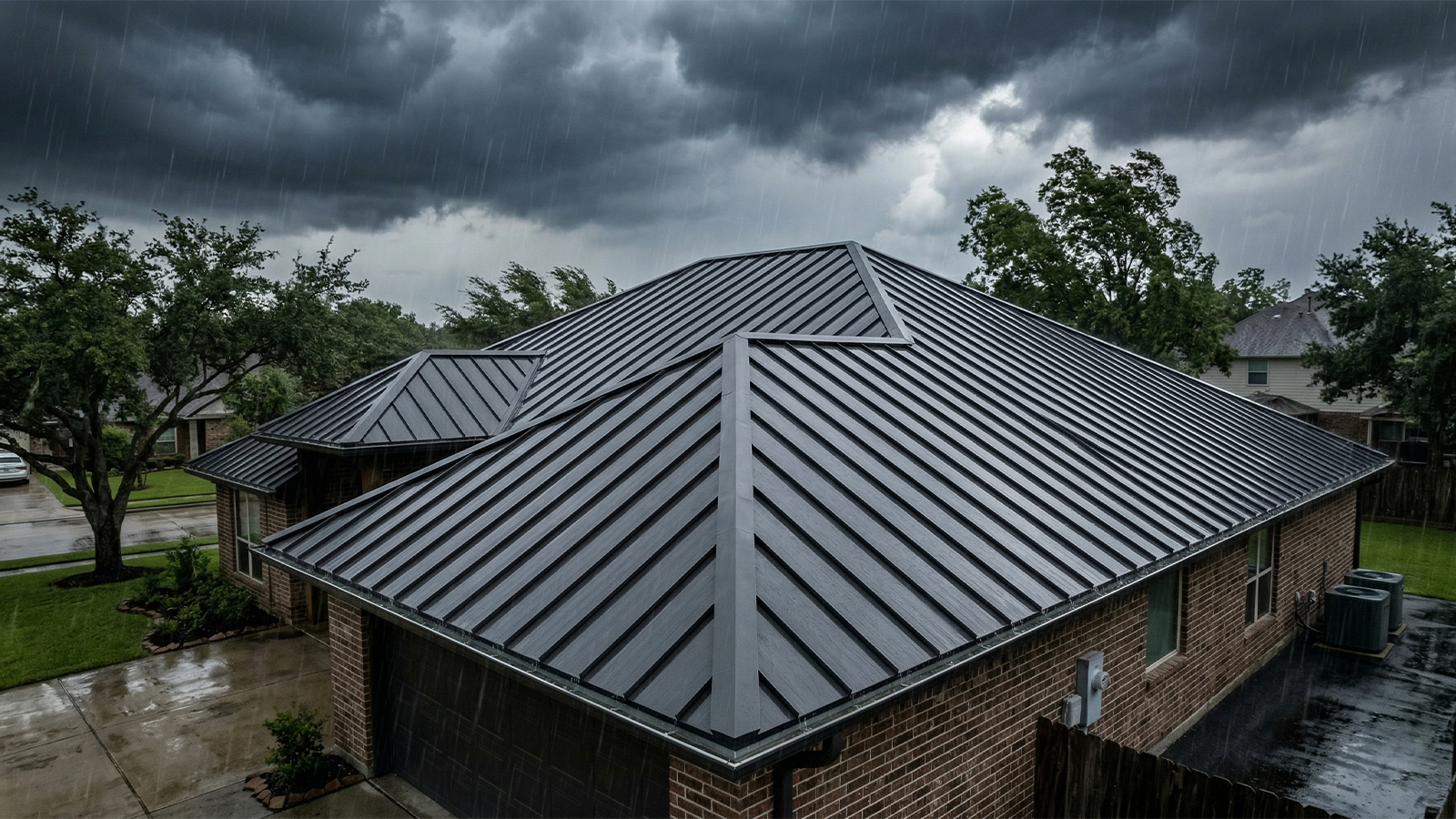
Houston’s climate doesn’t give a roof much rest. Between Gulf Coast storm systems, spring hail, and year-round humidity that accelerates breakdown in ways dry climates never experience — this city tests roofing materials in conditions that expose exactly what each type of roof is made of. Choosing a durable residential roof here means something different than it does almost anywhere else in Texas, and the wrong call leads to shorter replacement cycles and more repair bills than anyone signs up for.
Most homeowners researching common roofing materials run into a wall of generic content with no regard for local weather. The best durable roofing materials for Houston aren’t the same as what performs well elsewhere, and a roofing company that ignores that sets you up for early failure. At Nailed It Roofing Pros, we know which roofing is durable under real Gulf Coast conditions — not just which products have strong spec sheets.
This guide covers the different roofing materials available in Houston, what each roof will last through, and how to choose the best roof material for your budget and timeline.
What Houston Weather Does to Your Roof
Houston sees over 50 inches of rain annually. High winds from Gulf storm systems regularly test every fastener and seam. Extreme weather conditions arrive hard in spring, when hail events strip granules from unprepared shingles in a single storm. Summer surface temperatures regularly exceed 150°F, accelerating breakdown of organic materials from the outside in. Humidity works in the opposite direction — moisture infiltrating through any gap or failing seal creates the rot and leak damage that turns a maintenance issue into a structural one.
Any new roofing material that doesn’t withstand this combination will underperform its rated lifespan, regardless of what the manufacturer prints on the warranty. The roofing materials on the market vary significantly in how they handle heat, moisture, impact, and high winds simultaneously. The right roofing choice here starts with understanding what your roof is actually up against.
6 Most Durable Roofing Materials for Homes
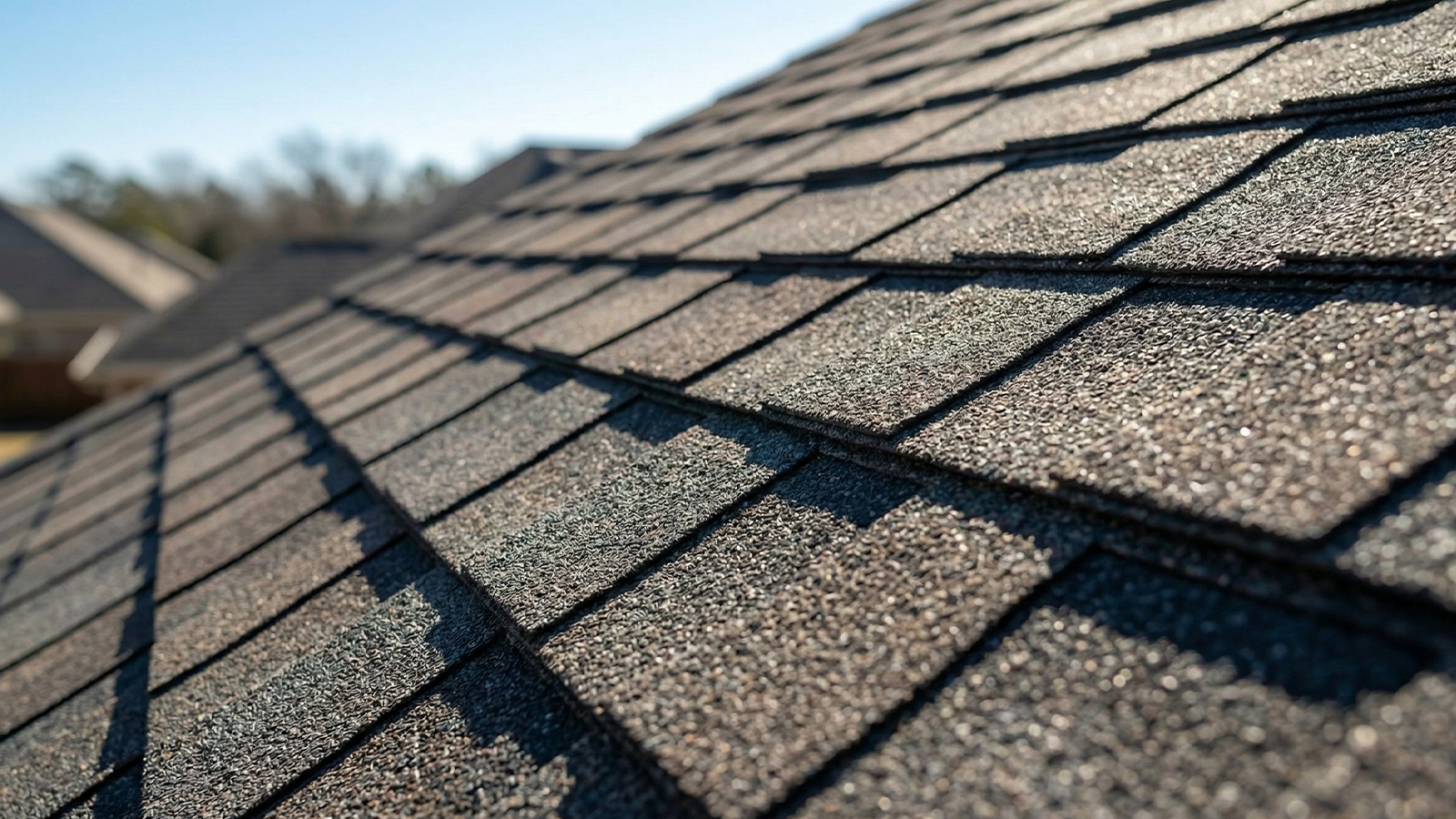
1. Architectural Asphalt Shingles — The Most Common Durable Roof Material
Asphalt shingles are the most widely installed roofing on Houston homes, and traditional asphalt shingles have come a long way from the entry-level three-tab products most older homes are still running. Asphalt shingles remain the dominant product category because modern architectural versions deliver performance those older shingles never reached. Architectural shingles are a multi-layer product — each shingle bonded into a thicker, dimensional profile — that handles wind uplift better, retains granules longer under UV exposure, and puts more material between weather and your decking (the plywood sheeting that forms the structural base of your roof).
Shingles offer a wide performance range at accessible price points, and shingles are the most common choice because they work across different budgets, structural types, and architectural styles. A standard color roof is available in dozens of profiles. A quality architectural shingle carries a 30-year warranty; premium lines from major roofing manufacturers reach 50 years. At the Class 4 level, shingles are the best impact-rated product for the price — making architectural shingles the best roofing material for those who need strong performance in hail-prone conditions, with a potential home insurance discount attached.
A shingle roof fails early in Houston for three consistent reasons: overlay installation (laying new shingles over old without a full tear-off), inadequate attic ventilation, and choosing a grade below what this region’s weather demands. Asphalt shingles work when installed correctly on clean decking with a full tear-off. At Nailed It Roofing Pros, we always recommend full tear-offs — never overlays — for a proper roof that performs through its rated lifespan.
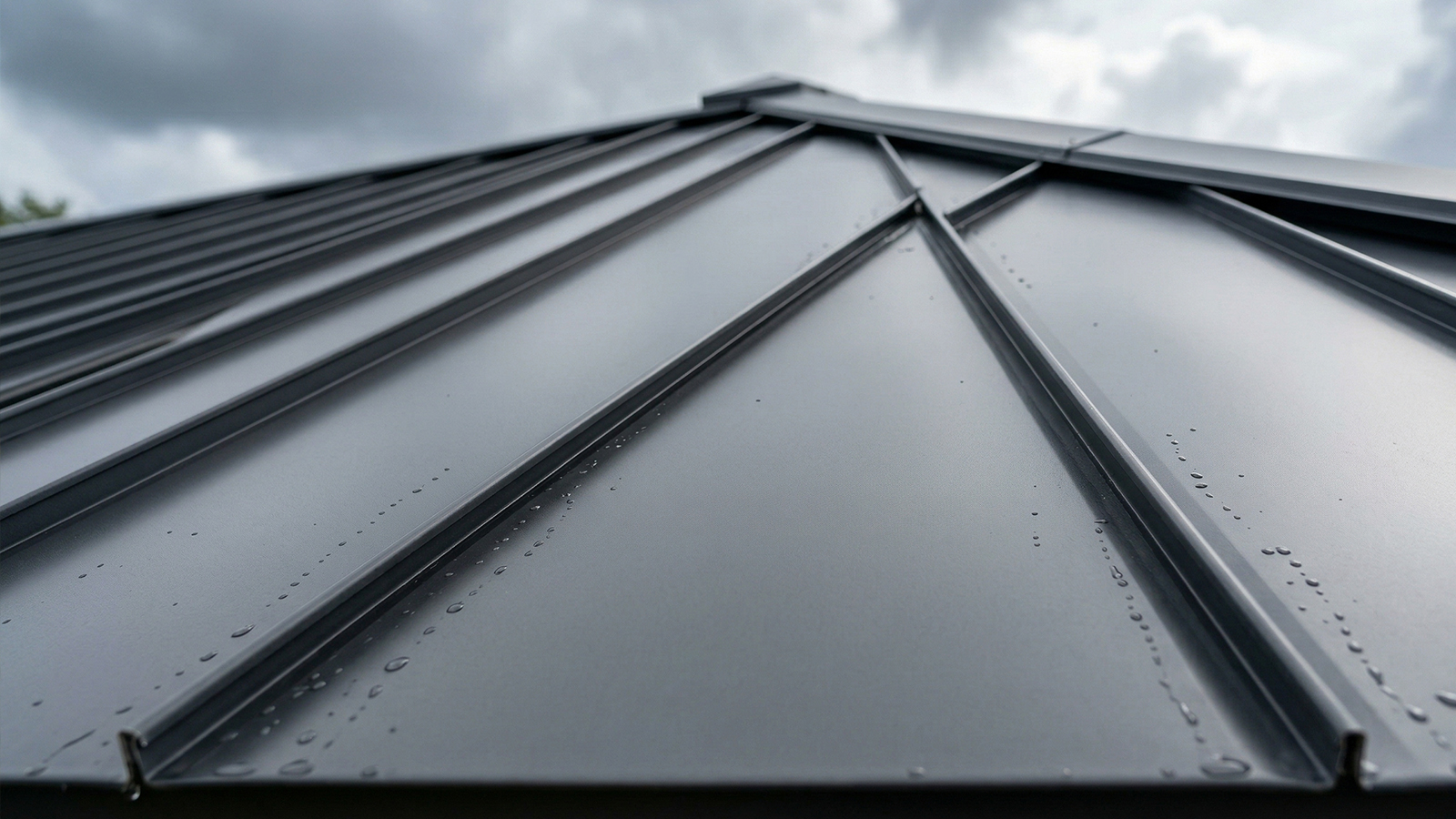
2. Standing Seam Metal — Maximum Storm Durability
Metal roofing comes in several profiles, but standing seam metal roof systems are the category’s highest-performing durable roofing material for Houston weather exposure. Interlocking metal panels run from ridge to eave with all fasteners hidden beneath raised seams — no exposed penetrations for water to infiltrate, no surface anchors for wind to grab. Metal roofing offers storm resistance and long-term durability that no asphalt product matches.
A metal roof can last 40 to 80 years — and that’s the realistic range, not the optimistic ceiling. Steel panels with a Galvalume coating handle corrosion in Houston’s humid climate. The system is fire-resistant, reflects solar heat instead of absorbing it, and most metal systems carry warranties rated for winds exceeding 130 mph. This is the long-lasting roofing category that earns the name.
The tradeoff is upfront investment: a full installation on a typical Houston home runs $15,000 to $30,000+. Metal roofing offers lower lifetime cost when you account for the shingle replacement cycles you’ll skip over a 40-plus-year horizon. For a homeowner planning to stay long-term, metal delivers the strongest combination of storm performance and return on investment available in this market.
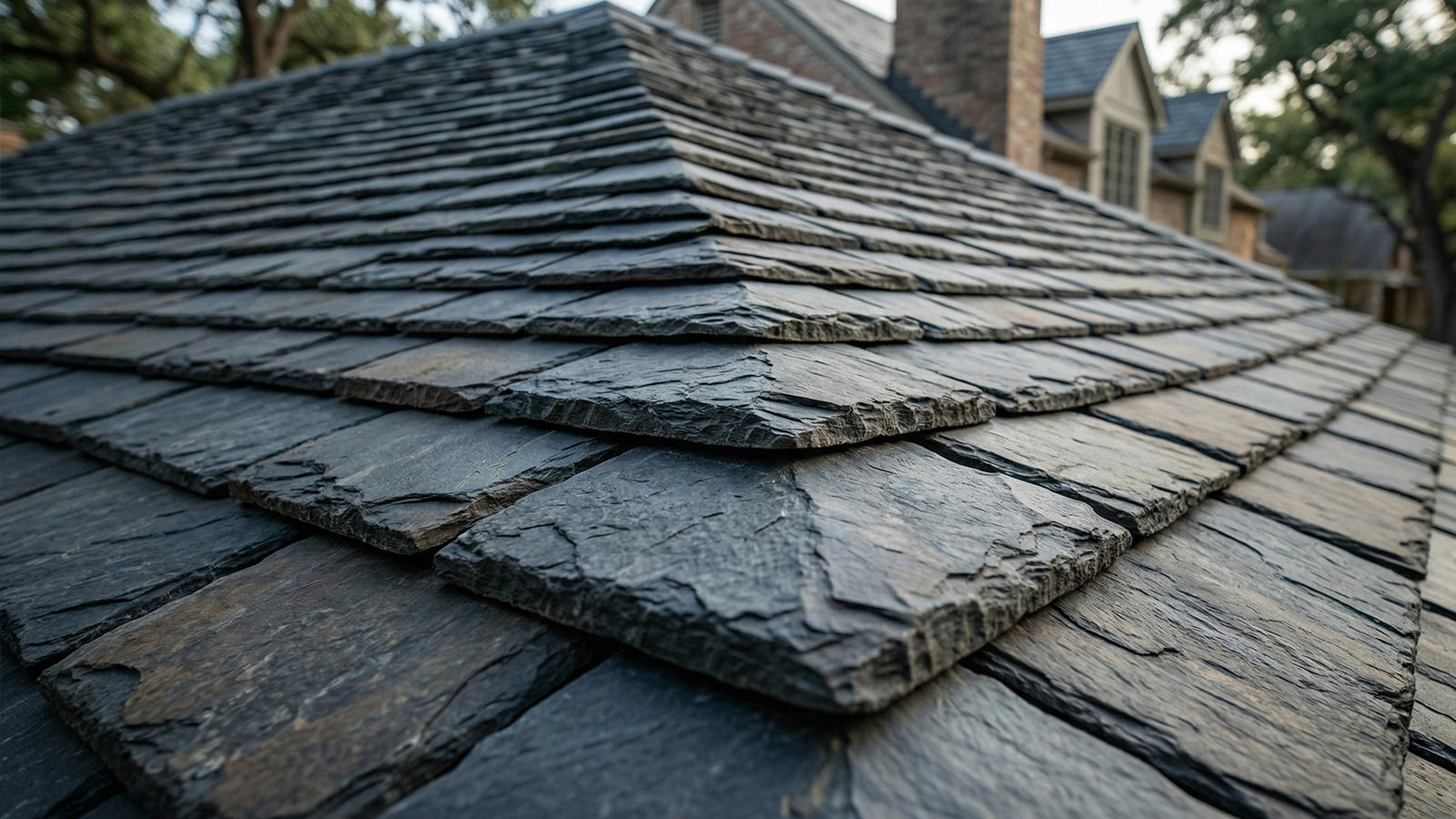
3. Slate — The Forever Roof
When a forever roof is the goal, materials like slate are the honest answer. Slate is a dense natural stone material cut into flat tiles — it can last 75 to 150 years when installed on framing capable of supporting the load. The lifespan of your roof in slate is measured in generations, not decades. A slate roof simply doesn’t break down the way manufactured products do, and for anyone looking to make a single long-term decision and stop thinking about the roof entirely, slate is the most durable option on the market.
Weight is the primary constraint. A roofer must verify framing capacity before installation begins. Cost runs $25,000 to $50,000+ depending on size and grade — and the price reflects what you’re getting.
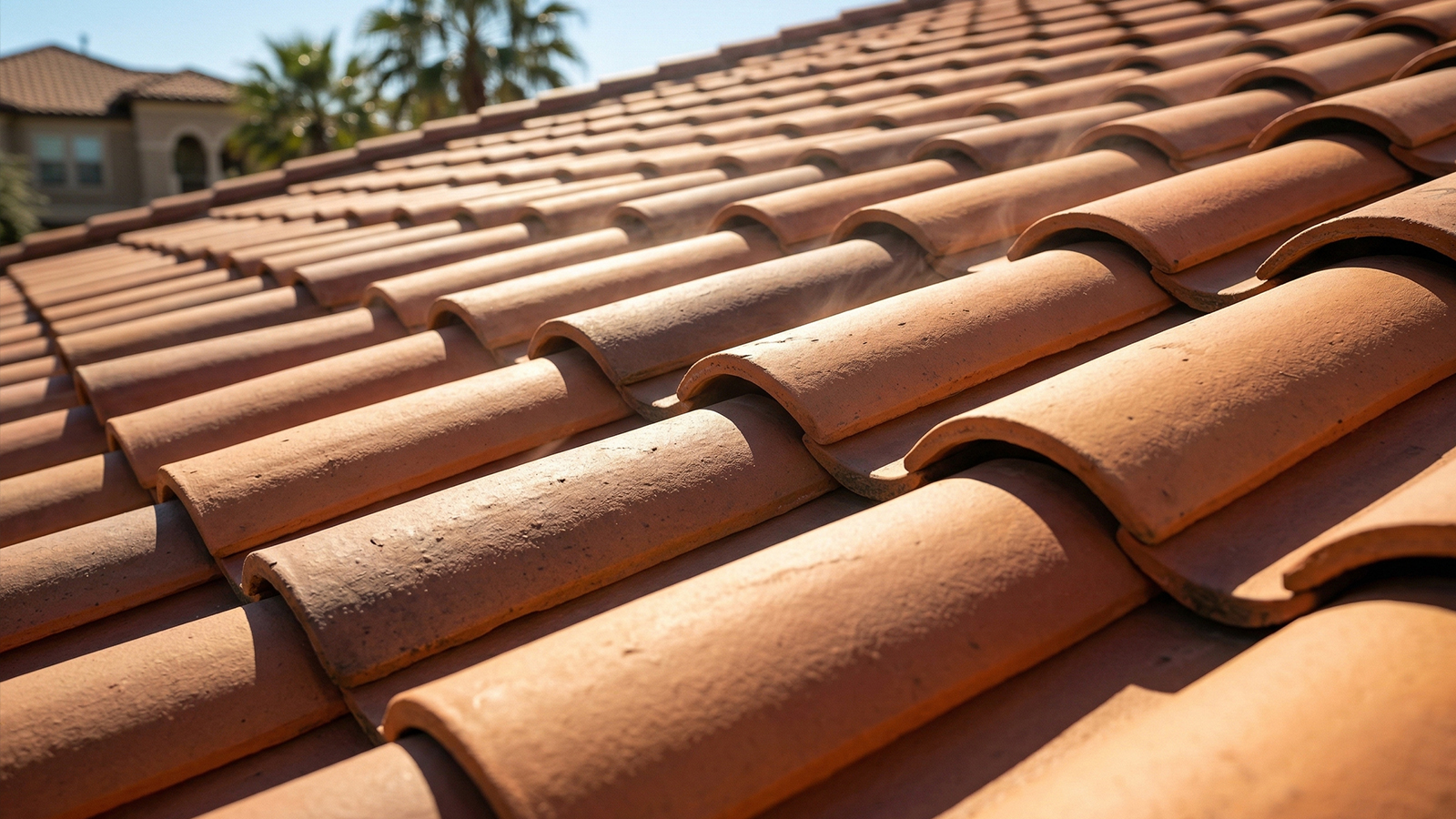
4. Clay Tile — 50 to 100 Years in Houston’s Heat
Clay tiles have been used on roofs in hot, humid climates for centuries. A clay tile roof resists UV degradation, moisture, insects, and heat better than most materials available today. Clay is one of the natural materials with the longest performance record in climates like Houston’s — a realistic lifespan of 50 to 100 years.
Clay tile installation requires a structural load verification before it begins. Individual tiles can crack under debris impact, so occasional tile-level repairs are part of ownership. At Nailed It Roofing Pros, we verify framing capacity and specify the correct underlayment system before any tile work starts — cutting corners on a clay tile roof eliminates the durability advantage the material provides.
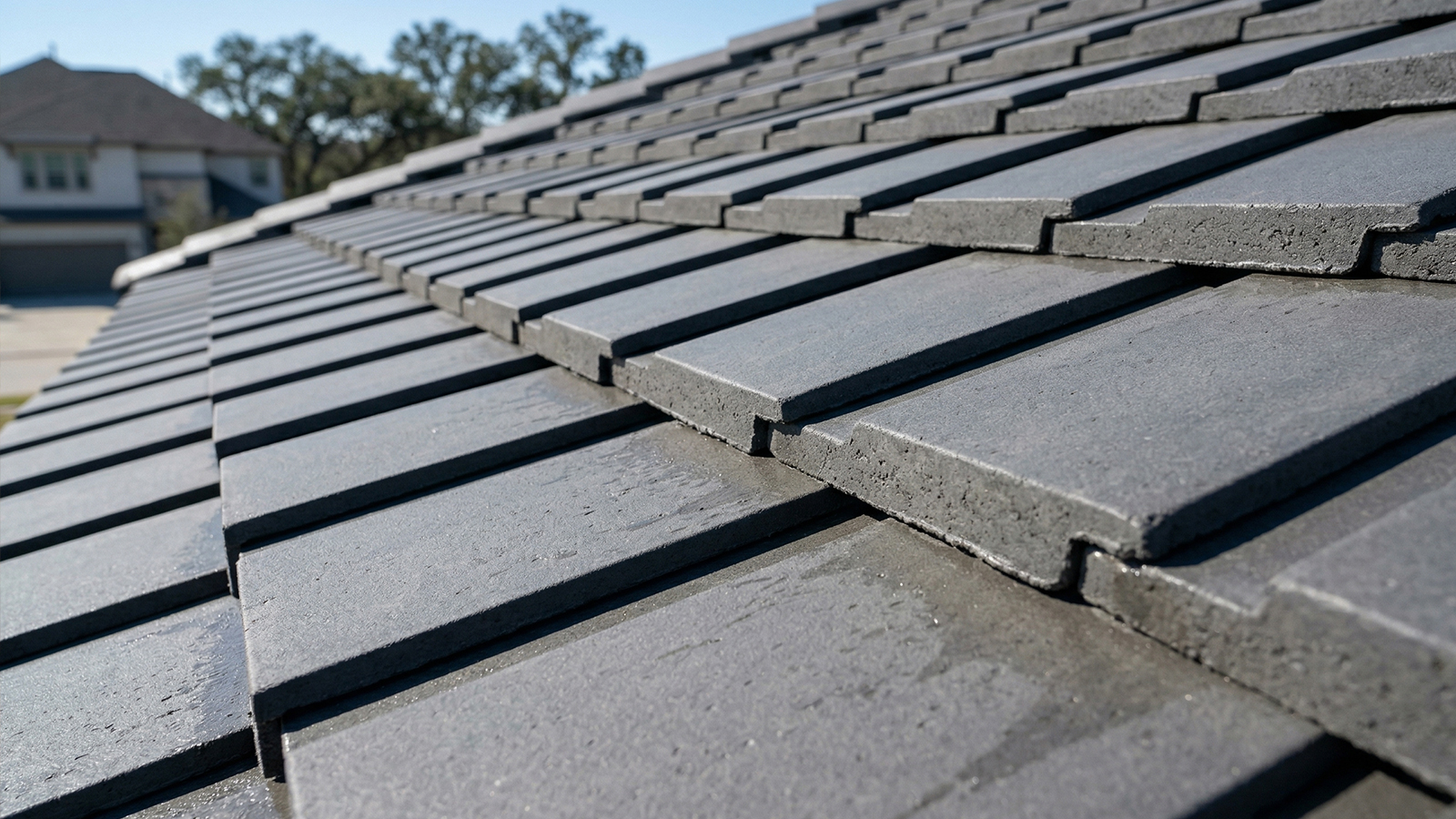
5. Concrete Tiles — Durable Roofing Material at a Lower Price Point
Concrete tiles are manufactured from sand, cement, and water — dense, moisture-resistant, and engineered to handle Houston weather conditions over decades. A well-installed concrete installation typically lasts 40 to 50 years, making concrete tiles a legitimate durable roofing material for those who want tile-level performance without the clay tile price ceiling. Concrete is the right choice for your home if you want generational durability at a price point closer to premium asphalt.
Concrete tiles are heavier than asphalt and require the same structural support verification as clay. They absorb slightly more moisture over time, which proper synthetic underlayment and ventilation address. For homeowners weighing options in the tile category, concrete tiles offer strong durability at a lower cost than clay.
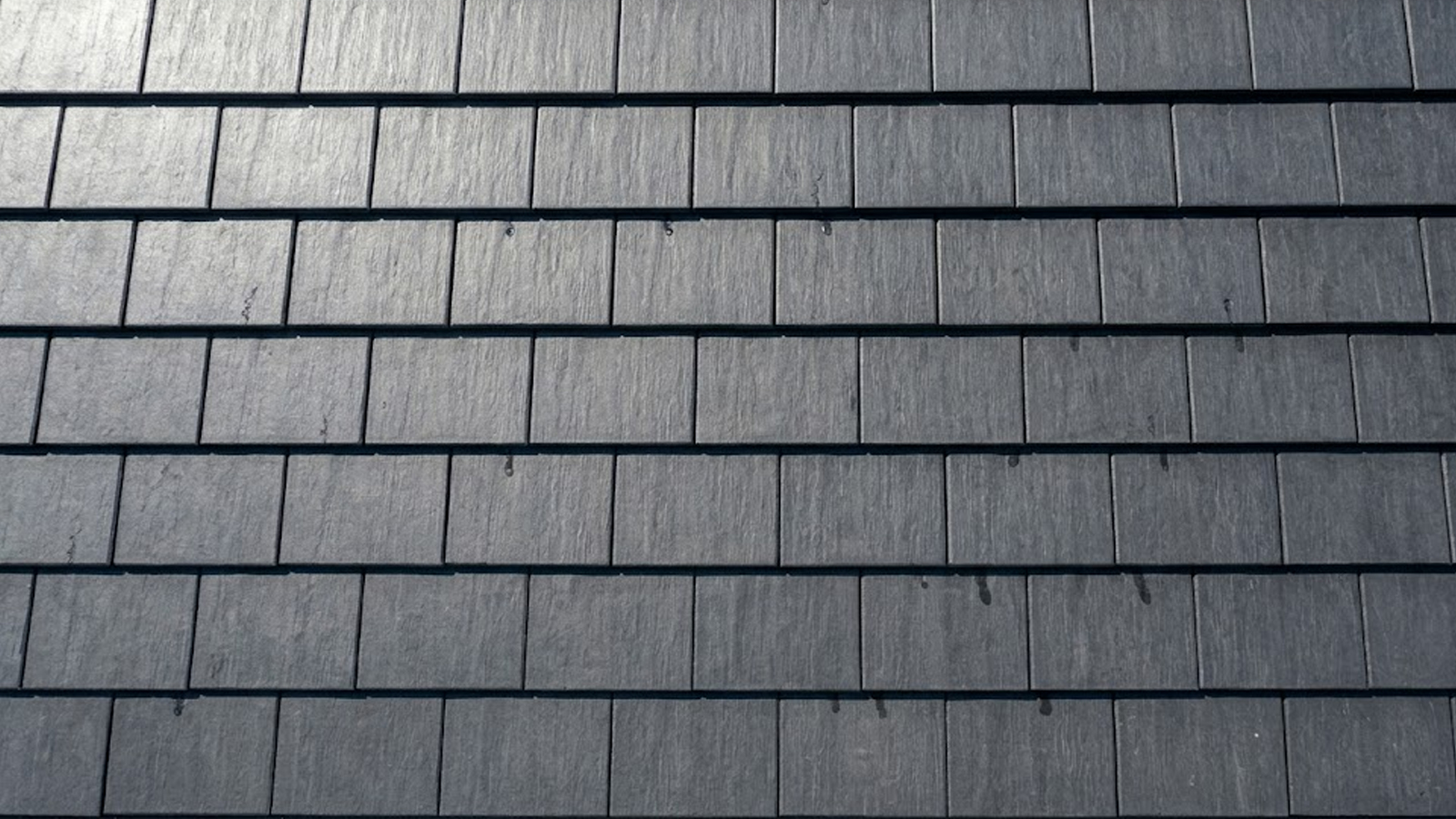
6. Synthetic and Polymer Roofing — Long-Lasting Roofing Without the Structural Requirements
Polymer roofing products are engineered to replicate the look of traditional materials while improving on the weaknesses that make those traditional materials difficult to maintain in Houston’s climate. Most synthetic products use recycled rubber, plastic, or composite fiberglass, engineered for impact, UV exposure, and moisture resistance. Today’s roofing products from established manufacturers carry 30-to-50-year lifespans and represent some of the best roofing available for those who want durability without slate or tile’s structural demands.
Wood roofing — wood shake and cedar — comes up in durability conversations often, but wood roofing is not well-suited to Houston’s climate. Moisture, mold, fungal growth, and insect damage are all accelerated here. Cedar and similar materials last far longer in dry climates. Synthetic roofing that replicates cedar’s appearance is a better fit for most roofing needs in this market. Solar roofing shingles — a newer category integrating photovoltaic technology directly into the roofing system — also fall here and are worth discussing with a roofing contractor if energy generation is part of your thinking.
Durability Comparison — Roofing Materials
| Material | Lifespan | Estimated Cost in Houston | Key Advantage |
| Architectural Asphalt Shingles | 25–35 years | $8,000–$18,000+ | Value, Class 4 hail rating, wide availability |
| Standing Seam Metal | 40–80 years | $15,000–$30,000+ | Storm durability, energy efficiency |
| Slate | 75–150 years | $25,000–$50,000+ | Generational lifespan |
| Clay Tile | 50–100 years | $18,000–$35,000+ | Heat and UV resistance |
| Concrete Tile | 40–50 years | $12,000–$22,000+ | Tile durability at a lower cost |
| Synthetic / Polymer | 30–50 years | $10,000–$20,000+ | Natural aesthetics, moisture resistance |
How to Choose the Best Roofing Material for Your Houston-Area Home
Selecting the best roof material comes down to three real variables: budget, how long you plan to stay, and what your structure can carry. A homeowner building long-term equity has different math than someone planning to sell within five years. Committing to roof replacement with the cheapest option rarely pencils out once the next early cycle arrives.
If you need a new roof and want durable materials without structural reinforcement concerns, premium architectural shingles with a Class 4 impact rating or a metal system offer the best long-term value for most Houston homes. If budget and framing allow, tile and slate extend service life well beyond what asphalt shingles deliver.
Asphalt is the best value entry point. Metal is the best storm performer. Tile and slate are for anyone who wants to make one decision and move on. A good roofing contractor gives you an honest read on what your structure, budget, and timeline actually call for — not just the product with the highest margin.
Why Roofing Costs Vary So Much Between Contractors
A $12,000 bid and a $20,000 bid for the same type of roof aren’t measuring the same scope. The gap comes from whether the old roof gets fully torn off or overlaid, whether damaged decking gets replaced or covered, whether the right underlayment is specified for this climate, and whether the crew carries the right licensing and insurance.
An old roof with hidden decking damage can add $1,500 to $3,000+ once it’s exposed. A roofing company that doesn’t account for that isn’t offering a lower price — they’re offering an incomplete one. When comparing roofing services and bids, verify the same scope, material grade, and warranty coverage across every estimate.
A proper roof installation includes full tear-off, decking inspection, synthetic underlayment, drip edge, ventilation assessment, and product warranty registration. If those line items are absent from a bid, ask why before you sign.
Learn More: How Much Does A New Roof Cost in Houston
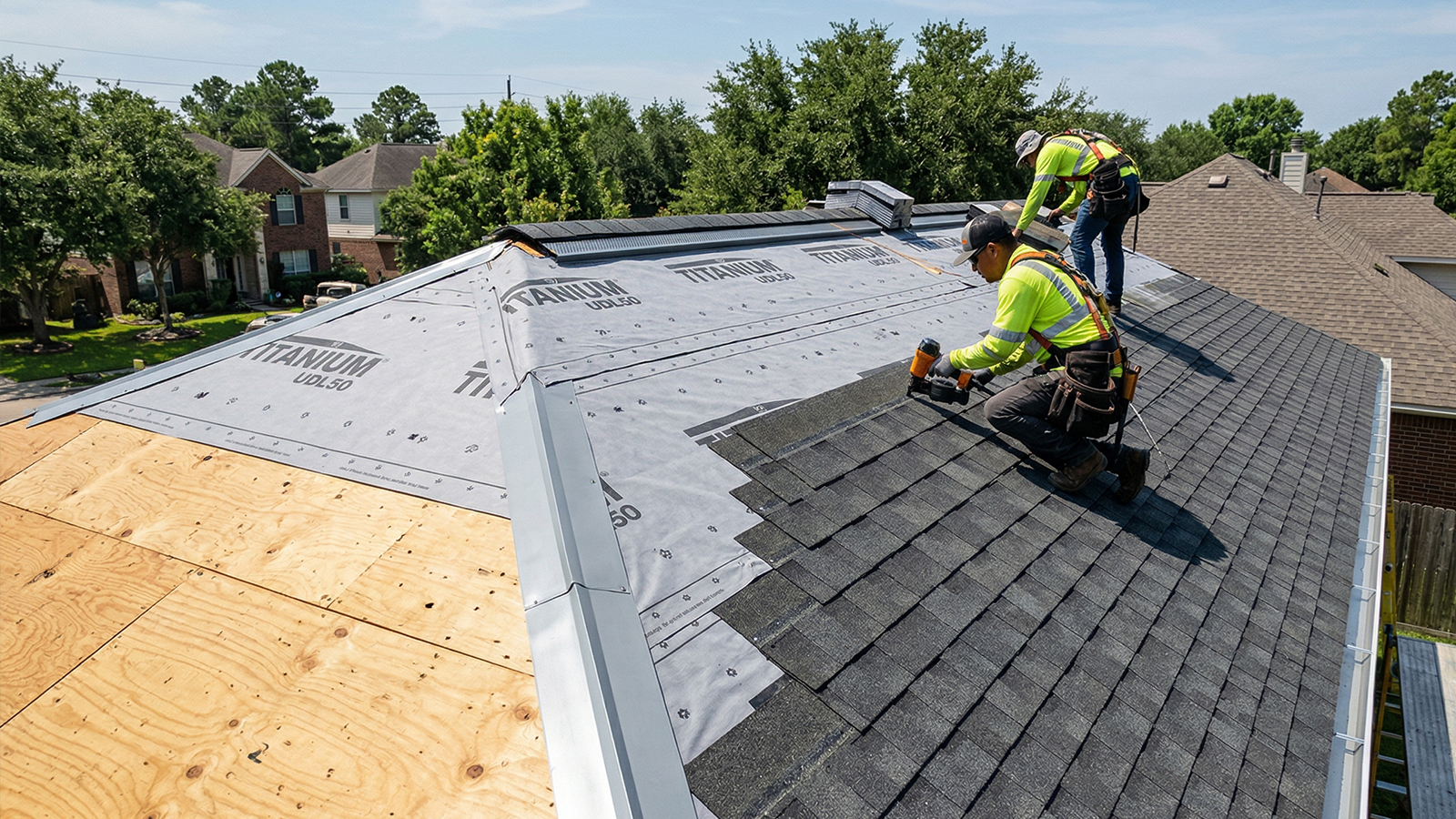
What’s Included With Nailed It Roofing Pros
Every installation with Nailed It Roofing Pros includes a complete roofing system — not a scope that looks competitive on paper but cuts corners where you can’t see them.
- Full tear-off and disposal — We remove the old roof down to the decking. No overlays.
- Decking inspection and repair — Every board inspected before installation. Damaged sections documented and replaced.
- Synthetic underlayment — A moisture barrier between your decking and the surface layer.
- Drip edge installation — Metal flashing along roof edges that channels water away from the fascia.
- Ventilation evaluation — Proper ventilation extends the life of any roof material and prevents moisture damage from the inside.
- Product warranty registration — Coverage is active from day one.
Roofing manufacturers void warranties on improperly installed systems. A roofer who skips these steps hands you a warranty that won’t hold when you actually need it.
Ready to Find the Right Roofing for Your Home?
Not sure where your roofing needs fall on the durability-versus-budget spectrum? That’s what a free inspection is for.
Your free inspection from Nailed It Roofing Pros includes:
- A full condition assessment of your current roof and its realistic remaining service life
- An honest repair-versus-replace recommendation based on what we actually find
- Roofing options by budget range so you’re comparing real numbers
- A home insurance review if storm damage may be a factor
- A detailed written estimate — no vague figures, no surprises
There is zero pressure to make a decision on the spot. Our job is to give you the information you need to make a confident call — not to push you toward a contract.
Ready to get started? Contact Nailed It Roofing Pros today to schedule your free inspection at naileditroofingpros.com/contact/.
Frequently Asked Questions About Durable Roofing in Houston
What is the most durable roofing option for Houston homes?
For maximum longevity, slate and clay tile lead the category. For the most durable roof without structural reinforcement requirements, a metal roof is the strongest performer — it handles storm exposure, moisture, and heat better than any other roof material available and delivers a lifespan well beyond what asphalt shingles can match.
How long do asphalt shingles last in Houston?
Architectural asphalt shingles can last 25 to 35 years in Houston with a full tear-off, clean decking, and adequate ventilation. Asphalt shingles are the most common residential choice because they work across a wide budget range — but early failure is common when a shingle roof is installed over an existing layer or on a structure with insufficient airflow.
Is metal roof worth the investment for a Houston home?
For a homeowner staying long-term, yes. The $15,000 to $30,000+ upfront cost is offset by a lifespan that can last 40 years at minimum, low maintenance requirements, energy savings from heat reflection, and stronger resistance to the repair calls that follow every major Houston storm.
When should I repair or replace my roof?
If your shingle roof is under 15 years old and damage is isolated, roof repair is likely sufficient. If it’s over 20 years old, has widespread deterioration, or took significant storm damage, replacing a roof typically makes better long-term financial sense. A qualified roofer gives you an honest assessment — not a recommendation designed to sell a full job.
How does Houston’s humidity affect which roofing material I should choose?
Significantly. Humidity accelerates breakdown in wood shake, cedar, and untreated asphalt. Metal, slate, and clay tile handle moisture far better. When evaluating your roofing options for Houston, moisture resistance belongs alongside impact rating and wind resistance — not as an afterthought.