
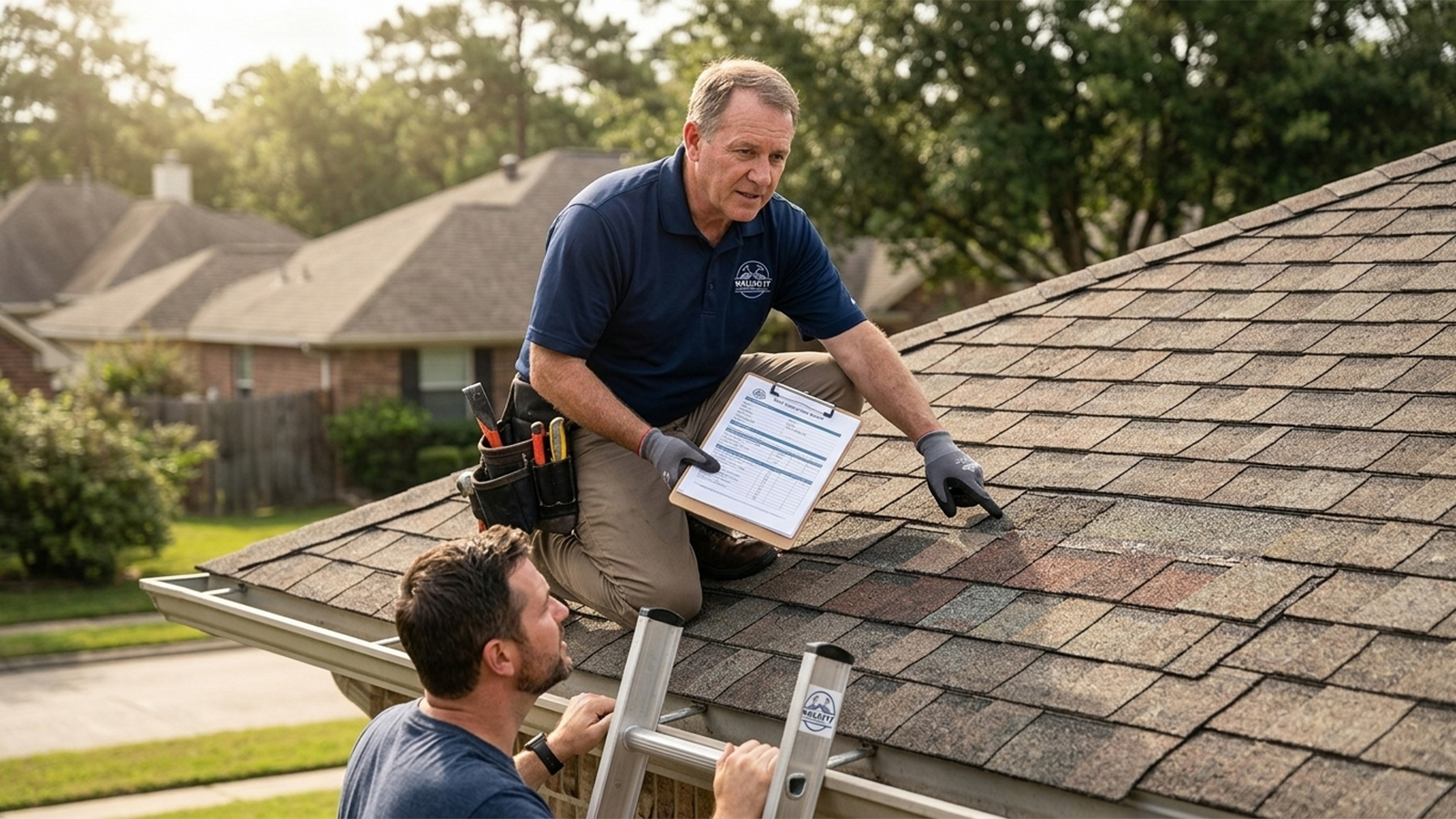
If you’ve paid for two or three repairs already and you’re bracing for someone to push a hard sell on you, take a breath. There’s a clear, calculable answer to how many roof repairs before replacement makes sense, and it’s not a guess or a scare tactic.
Most homeowners hit that tipping point at 3 or more repairs within a 2 to 5 year window, or once repair costs climb toward 50% of a full replacement. If you’re already looking at a third repair, it’s worth a straight conversation with a residential roofing replacement team before you spend another dollar patching. Every patch on an aging roof is really a bet that the next Houston storm won’t find the next weak spot.
This guide breaks down the exact numbers so you can make the call with confidence, no pressure attached.
Key Takeaways
- Three or more roof repairs in a 2 to 5 year span is the point where replacement usually becomes the smarter investment
- Once repair costs reach roughly half of full replacement cost, replacement almost always wins in the long run
- Asphalt shingles typically last 20 to 25 years, metal roofs 40 to 70 years, and tile 50 or more years, and age combined with repair frequency tells the real story
- Recurring leaks in the same spot, granule loss, and sagging decking are red flags even before you reach the third repair
- A professional roof inspection report is the fastest way to know exactly where your roof stands right now
How Many Times Can You Repair a Roof Before Replacing It? The 3-Repair Rule
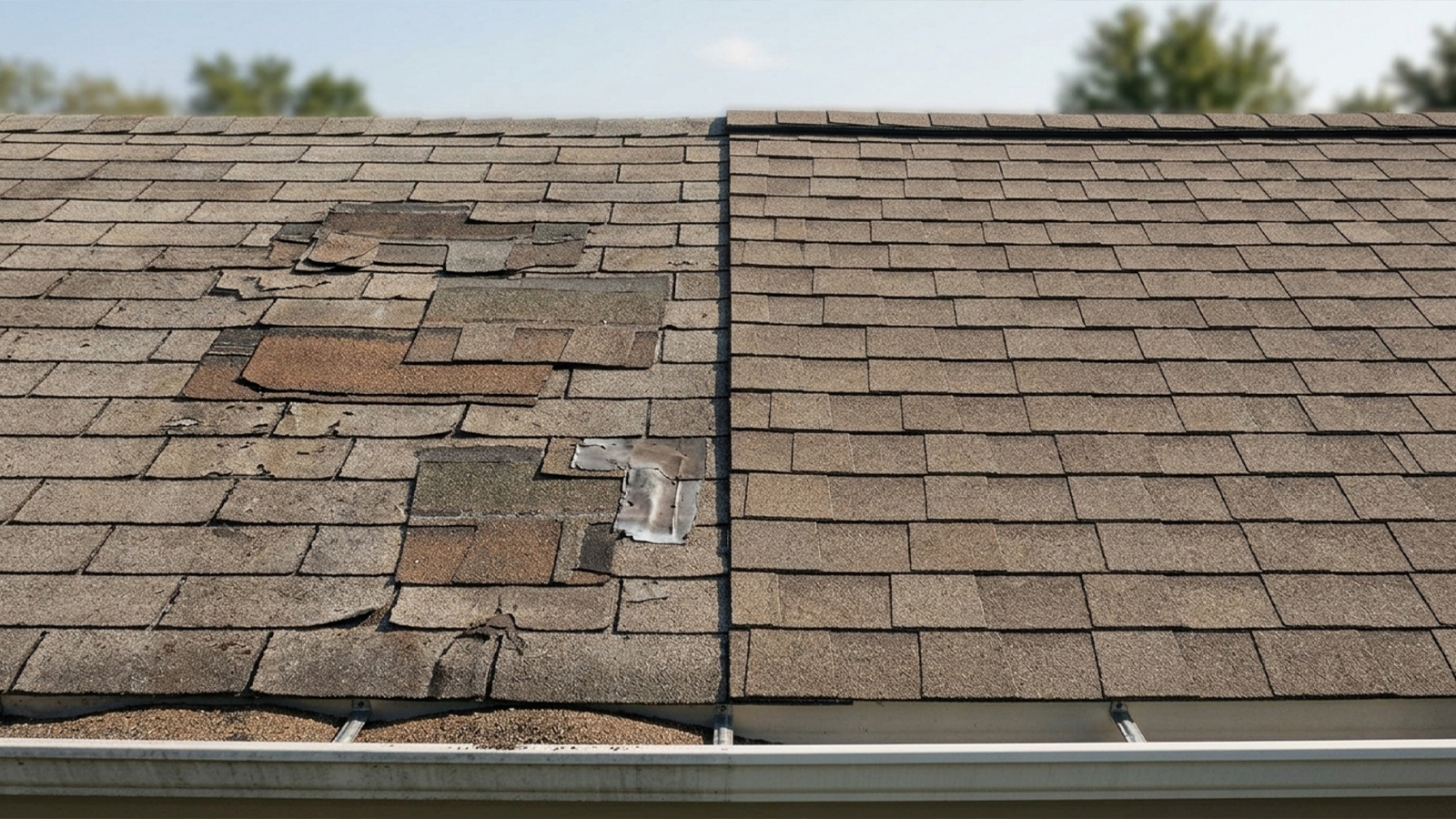
Three separate roof repair visits within two to five years. That’s the tipping point where a roof moves from maintainable to failing. We call this the 3-Repair Rule, and it exists because repair history rarely lies. One repair after an isolated incident is normal maintenance. Three unrelated repairs in three years is a pattern, and patterns point to a roof that’s simply wearing out.
Why the Third Repair Is Different From the First
The first repair on a roof usually fixes an obvious problem: a cracked flashing seal, a section of missing shingles after wind, a small leak around a vent pipe. The second repair often shows up somewhere new. By the third, most roofers aren’t treating isolated damage anymore. They’re chasing a roof that’s failing in multiple places at once. Each fix buys a little time, but it rarely explains why the roof keeps breaking down in the first place.
Reading the Pattern: Random Damage vs. Systemic Failure
A single repair after a major storm is different from three unconnected repairs spread across a few seasons. Houston-area roofs tend to go through more repair cycles per decade than homes in drier climates, simply from repeat exposure to hail, wind, and heat cycling. If your roofer keeps finding a new leak in a different spot each visit, that’s systemic failure, not bad luck. This isn’t about pushing you toward a decision. It’s a plain diagnostic line that tells you when patching stops making financial sense for a homeowner watching every dollar and trying to protect your home from repeat storm damage.
If you’re already at repair number two or three and unsure which category you’re in, a second opinion from an inspection costs you nothing and clears up the guesswork fast.
What Is the 50% Rule for Roof Replacement? (And Is It Cheaper to Repair or Replace?)
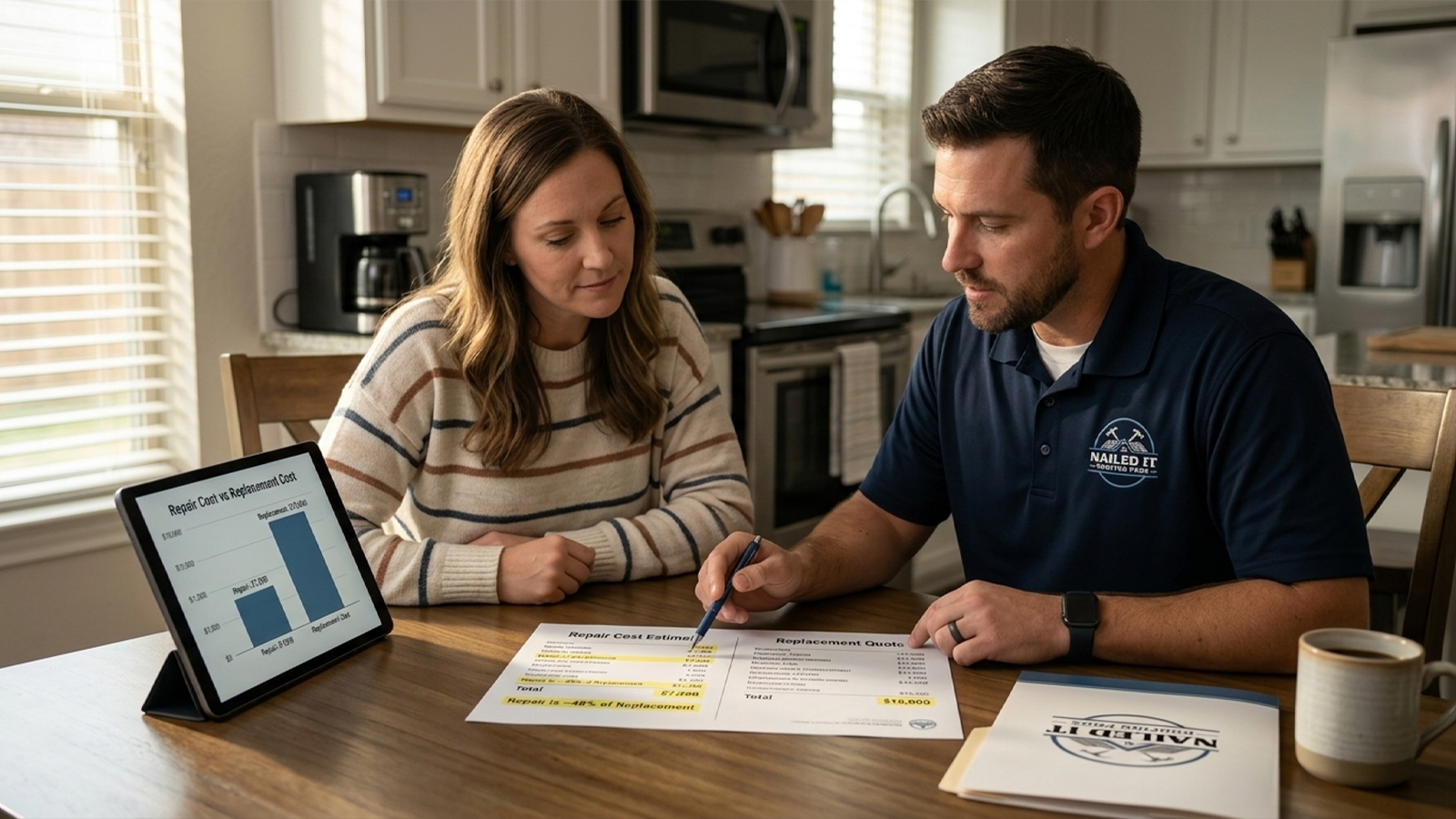
The 50% Cost Rule states that once a repair, or the total of several repairs, approaches half the price of a full roof replacement, replacement delivers better long-term value than continuing to patch. This is a financial guideline, not a building code requirement. Worth keeping those two ideas separate.
The 50% Threshold Explained
Some regions apply damage-extent building codes that require a full replacement once a certain percentage of the roof surface is damaged, often somewhere between 25% and 50% depending on local code. That’s a structural rule. The 50% Cost Rule we’re describing here is a financial one: it compares what you’d spend fixing the roof against what a new roof would cost. When those numbers get close, repair stops being the bargain it feels like.
Repair Costs vs. Replacement Costs at a Glance
| Scenario | Typical Cost Range | Better Long-Term Value |
|---|---|---|
| Single minor repair | Few hundred to $1,000 | Repair |
| Repeated repairs (3+) over 2-5 years | $2,000-$5,000+ cumulative | Often replacement |
| Full replacement (average Houston roof) | $8,000-$16,000+ | Replacement, if repair cost nears 50% |
Is it cheaper to repair or replace a roof? In the short term, repair almost always costs less upfront. But repeated repair costs add up, and a full replacement comes with a fresh warranty, updated materials, and no more guessing where the next leak will show up. If your last insurance claim or repair invoice was already a third of what a new roof would cost, the math is starting to favor roof repair vs. replacement for most homeowners.
Roof Age Benchmarks by Material and Warning Signs You Need a New Roof
A 22-year-old asphalt shingle roof needing its third repair is a very different situation than a 5-year-old roof with the same repair count. Age changes what a repair pattern actually means.
Expected Lifespan by Roofing Material
Asphalt shingle roofs generally last 20 to 25 years, in line with manufacturer standards from GAF, Owens Corning, and CertainTeed. A metal roof runs much longer, typically 40 to 70 years, while tile roofing can exceed 50 years with proper maintenance. Homeowners weighing the most durable residential roofing options against asphalt shingles often find that a metal roof’s longer lifespan makes up for the higher upfront cost, especially in a climate as demanding as Houston’s. Heat, humidity, and UV exposure tend to push asphalt shingles toward the shorter end of that range here, so a shingle roof rated for 25 years may realistically perform closer to 20. If your asphalt roof is already past 15 years old and needing repeat repairs, age is working against you, not just bad luck.
Warning Signs That Outweigh the Repair Count
Some signs mean it’s time to replace your roof regardless of how many repairs you’ve had:
- Recurring leaks in the same spot despite prior repair attempts
- Heavy granule loss visible in gutters or downspouts
- Sagging roof decking or roof boards, a sign of possible structural damage
- Multiple roof flashing failures around chimneys, vents, or valleys
- Water stains spreading across ceiling drywall
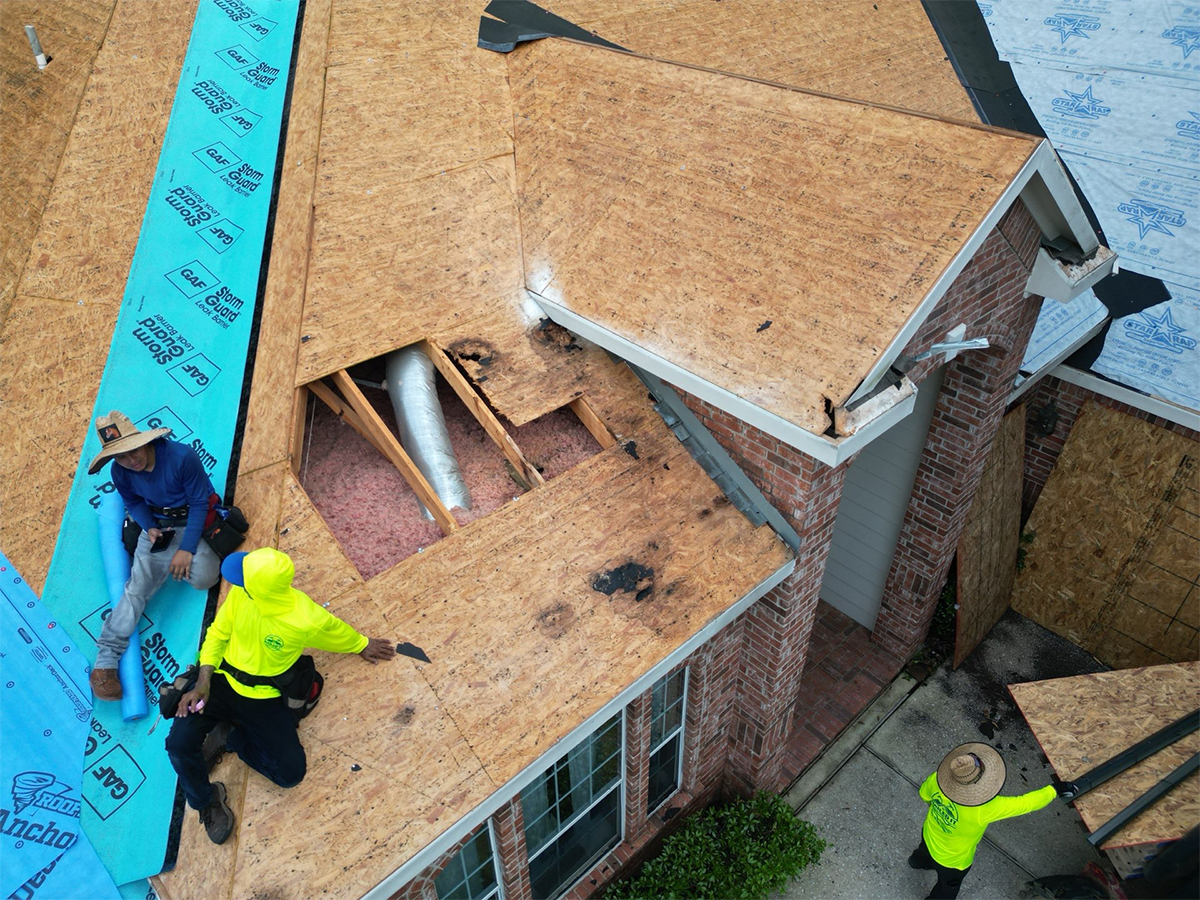
The International Residential Code (IRC) sets baseline requirements for decking and structural integrity, and sagging decking or water stains often mean those standards are no longer being met. At that point, a licensed roofer needs to check structural integrity rather than run another surface-level patch.
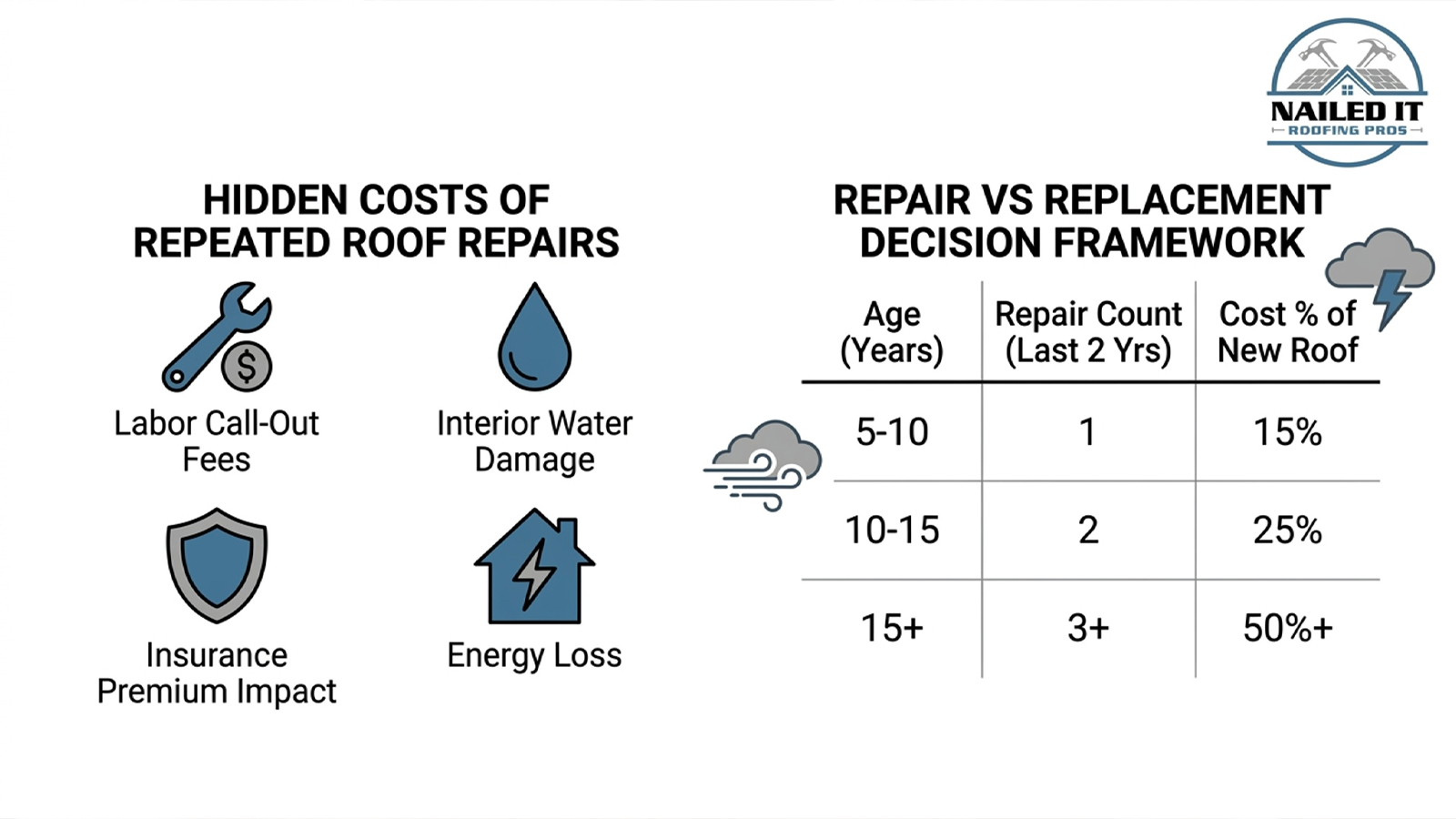
Hidden Costs of Repeated Repairs, Local Magnolia/Houston Storm Factors, and Your Decision Framework
Every repair call carries costs beyond the invoice. Houston’s climate adds its own pressure on top of that.
The Real Cost of “Just One More Repair”
- Labor call-out fees stacking up with every repair visit
- Interior damage from leaks that go unnoticed until they reach drywall or insulation
- Rising homeowners insurance premiums after repeat claims
- Energy loss from compromised roof decking and insulation
Houston Storm Risk Factors That Shorten Roof Life
Magnolia and the greater Houston area see regular hail and high wind events, and a roof’s wind uplift rating plays a real role in how well shingles hold up during a major storm. Insurance companies pay close attention to repeat claims on aging roofs, and IRC compliance can factor into how a claim gets evaluated. A licensed Houston roofing contractor who understands local wind uplift requirements can help you document storm damage properly before filing an insurance claim, and a well-timed replacement can protect your home before the next major storm finds its way through a weak spot.
Decision Framework Checklist
| Factor | Repair Likely OK | Replacement Recommended |
|---|---|---|
| Roof age | Under 15 years | Asphalt 20+ years, metal 40+ years |
| Repair count | 1-2 repairs, unrelated issues | 3+ repairs in 2-5 years |
| Repair cost vs. replacement | Under 25% of replacement cost | Approaching or over 50% |
| Storm damage | Isolated, minor | Widespread hail/wind damage |
We worked with a Magnolia homeowner last year who had paid for three separate flashing and shingle repairs over four years on a roof already past 20 years old. Once we walked through the checklist with them, cost, age, and repair count all pointed the same direction. They moved forward with a full roof replacement instead of a fourth repair call on their old roof.
If you can check two or more boxes in the replacement column above, it’s a reasonable moment to get a professional opinion rather than schedule another patch.
Conclusion
Three or more repairs. A repair cost creeping toward 50% of replacement. A roof already past its material’s expected lifespan. These are the three signals that matter most. When two or more line up, you’re not looking at a repair decision anymore, you’re looking at a replacement decision. You now have the same criteria we use on every roof we inspect, so you don’t have to take anyone’s word for it, including ours. We bring more than 40 years of combined experience to every inspection, and we’ll tell you honestly if a repair still makes sense before ever recommending a full replacement.
Request your free roof inspection and estimate today by calling (713) 909-0480. We serve Magnolia, The Woodlands, Tomball, Conroe, and the surrounding Houston area, and protecting your home is the only outcome we’re working toward.
FAQ
How do I know if my roof needs repair or replacement?
A roof needs replacement when repair frequency, age, and cost thresholds line up rather than any single factor alone. If you’ve had three or more repairs in a few years, your roof is already past its expected material lifespan, or repair costs are approaching half of replacement cost, those combined signals point toward replacement. A professional roof inspection report is the most reliable way to confirm exactly where your roof stands.
How many years does a roof repair last?
A typical roof repair lasts 2 to 5 years before the surrounding material starts failing again. On a roof already past its expected lifespan, that window shrinks considerably, since the materials around the repair are aging at the same rate as the section that just failed. A roof inspection can give you a more accurate estimate for your specific situation.
Does homeowners insurance cover roof replacement after multiple repairs?
Homeowners insurance may cover roof replacement after multiple repairs if the damage stems from a covered storm event rather than gradual wear and tear. Insurance companies typically scrutinize repeat claims closely and often require a documented roof inspection report before approving a homeowners insurance claim. Working with a roofer experienced in insurance claim documentation can improve the accuracy and clarity of that paperwork for any homeowner filing a claim.
How much roof damage can be repaired instead of replaced?
Roof damage affecting less than 25 to 30% of the total roof surface can typically be repaired rather than replaced. This threshold connects to structural standards outlined in the IRC, though the exact percentage that justifies a full replacement can vary by material and by how the damage is spread across the roof. Damage extent is hard to judge accurately from the ground, which is why a professional assessment matters.
What does a professional roof inspection include?
A professional roof inspection includes a detailed check of shingles, flashing, decking, and ventilation, documented in a written roof inspection report. We evaluate wind uplift rating, material condition, and how well existing GAF, Owens Corning, or CertainTeed products are holding up, then walk homeowners through what we find before recommending a repair or a new roof.
How does Nailed It Roofing Pros decide between repair and replacement?
We weigh roof age, repair history, cost percentage, and storm damage extent together rather than leaning on any single factor. Our approach is inspection-first and no-pressure, which means we’ll tell you honestly if another repair still makes sense before ever recommending a full replacement. If you’re ready for that honest assessment, schedule your free estimate and we’ll walk the roof with you.