

That yellowish ring on your ceiling isn’t going to fix itself. Roof leaks in Magnolia are less a question of “if” and more a question of “when” — 49 inches of annual rainfall, Gulf-fed thunderstorms, and summer heat that bakes roofing materials from the outside in make sure of that. The gap between catching a leak early and discovering full-blown structural damage is often just a few missed warning signs and a few rainstorms. Whether you’ve noticed a drip after heavy rain or a faint stain you’ve been meaning to check, understanding what your roof is trying to tell you is the first step. Nailed It Roofing Pros helps Magnolia homeowners identify residential roofing damage before it becomes a disaster.
Key Takeaways
- Ceiling stains, musty odors, and drips are often the last signs to appear — by the time you see them, water has already been seeping through for a while
- Magnolia’s humid subtropical climate accelerates shingle and flashing deterioration faster than most U.S. markets
- A small leak left unaddressed through even one storm season can escalate to rot, mold, and roof deck compromise
- Most homeowners can perform a useful basic inspection from inside the attic and from the ground — no roof climbing required
- A professional roof inspection is the only reliable way to confirm the full scope of the damage
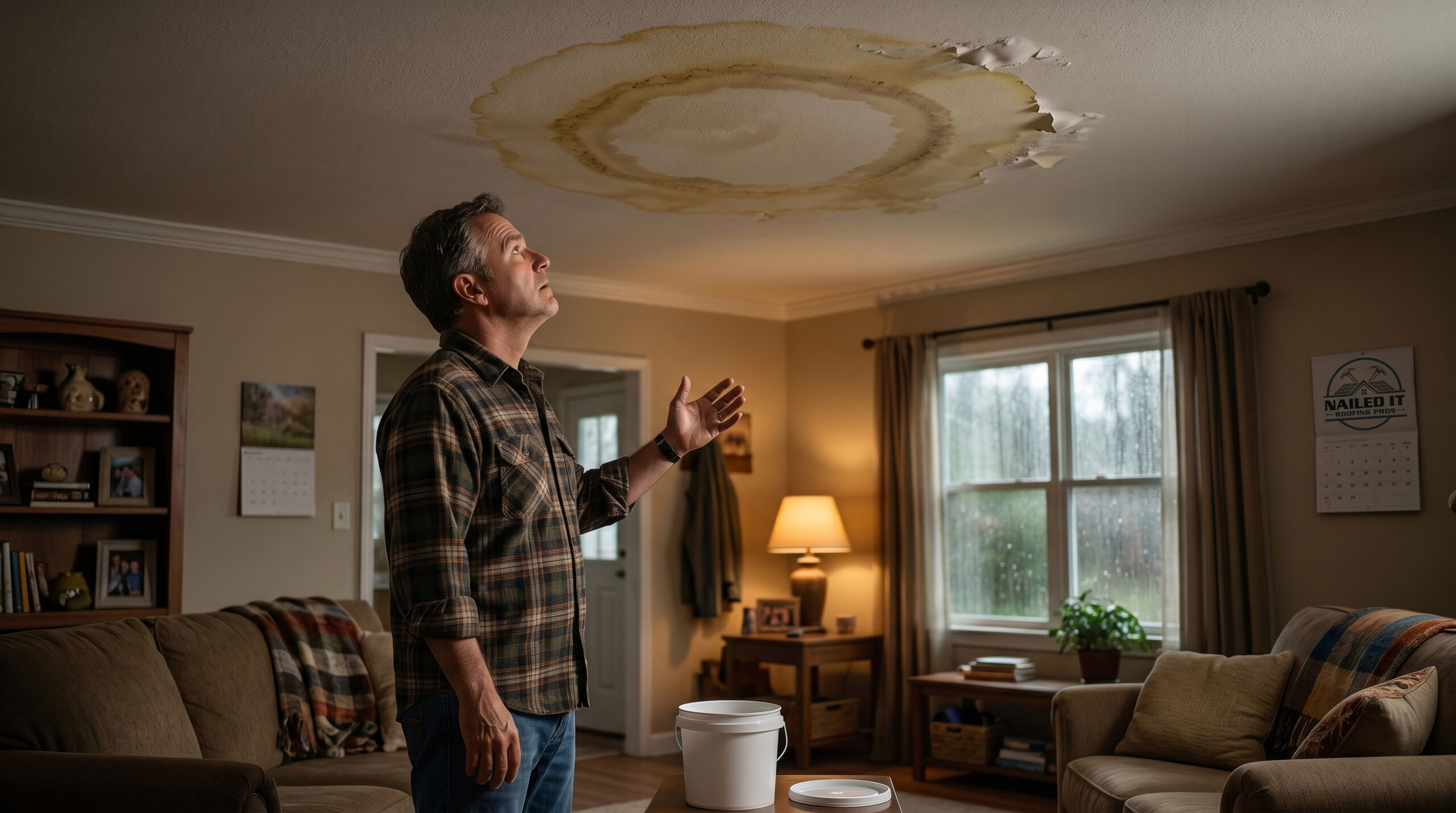
Common Signs of a Roof Leak Every Homeowner Should Know
The signs of a roof leak are not always dramatic. Most homeowners picture a bucket-and-drip situation. The reality is usually quieter and harder to pin down.
Ceiling stains are the most familiar indicator. A brown, yellow, or dark ring after a storm means moisture has already moved through your roof structure and into the ceiling material below. The leak source is often not directly above that water stain. Water travels along rafters and sheathing before it drips, so a stain on one side of the room may trace back to a roof penetration on the opposite side entirely.
A musty odor — especially in a closed room or your attic — often signals trapped moisture or early mold growth before any visible staining appears. In Magnolia’s humidity, mold can establish itself in 24 to 48 hours once moisture finds a foothold. By the time you smell something, the process has already started.
Drips during heavy rain are obvious. Less obvious are the intermittent ones that show up only under certain conditions — a specific wind direction, a sustained downpour — and then stop completely. Many homeowners tell themselves it only leaks when it really pours. That’s not reassurance. That’s evidence of a gap in your roof that water is finding under pressure, and it will widen.
A sagging ceiling is a different category of problem. If a section is visibly bowing or soft to the touch, water has been pooling inside the ceiling substrate long enough to saturate it. That’s not a note on the to-do list — it’s a call to Nailed It Roofing Pros at (713) 909-0480 before the next storm adds to the damage.
Granules in your gutters after a storm are also worth taking seriously. As asphalt shingles age, they shed the protective granule layer that shields the roof from UV damage and water infiltration. Magnolia’s summer heat accelerates this. Granule loss is a precursor to roof leaks, not a cosmetic issue.
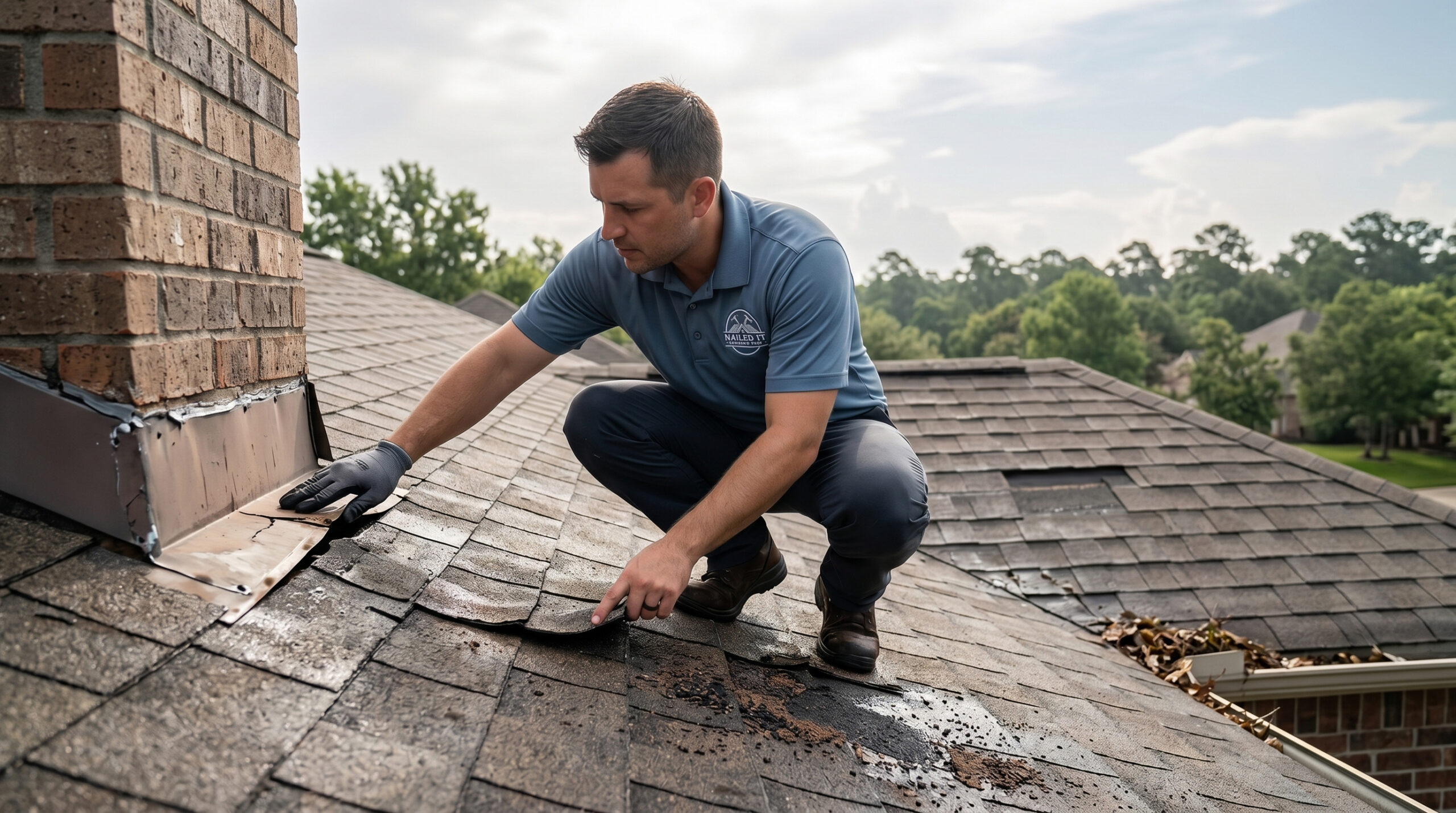
Common Causes of Roof Leaks in Magnolia Homes
Knowing why roofs leak in this area tells you where to look and what to prioritize.
Missing or Damaged Shingles
Missing or damaged shingles are the most common entry point for water. High winds from Gulf storm systems, hail impacts, and years of UV exposure crack, curl, and dislodge shingles over time. When a shingle is gone or compromised, the roof deck beneath it is directly exposed. From the ground, look for dark patches, visible curling at shingle edges, or irregular color patterns suggesting damage across a section.
Flashing Failures Around Chimneys and Vents
Flashing — the metal strips that seal joints around chimneys, vents, and roof transitions — is one of the most failure-prone components on any roof. When it cracks, lifts, or corrodes, water seeps through the gap and travels inward, often appearing as a ceiling stain several feet from the actual entry point. Chimney flashing is especially vulnerable here because extreme summer heat followed by cooler winters creates expansion and contraction cycles that gradually work flashing loose. A failed chimney or vent flash can allow water entry with no visible shingle damage nearby — which is exactly why it’s easy to miss on a ground-level look.
Clogged Gutters and Poor Drainage
Clogged gutters are a quiet but serious contributor to roof leaks. When gutters fill with debris and can’t drain, water backs up along the roofline and pushes under the lowest shingle courses, saturating the fascia and eventually reaching the roof deck. Magnolia’s dense tree canopy — pines, oaks, sweet gums — means gutters clog faster than average and shed continuously throughout the year. Seasonal cleaning is maintenance, not optional.
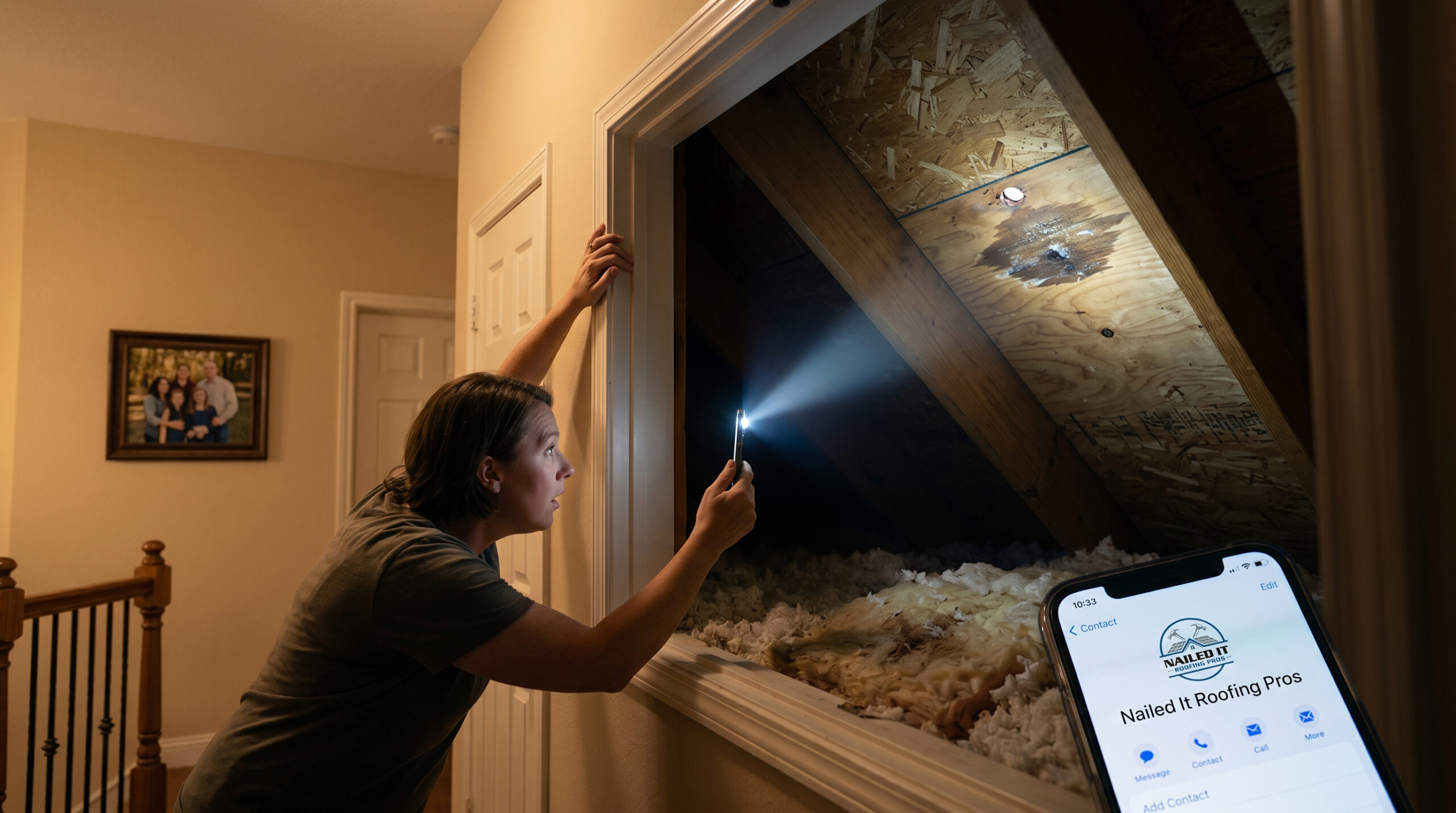
How to Inspect Your Roof for Leaks Without Climbing On It
A useful inspection does not require getting on the roof. You should never attempt to walk your roof without professional equipment and training. There’s still plenty you can assess safely.
Start in the Attic
The attic is your best first stop. Bring a flashlight and look for wet or stained insulation, dark streaks running along roof deck boards, soft or spongy wood, or any daylight visible through the boards. Stained insulation means the leak is already progressing past the roof structure. Wet insulation also loses its thermal performance and becomes a mold host, so what looks like a roofing problem is also an energy and air quality problem. Check after a rain event while conditions are fresh — dried water stains on roof deck wood still show you the path water has taken.
Ground-Level Exterior Inspection
Walk the perimeter with binoculars. Look for lifted or missing or damaged shingles, flashing that has pulled away from the chimney or a vent, moss or algae growth (a sign of ongoing moisture retention common in Magnolia’s humidity), and any visible damage to vent covers. Check gutters for granule accumulation and look at the fascia boards for staining or rot.
A ground-level and attic check gives you useful information about ceiling stains, insulation condition, shingle appearance, and gutter health. What it cannot give you is a full roof deck assessment for hidden rot, underlayment and membrane integrity, valley and flashing seal condition, structural sag evaluation, or documentation suitable for an insurance claim. That requires a professional inspection.
| What You Can Check Yourself | What Requires a Professional |
|---|---|
| Ceiling stains and water stains inside the home | Full roof deck assessment for hidden rot |
| Attic insulation condition and visible wet spots | Underlayment and membrane inspection |
| Ground-level shingle condition with binoculars | Valley and flashing seal integrity |
| Gutter granule accumulation | Structural load and sag evaluation |
| Visible missing or damaged shingles from the ground | Insurance documentation and damage report |
If your attic or exterior check turns up any of the signs above, a professional roof inspection is the next step — not a repair attempt.
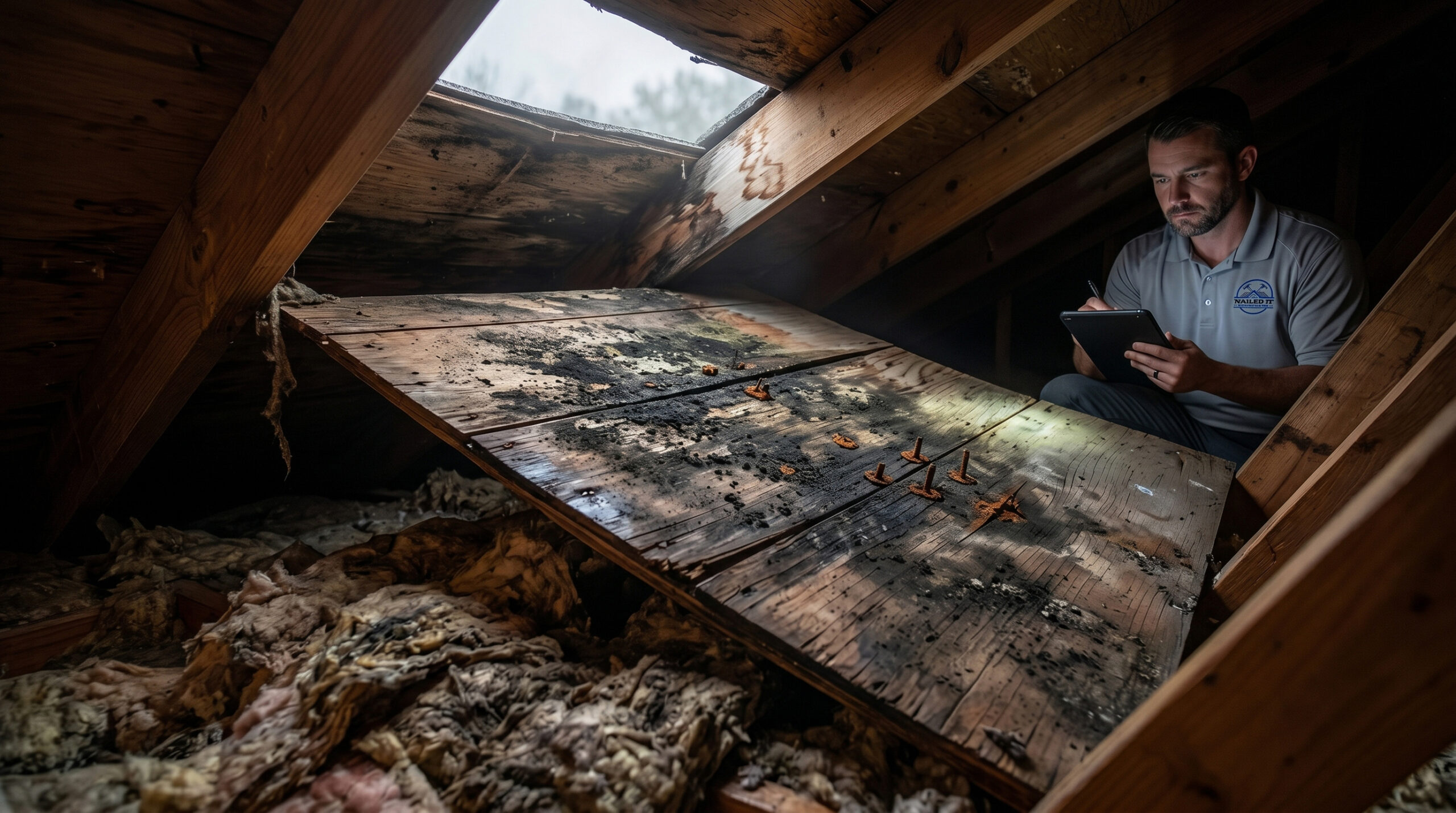
What Happens When You Ignore a Roof Leak
A small leak does not stay small. Water follows the path of least resistance, spreading laterally through insulation, along rafters, and into wall cavities. What starts as a ceiling stain progresses to material saturation, wood rot in the roof deck, and mold growth in wall framing — often without any dramatic increase in visible symptoms inside the home.
In Magnolia’s climate, where mold establishes quickly in humid conditions, the window between a minor repair and a major problem is short. Roof replacement becomes necessary when structural components have rotted to the point where new roofing material cannot be properly secured. What should have been a focused repair becomes a full replacement. Magnolia receives rain across every month of the year, so a leak that emerges in spring will be tested again and again through summer storms. Acting on water damage early is always the less expensive path.
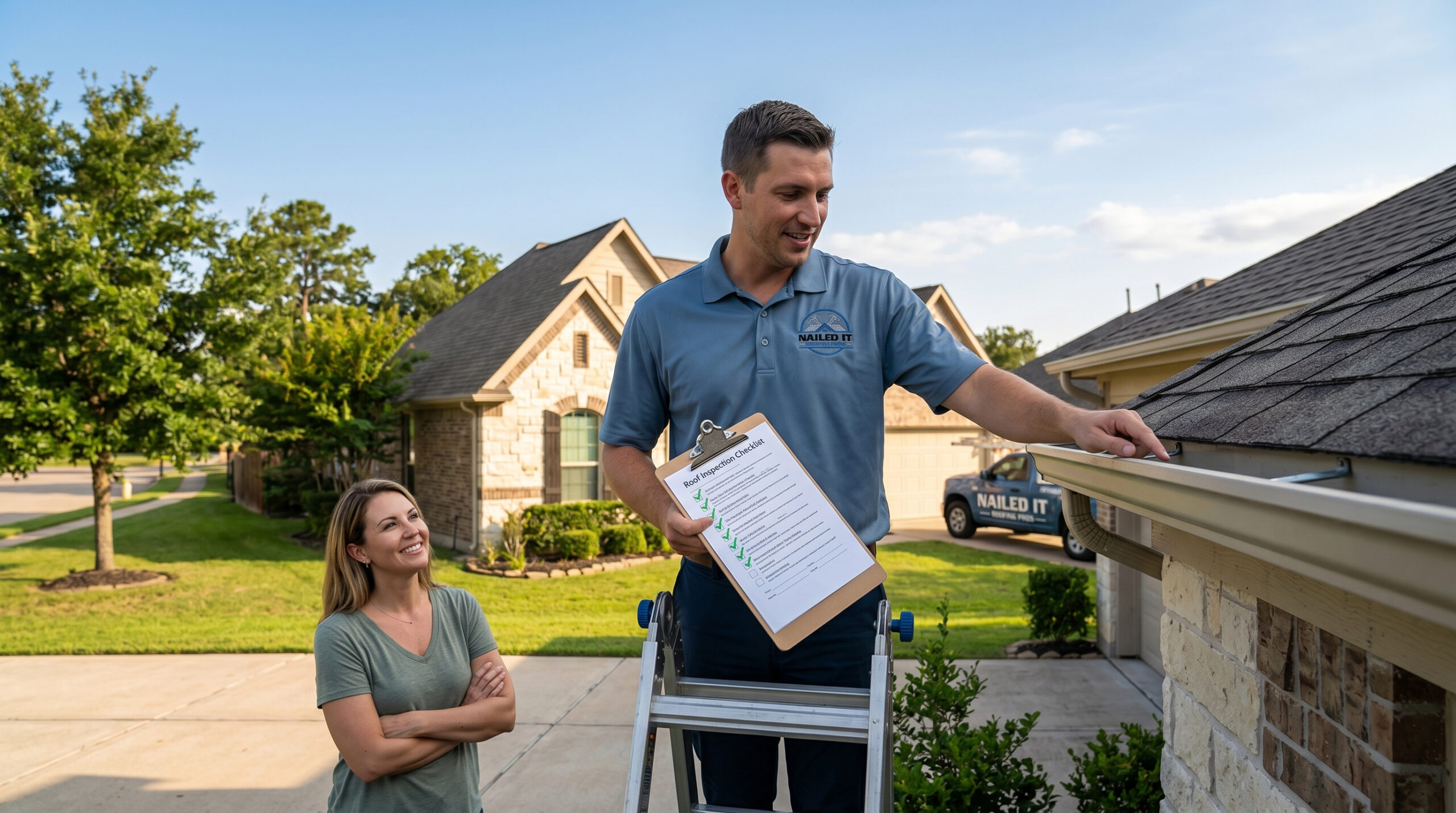
Stay Ahead of Roof Leaks: Roof Inspection and Maintenance Tips
Prevention is the most cost-effective roof strategy available to any homeowner in Montgomery County. A professional roof inspection twice per year — spring and before peak storm season — catches developing problems before they become active leaks. After any hail event or severe storm, schedule an inspection rather than waiting for symptoms to appear inside.
Keep gutters clear year-round. Trim overhanging branches, since debris accumulation and limb contact both accelerate shingle wear and increase clog risk. Address missing or damaged shingles as soon as they’re identified — a single exposed area left through a Magnolia summer invites UV damage and water intrusion at the same time. A routine inspection costs a fraction of emergency roof repair, and knowing your roof’s actual condition before the next storm is a practical financial decision. Nailed It Roofing Pros offers roof inspections for homeowners in the area — no pressure, just a straight answer on what you’re dealing with.
Conclusion – Signs to Look For To Prevent Roof Leaks
You noticed something — a stain, a smell, a drip — and the instinct to look into it is the right one. The homes in Montgomery County that hold up best belong to owners who don’t wait for problems to get loud. If any of the warning signs in this article sound familiar, contact Nailed It Roofing Pros at (713) 909-0480 for a professional roof inspection. You’ll get clarity on what’s actually happening and a practical path forward — real peace of mind before the next storm puts your roof to the test.
FAQ
How do I know if a ceiling stain is from a roof leak or a plumbing pipe?
Roof leak stains tend to appear or darken after rain events and often form irregular spreading rings. Plumbing leaks can appear anytime and are usually located directly below a bathroom, kitchen, or water supply line. If the stain correlates with rainfall, the roof is the more likely source — but a professional inspection will confirm it.
Why does my roof only leak during heavy rain?
Small gaps in flashing or shingles may only allow water entry under high-volume or wind-driven rain conditions. This does not mean the problem is minor — it means the gap exists and will worsen as roofing material ages and storm pressure increases. An intermittent leak requires the same attention as a constant one.
What should I check in my attic to find a roof leak?
Look for stained or wet insulation, dark streaks along roof deck boards, soft or discolored wood, and any daylight visible through the boards. These are reliable indicators of active or past water intrusion, and each one warrants a professional roof inspection.
Can a small roof leak cause mold?
Yes, particularly in Magnolia’s humid climate. Mold can develop in as little as 24 to 48 hours once moisture reaches insulation or wood framing. Insulation is a common hidden mold host because it retains moisture long after the drip has stopped.
How often should homeowners schedule a roof inspection in Magnolia?
Twice per year is the general recommendation, plus a dedicated inspection after any major storm. Roofs in the Houston metro climate typically last only 15 to 20 years due to heat and humidity, so regular inspection matters most for homes approaching the 12 to 15 year mark.
When should I repair my roof versus replace it entirely?
Roof repair is appropriate when damage is localized — a few missing shingles, a failed flashing seal, a cracked pipe boot. Roof replacement becomes necessary when damage is widespread, when the roof deck has structural rot, when the roof has reached or exceeded its expected lifespan, or when storm damage has compromised the integrity of the system as a whole.
What do granules in my gutters mean?
Granule accumulation in gutters means your asphalt shingles are shedding their protective surface layer. Heavy granule loss signals that the roofing material is approaching the end of its effective life and warrants a professional evaluation before leaks develop.