
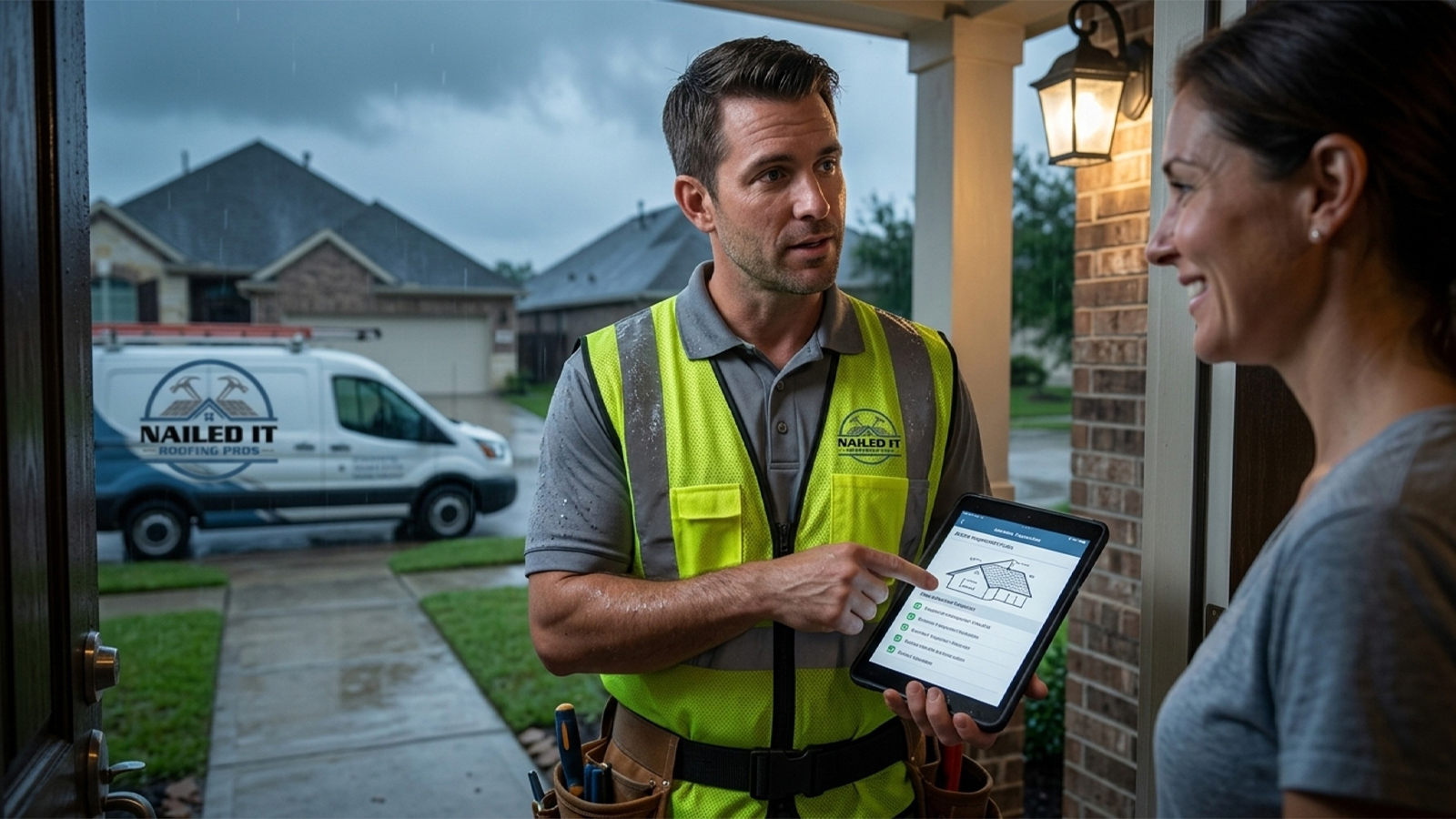
Water is dripping through your ceiling right now, and the storm outside isn’t stopping to let you think it over. That’s a real emergency, and there is a right next move. A roof leak during an active storm isn’t something to wait out or investigate yourself. The safest first step is to contact our team for emergency roof repair in Houston before the water finds its way any deeper into your walls, insulation, or framing. While we’re on our way, here’s what to do in the next few minutes and why calling a professional sooner rather than later protects both your home and your insurance claim.
Key Takeaways
- Move furniture and place a bucket or towels under the drip immediately, and stay away from any electrical fixtures near the water.
- Never climb onto a wet or storm-damaged roof to search for the leak yourself, no matter how tempting it feels.
- The ceiling stain almost never marks the actual entry point on the roof itself.
- Mold can begin forming behind drywall in as little as 24 to 48 hours, especially in Houston’s humidity.
- Call a professional roofer for a same-day, documented inspection before attempting any fix of your own.
Act Quickly, But Stay Safe: Steps to Take Right Now
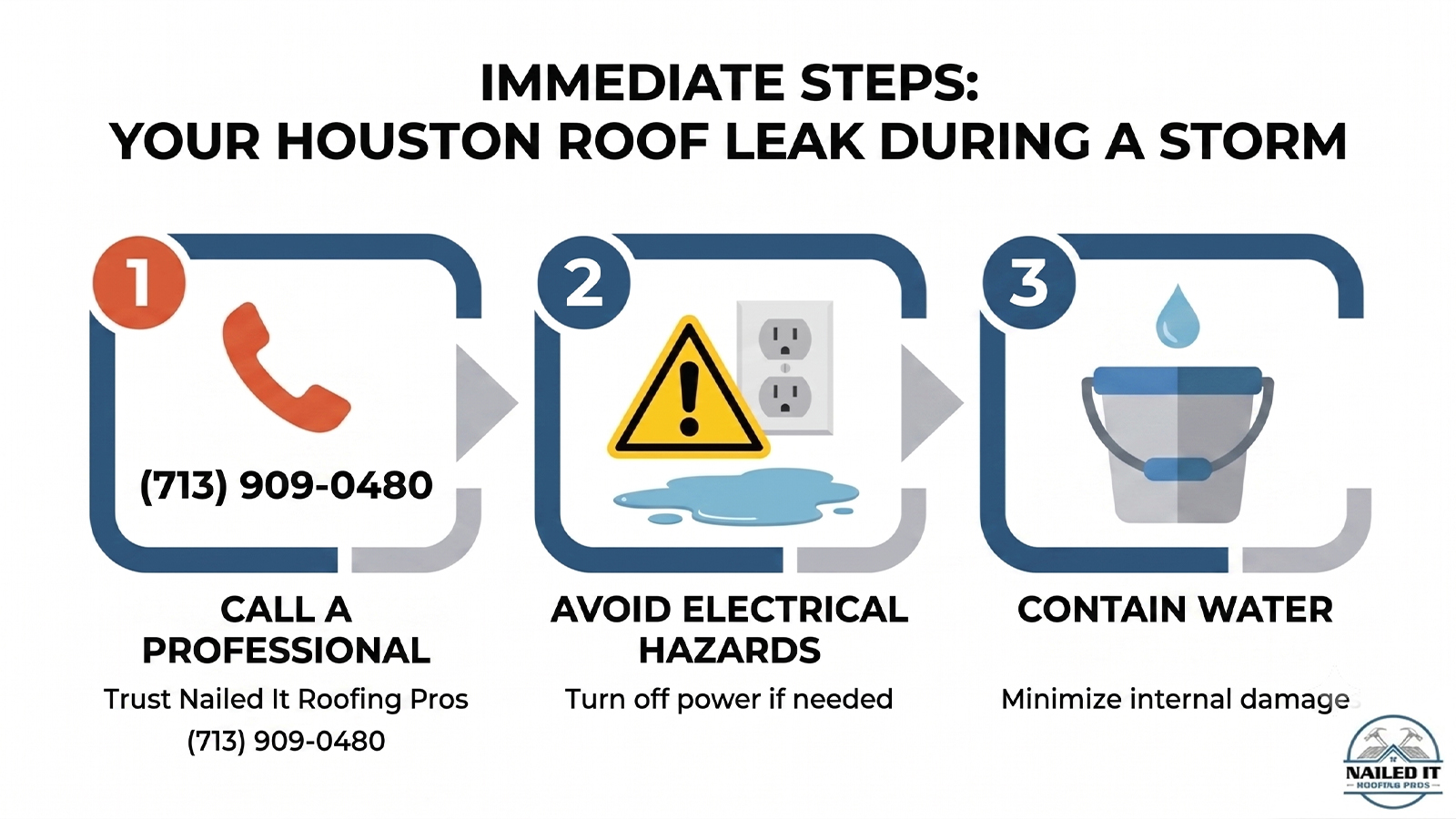
The goal in these first minutes isn’t to fix your roof. It’s to control the damage happening inside your home while you wait for a professional to arrive.
Contain the Water Indoors
Move furniture, electronics, and anything valuable away from the drip zone right away. Slide a bucket or a towel-lined container under the leak to catch dripping water and protect your floor from pooling and staining. None of this fixes the roof, but it buys your flooring and furniture some protection while help is on the way, and it can help prevent water damage from soaking into subflooring or drywall before a professional arrives.
Avoid Electrical and Structural Hazards
Stay clear of light fixtures, ceiling fans, and outlets anywhere near the leak. Water and electricity are a dangerous combination. If you can safely reach your breaker panel, cutting power to that circuit is a smart precaution. If the ceiling looks swollen or is sagging, keep everyone out of that room entirely.
Why Outdoor Fixes Have to Wait
It’s tempting to grab a tarp and head outside, but heavy rain and wind make roof access genuinely dangerous, even once the worst of the storm seems to pass. A tarp thrown over the wrong spot does nothing to stop water that’s already tracking through insulation and drywall. These interior steps are damage control, not damage repair. You’re buying time, not solving the problem, and that’s exactly the point where a lot of homeowners start second-guessing themselves. If that’s you right now, the instinct to call someone rather than climb up there yourself is the right one.
Why Chasing the Leak Yourself Can Turn Into a Bigger Disaster
Once the immediate mess is contained, the next instinct is to figure out where the water is actually coming from. This is where most homeowners run into trouble.
Why the Ceiling Stain Isn’t the Real Leak Point
Water rarely drips straight down from where it enters your roof. It travels along rafters, insulation, and framing, sometimes for several feet, before it finally shows up as a stain on your ceiling. Chase the visible spot and you’re often looking in the wrong place entirely, while the real point of entry keeps letting water in unnoticed.
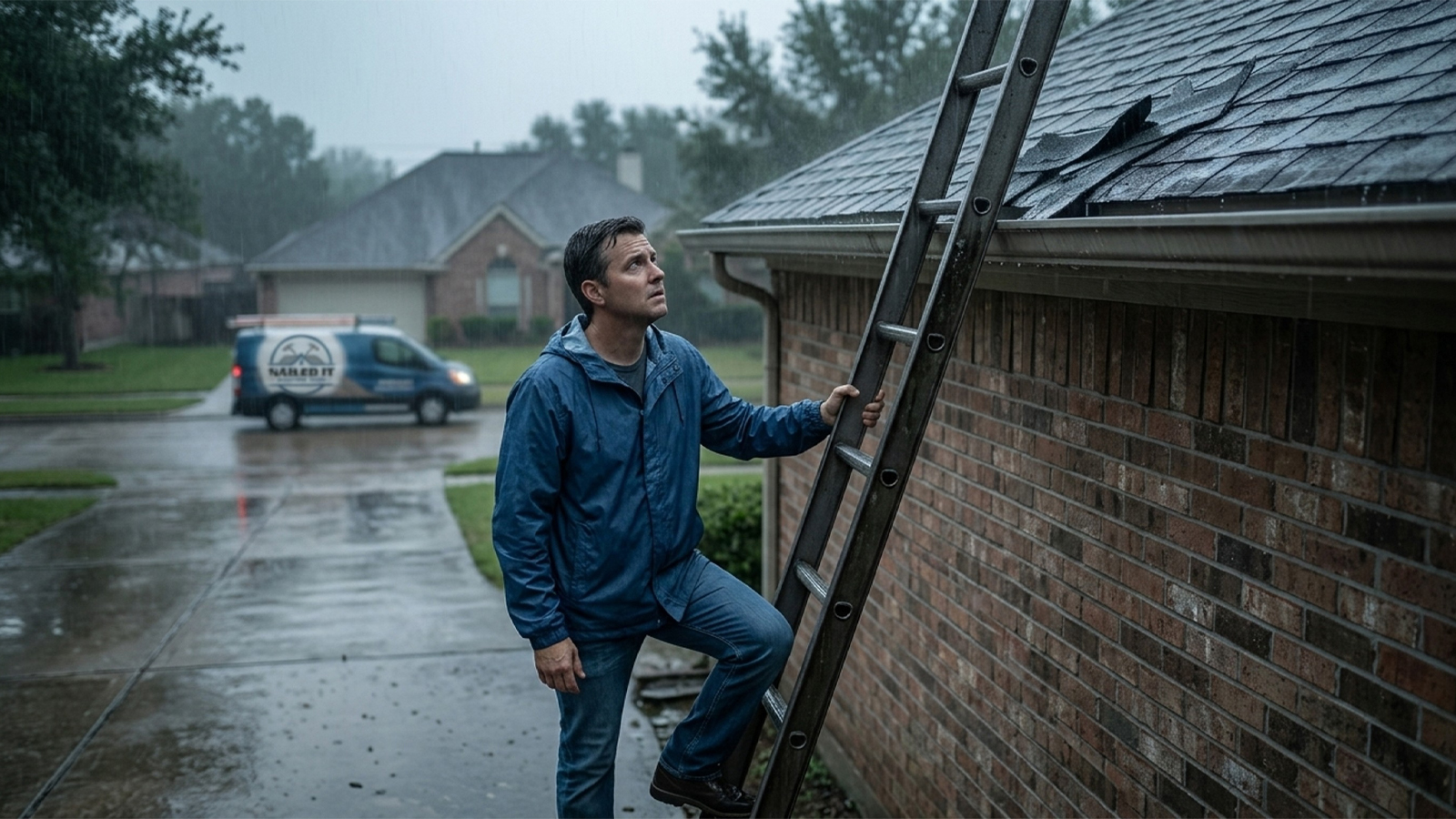
The Risk of Climbing a Storm-Damaged Roof
Climbing onto a wet, storm-battered roof to inspect shingle damage yourself is one of the fastest ways a bad day turns into a disaster. Insurers generally won’t cover injuries from a fall sustained during a self-directed DIY inspection. The risk is entirely yours to carry, and it’s not worth it when a trained inspector can assess the same damage from a safer vantage point and with the right equipment.
How Fast Mold and Rot Set In
Once water reaches your attic, it saturates insulation and drywall, which can lead to sagging ceilings and, in serious cases, ceiling collapse. Mold can begin forming in that saturated material within 24 to 48 hours, and Houston’s humidity speeds that timeline up compared to drier climates.
Here’s the gap between what a homeowner can typically see and what a trained roofer checks during a storm damage inspection:
| What a Homeowner Can Check | What a Trained Roofer Checks |
|---|---|
| Visible ceiling stain or drip | Attic decking and rafters for hidden moisture |
| Surface-level water pooling | Insulation saturation beyond what’s visible from below |
| Obvious missing shingles from the ground | Shingle lift or damage from wind and hail |
| General sense that “something’s wrong” | Flashing seals around vents, chimneys, and skylights |
| Gutter overflow during the storm | Gutter backups contributing to water intrusion |
If that list sounds like more than you want to guess at alone, that’s a fair reaction. It’s exactly why a same-day inspection exists.
Protecting Your Insurance Claim With a storm damage roof inspection
There’s a financial reason to call quickly, not just a safety one.
What Insurers Expect After Storm Damage
Most homeowners insurance policies require proof that you took reasonable steps to prevent further damage. That’s a specific standard, and a documented professional inspection satisfies it in a way that a few phone photos generally don’t. In practice, insurers are typically looking for a few specific things:
- Timely notice that damage occurred and that you contacted a professional promptly
- Evidence you took reasonable steps to prevent further damage, like containing water indoors
- Photos or a written report documenting the damage before any repairs began
- A clear record of when the storm occurred relative to when the damage was documented
Why Photos Alone Aren’t Enough
Texas policies often carry a separate windstorm deductible, and how a claim gets classified can depend on accurate, professional documentation of the roofing system and the damage it sustained. Texas homeowners generally have up to two years to file a windstorm or hail claim, but insurers still expect prompt mitigation right after the storm.
Waiting days to document damage can weaken your case regardless of that filing window. Applying sealant or a patch yourself before an inspection can also complicate things if an adjuster can’t verify the original damage.
How a Same-Day Inspection Strengthens Your Claim
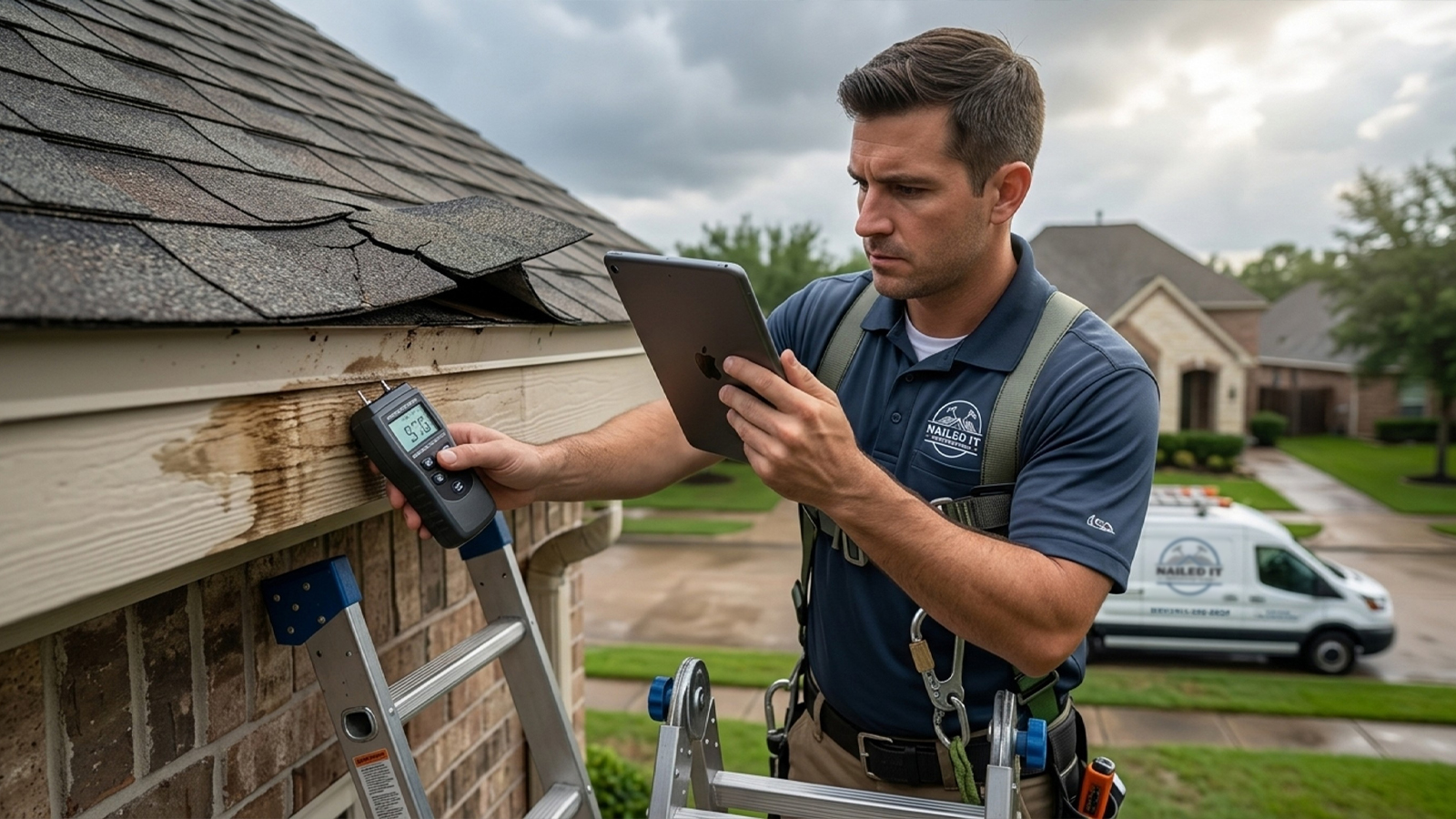
A same-day storm damage roof inspection creates the paper trail insurers expect: photos, moisture readings, and a written report. One Houston homeowner we worked with had a small ceiling stain after a spring storm and assumed it was minor. Our inspection found saturated insulation and lifted shingles near a valley that weren’t visible from inside. Because we documented it the same day, the repair was covered and didn’t turn into a full roof replacement months later. If you’re weighing whether your situation is “bad enough” to call, that story is a fair benchmark. It rarely looks urgent from the ceiling up.
Conclusion – When To Call A Professional Roof Company For a Leaking Roof
You don’t need a longer checklist right now, just one clear next step. Contain the water, stay away from the ceiling and any electrical fixtures nearby, and let a professional handle the rest.
Call (713) 909-0480 now for a free, same-day emergency roof assessment. We’ll inspect the damage safely, provide temporary protection, and document everything your insurance company needs, so this stays a repair instead of becoming a much bigger problem.
FAQ
Is it safe to go on my roof during or after a storm?
Climbing onto your roof during or right after a storm is not safe, even once the rain has stopped. Wet shingles, saturated decking, and lingering wind gusts create real fall risk, and structural damage may not be visible until it’s too late. A professional roof inspection is the safer alternative for identifying storm damage.
Will my homeowners insurance cover a roof leak caused by a storm?
Most homeowners insurance policies cover sudden roof leak damage caused by a storm, though coverage details vary by policy. Texas homeowners often have a separate windstorm deductible, and documentation from a professional inspection helps support the claim and confirm the damage was storm-related.
How do I stop a roof leak temporarily until help arrives?
Buckets, towels, and moving belongings away from the drip can slow interior damage, but these steps don’t address the source of the leak. Temporary containment buys time only, it doesn’t replace a professional roof repair.
How long does it take for mold to grow after a roof leak?
Mold can begin growing within 24 to 48 hours of water exposure behind drywall and insulation. Houston’s humidity accelerates this timeline, which is why a same-day professional response matters more here than in drier regions.
Why isn’t the water stain on my ceiling directly under the actual leak?
Water typically travels along framing, rafters, and insulation before it drips through your ceiling, so the stain rarely sits directly beneath the true point of entry on the roof. Finding the actual source requires a trained inspection rather than guesswork.
Should I patch the leak myself or call a roofing contractor?
Roofing tape or sealant might feel like a reasonable stopgap, but an unverified DIY patch can mask the real damage and complicate insurance documentation later. Established roofing companies can identify and repair the source correctly while preserving your claim.
How much does emergency roof repair cost in Houston?
Emergency roof repair costs in Houston depend on the extent of the damage, the materials involved, and whether insurance is covering part of the work. A free same-day assessment is the fastest way to get an accurate number for your specific situation.
What should I do first when my roof suddenly starts leaking during a storm?
The first step when your roof suddenly starts leaking is to contain the water indoors with buckets or towels, move furniture out of the way, and avoid anything electrical near the leak. Once that’s handled, calling a professional for a same-day inspection is the next step, and it isn’t optional.