
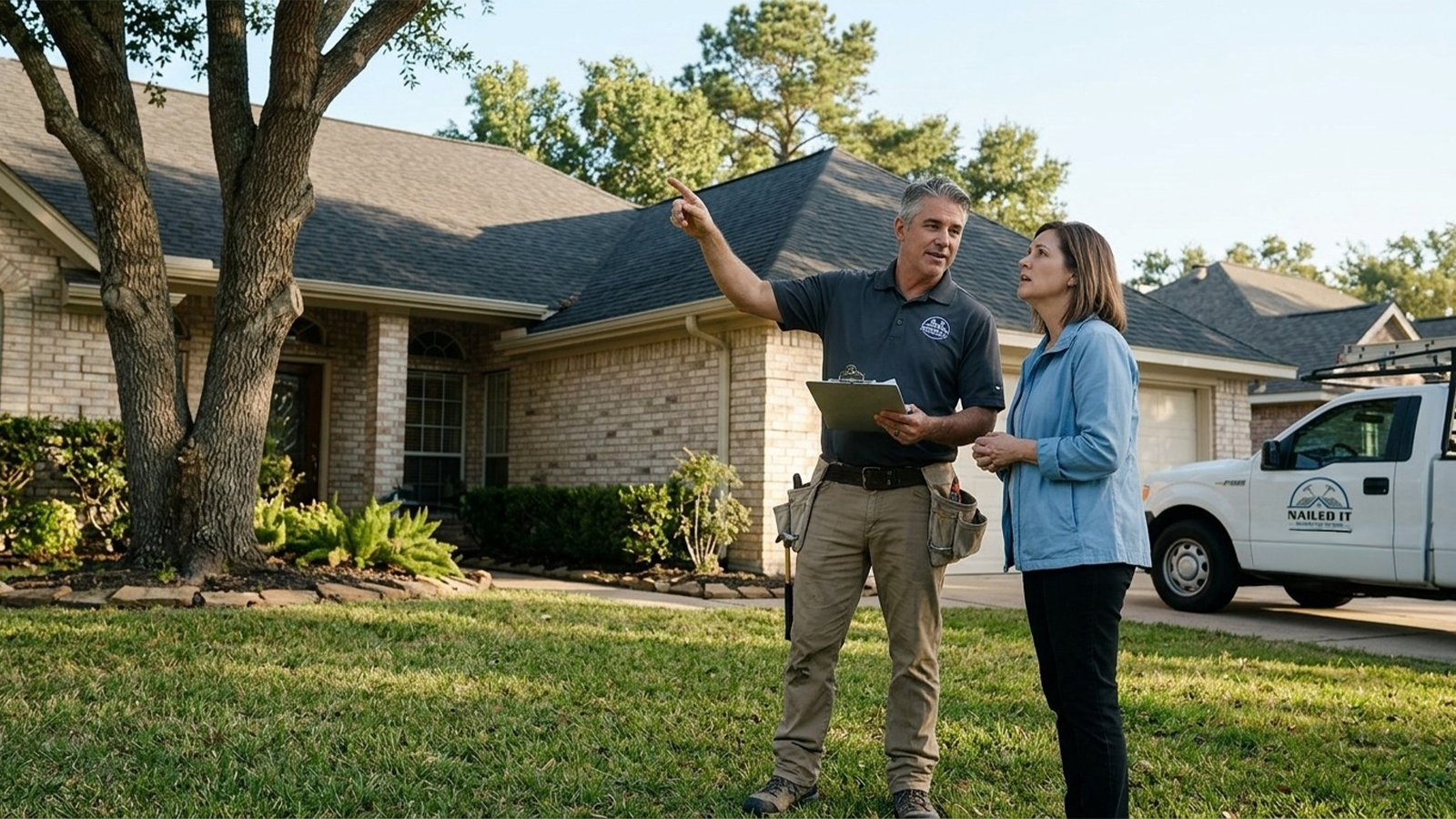
That visible dip running across your roofline isn’t your imagination, and it isn’t something a Houston homeowner should just watch and wait on. A sagging roof is almost always a sign that something structural underneath, the decking, the rafters, or the trusses, has already started to fail.
That’s why our team at Nailed It Roofing Pros treats every residential roof repair call involving a sagging roof as a priority, not a routine maintenance question. Before you climb a ladder or start Googling temporary fixes, it helps to understand what actually causes a roof to sag, and why the answer almost always requires a trained eye rather than a weekend project.
Key Takeaways
- A sagging roofline is a symptom, not the problem itself. Rotted decking, water-soaked rafters, or failed trusses are usually the real cause, and none of that is visible from the ground or the attic floor.
- Climbing onto a sagging roof to inspect it yourself carries real risk. Weakened rafters and decking can give way without warning.
- Moisture trapped behind a sag has often been sitting there for months or years, which means mold and wood rot may already be spreading faster than the visible dip suggests.
- Insurance companies typically require documented proof of the original cause, whether that’s storm damage, age, or poor installation, before they’ll cover repairs. A DIY patch job can jeopardize that claim.
- The longer a sag goes unaddressed, the more likely a repair turns into a full roof replacement, and the more likely you’ll miss your insurance company’s claim window entirely.
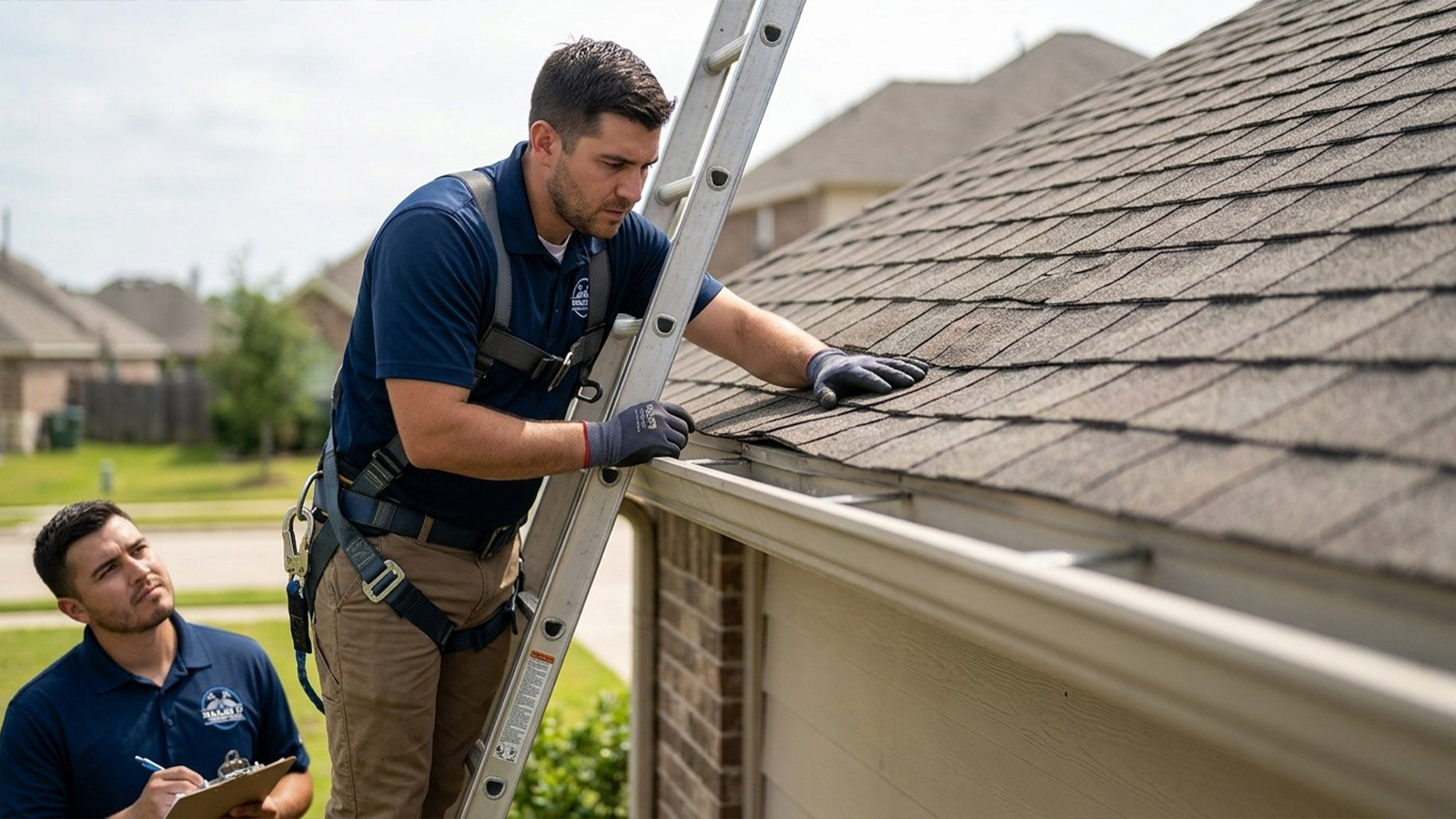
What Are The Common Causes of Roof Sagging in the First Place?
A roof doesn’t sag overnight. It’s usually the end result of a slow-moving problem that’s been building for years, quietly weakening the structure underneath your shingles. Understanding the common causes of roof sagging can help you catch the warning signs before the structural integrity of your home is compromised.
Trapped Moisture, Water Damage, Rotted Decking, and Failed Trusses
Houston’s humidity and heavy rain seasons are hard on roofing systems. When water finds its way past aging shingles, damaged flashing, or poor attic ventilation, it soaks into the wood decking and rafters below, and over time that constant moisture exposure softens the wood until it can no longer hold its shape. The decking is the layer of wood sheathing directly under your shingles, and the trusses are the framework holding the entire roof structure together. When either one rots or weakens, the roof loses its ability to stay level. This is one of the more serious causes of sagging because it affects the structural bones of your home, not just the surface, and it often signals structural problems that have already spread well beyond what’s visible.
We recently inspected a home in Houston where the owners had noticed a slight dip near the ridge for almost a year and assumed it was just the house settling. Once we got into the attic, we found the decking above one section had been absorbing moisture from a slow flashing leak for months, and two rafters had already softened enough to lose most of their load-bearing strength. Because the homeowners called before the sag worsened, the repair stayed contained to that one section instead of spreading into a full roof replacement.
Aging Materials and Undersized Framing in Older Homes
Some sagging traces back to how the roof was built in the first place. Undersized rafters, framing that wasn’t rated for the actual load of the roofing material, or shortcuts taken during a previous roof job can leave a roof more vulnerable to sagging years down the line, even without a single major storm involved. Older homes across Montgomery County often carry original 1980s-2000s decking and framing that’s now reaching or past its intended lifespan. Every roofing system has a lifespan, and as shingles age they lose their ability to shed water effectively, which opens the door for more moisture intrusion. Combine that with decades of Houston heat cycling the materials, and it’s easy to see how an aging roof system becomes more prone to sagging without one specific triggering event.
Storm Damage and Excessive Weight
Houston sees its share of severe weather, and heavy wind or hail events can crack a roof deck, lift shingles, or loosen flashing in ways that aren’t obvious from a quick look. Standing water after a storm, layered shingles, or the added weight of debris can also stress a roof structure that’s already been quietly weakening. If your sag appeared or worsened after a recent storm, that timeline matters, especially for insurance purposes.
Why a Sagging Roof Isn’t a DIY Inspection
It’s tempting to grab a flashlight, head into the attic, or even climb onto the roof to see how bad things really are. We understand the instinct, but if your roof is sagging, that’s exactly the kind of situation where a hands-on look can do more harm than good.
The Damage Is Rarely Visible From Where You’re Standing
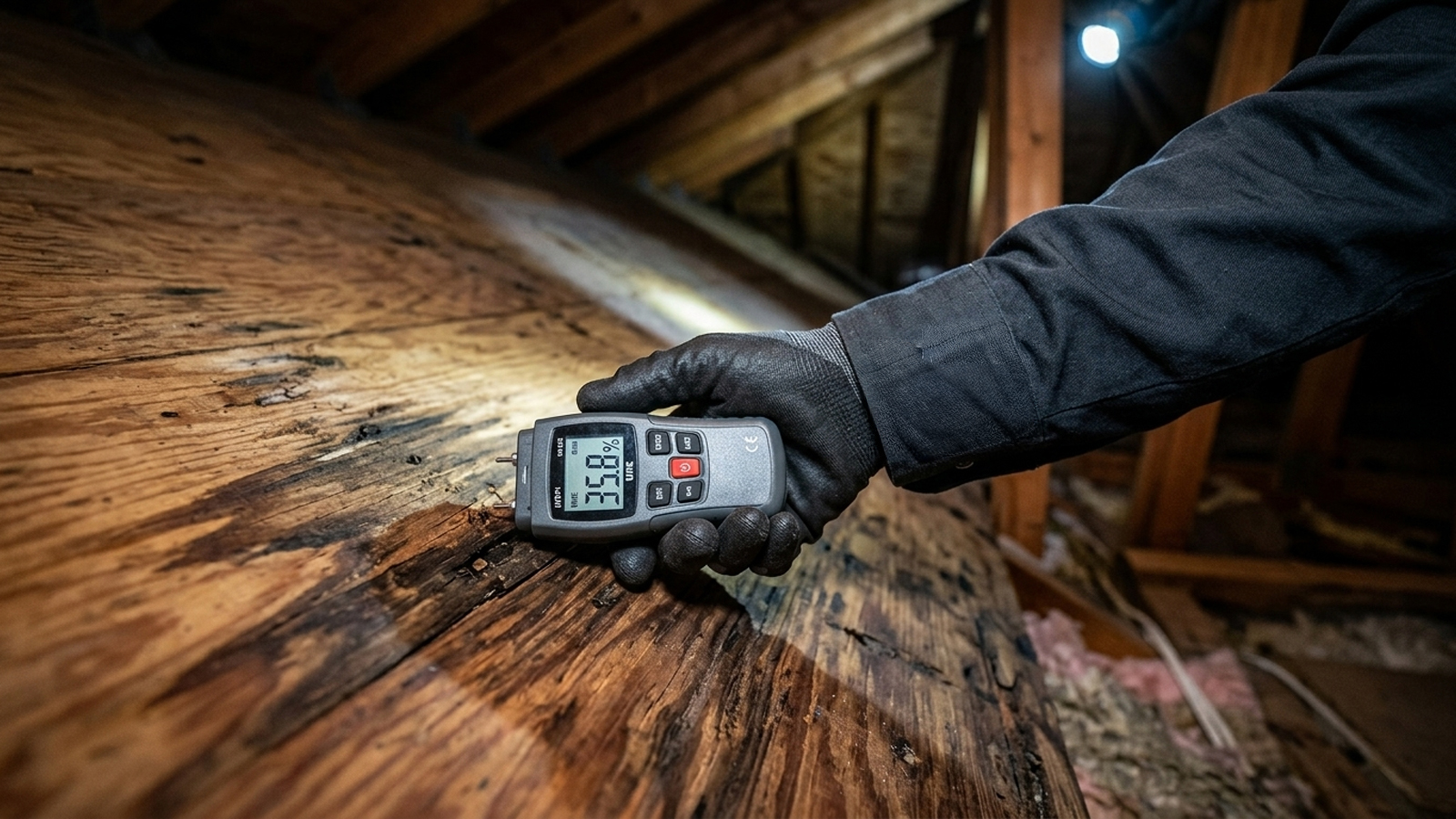
Sagging is a surface symptom of a structural problem happening underneath. You might see the dip, but you won’t be able to tell from the attic floor or the ground how far the rot has spread, whether the trusses are still load-bearing, or how many layers of the roof deck are affected. That kind of assessment takes training and, often, specialized tools, which is exactly what a roof inspection from a trained roofer is built to catch.
Walking a Weakened Roof Is a Real Risk
If the decking or rafters under a sagging section have already softened from water damage, that section may not support your weight the way the rest of the roof does. Sudden, localized collapse is a genuine possibility, which is why we’d rather come take a look ourselves than have you find out the hard way.
Temporary Fixes Mask the Problem, They Don’t Solve It
Shimming a rafter or adding a support beam might make the sag look less dramatic for a while, but if the root cause, whether that’s moisture intrusion, undersized framing, or an overloaded roof, isn’t addressed, the underlying damage keeps spreading underneath the fix. It does nothing to restore the structural integrity of the roof, and it can complicate an insurance claim if the documentation of the original cause was never established before the patch job went in.
What Happens If You Wait to Call a Roofing Professional
We’re not in the business of scaring homeowners into decisions, but it’s worth being honest about the timeline here, because waiting has real consequences.
- Every month a sag goes unaddressed, trapped moisture has more time to spread further into the decking and framing.
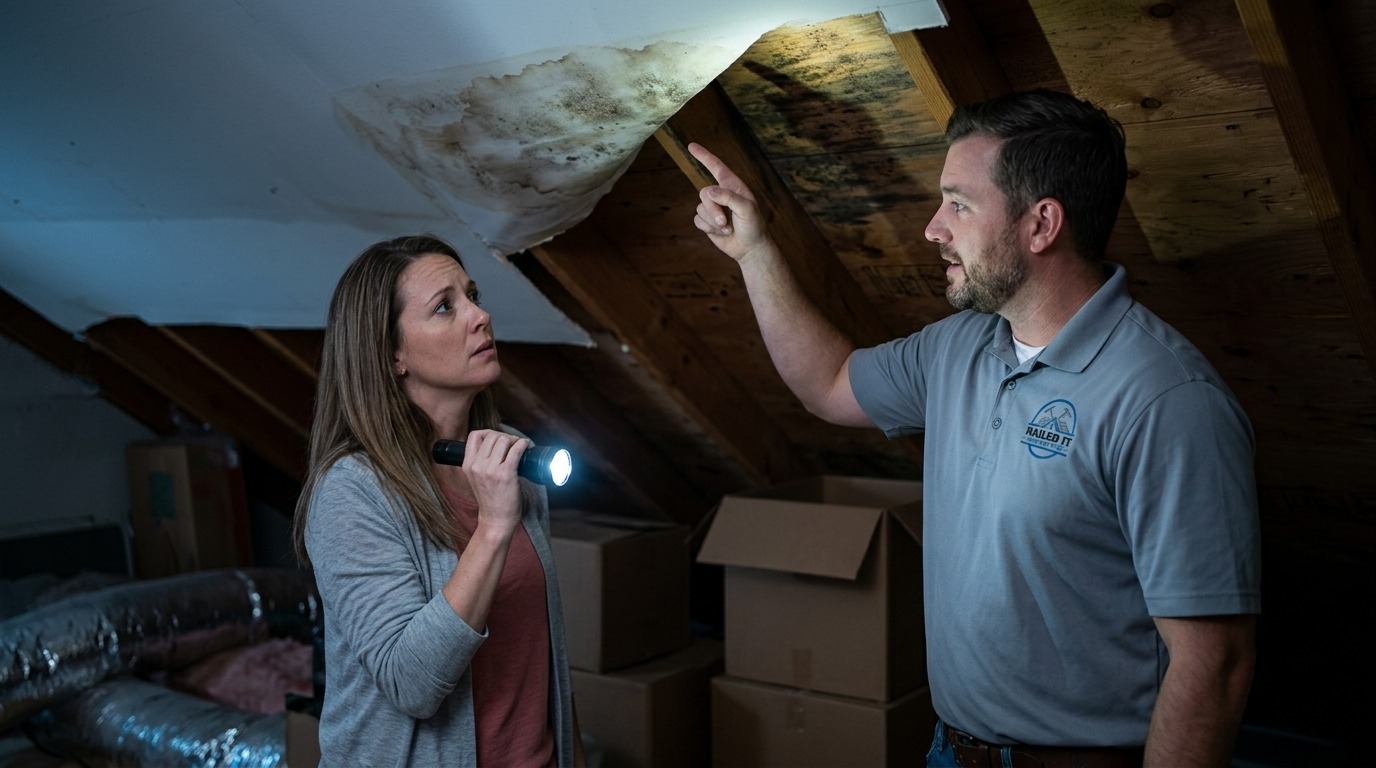
- Mold can begin colonizing within 48 to 72 hours of sustained moisture exposure, which means what starts as a structural issue can become a health concern inside your attic and living space.
- Left unaddressed long enough, a structural sag can progress toward a partial or full roof collapse, particularly during a heavy Texas rain or wind event.
- Most insurance policies have a claim window, often around 12 months from the storm that caused the damage. Miss that window, and you may end up paying entirely out of pocket for something that would have been covered.
Repair or Replacement: What Determines the Difference
| Factor | Points Toward Repair | Points Toward Full Replacement |
|---|---|---|
| Damage location | Isolated to one section or truss | Spread across multiple roof segments |
| Decking condition | Localized soft spots | Widespread rot along the roof deck |
| Roof age | Newer roofing material, otherwise sound | Roof already near end of expected lifespan |
| Cause | Single flashing or ventilation issue | Long-term, undocumented moisture intrusion |
None of this means panic. It means a sagging roof deserves a phone call sooner rather than later, so you have real information instead of a growing list of worries. A qualified roofing contractor will check the extent of the damage, confirm whether rot has reached the roof deck, and give you a straight answer on repair versus replacement before the sag has a chance to spread further.
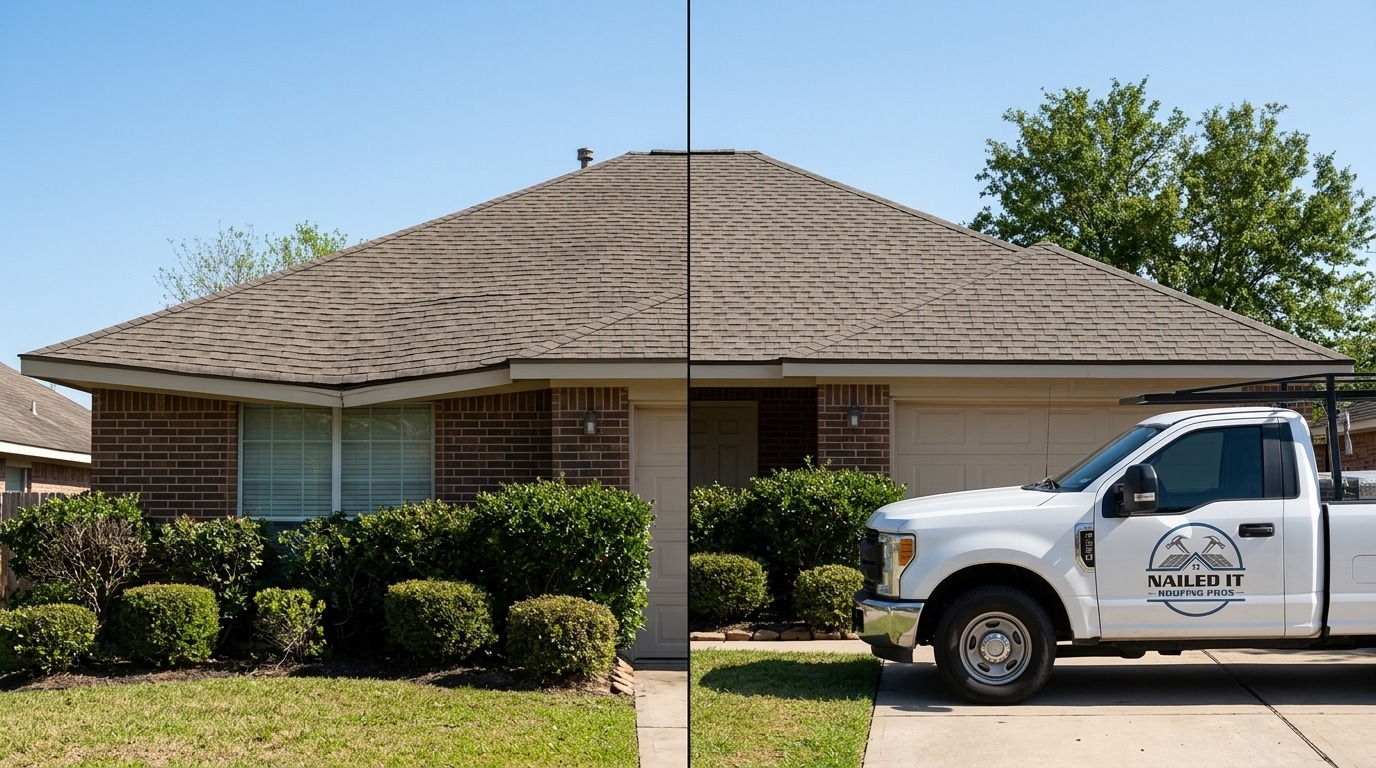
Conclusion – Cause of a Sagging Roof And How a Roofing Contractor Helps
A sagging roof is never just cosmetic. It’s your roof telling you that something underneath, whether that’s the decking, the framing, or the moisture barrier, has already failed, and only a trained eye can tell you how far it’s gone. regular roof inspections and prompt attention to leaks are what actually keep a sagging roofline from turning into something far more expensive, especially since water damage left unaddressed can quietly compromise rafters and decking long before any dip becomes visible from the ground.
We serve homeowners across Houston, Magnolia, The Woodlands, Tomball, and Conroe, and we’d rather give you a straight answer now than have you guessing at repair costs on your own. If you’re noticing a dip in your roofline, call Nailed It Roofing Pros at (713) 909-0480 for a free, no-obligation roof inspection. We’ll identify the exact cause of the sag and tell you plainly whether you’re looking at a simple repair or a full replacement, before it has a chance to get worse.
Frequently Asked Questions
Is a sagging roof always a sign of a serious problem?
A sagging roof always points to some level of moisture damage or structural stress underneath, even when the dip looks minor. The only way to know how serious it is, is to have someone experienced take a look, both from the attic and from the roof surface itself.
How much does it cost to fix a sagging roof?
Sagging roof repair costs depend entirely on the cause and extent of the damage. A localized area of rotted decking is a very different repair than widespread truss failure, which is part of why we offer a free inspection first, so you get a straight answer based on your specific roof rather than a guess.
Can I just add a support beam to stop the sag from getting worse?
A support beam can reduce how the sag looks temporarily, but it doesn’t address whatever causes a sagging roof in the first place. If moisture is still getting in, the damage keeps spreading underneath that temporary fix, which usually means a bigger repair later.
Will my insurance cover a sagging roof repair?
Insurance coverage for a sagging roof depends on the cause and how well it’s documented. Storm-related damage is often covered if you’re still within your policy’s claim window, but insurers typically want proof of the original cause, and a professional inspection helps establish that documentation before you file.
How quickly should I get a sagging roof looked at?
A sagging roof should be looked at as soon as you notice it, since moisture and rot spread faster than most homeowners expect. Mold can begin forming within 48 to 72 hours of trapped moisture exposure, and every month of delay increases the chance a repair turns into a full replacement. If your roof might be sagging even slightly, it’s worth having a professional roofer confirm the cause before it worsens.
If you’re seeing a dip in your roofline anywhere in Houston, Magnolia, The Woodlands, Tomball, or Conroe, give us a call at (713) 909-0480. We’re happy to take a look and tell you exactly what we find.