
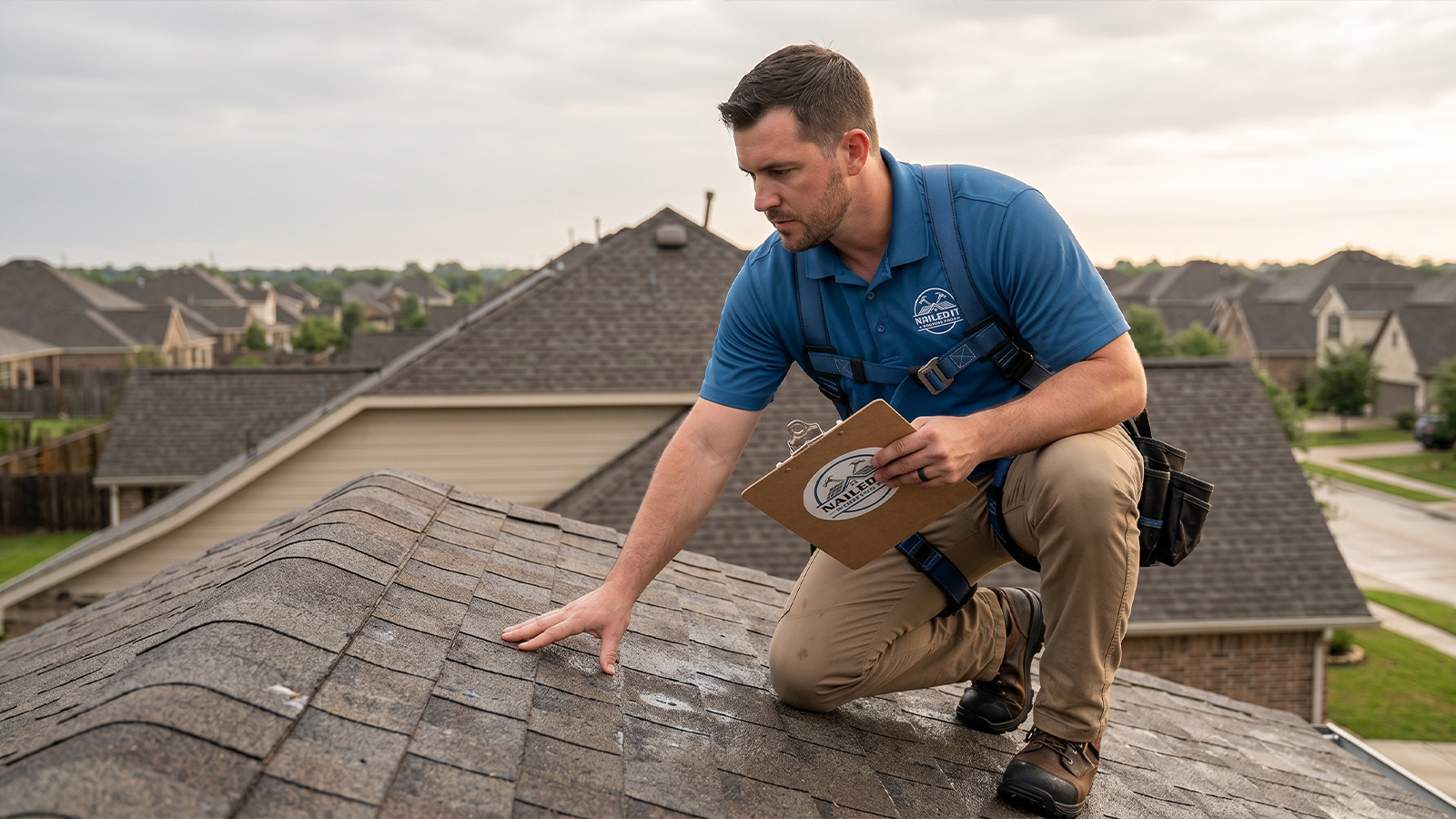
The storm rolled through. You walked outside, scanned the roofline, and saw nothing obviously wrong. No missing shingles, no gutters hanging loose. It’s tempting to call that a win and move on — but a professional roof inspection is exactly what your home needs right now, before the damage you can’t see turns into a claim you can’t file. At Nailed It Roofing Pros, we inspect roofs across Magnolia and the surrounding area after every major weather event, and homeowners who schedule their roof inspection service promptly protect themselves financially. The ones who wait often wish they hadn’t.
Key Takeaways
- Most hail and wind damage is not visible from the ground and requires a trained inspector on the roof surface to detect.
- Texas insurance carriers require timely, documented inspection reports, and your personal observations do not satisfy the claims process.
- Delays after a storm can turn a fully covered repair into an entirely out-of-pocket expense.
- Mold and structural moisture damage can begin within 48 hours of an undetected roof intrusion.
- A professional inspection from a local roofing contractor is the only documentation that carries real weight with an insurance company.
What You Can (and Cannot) See From the Ground
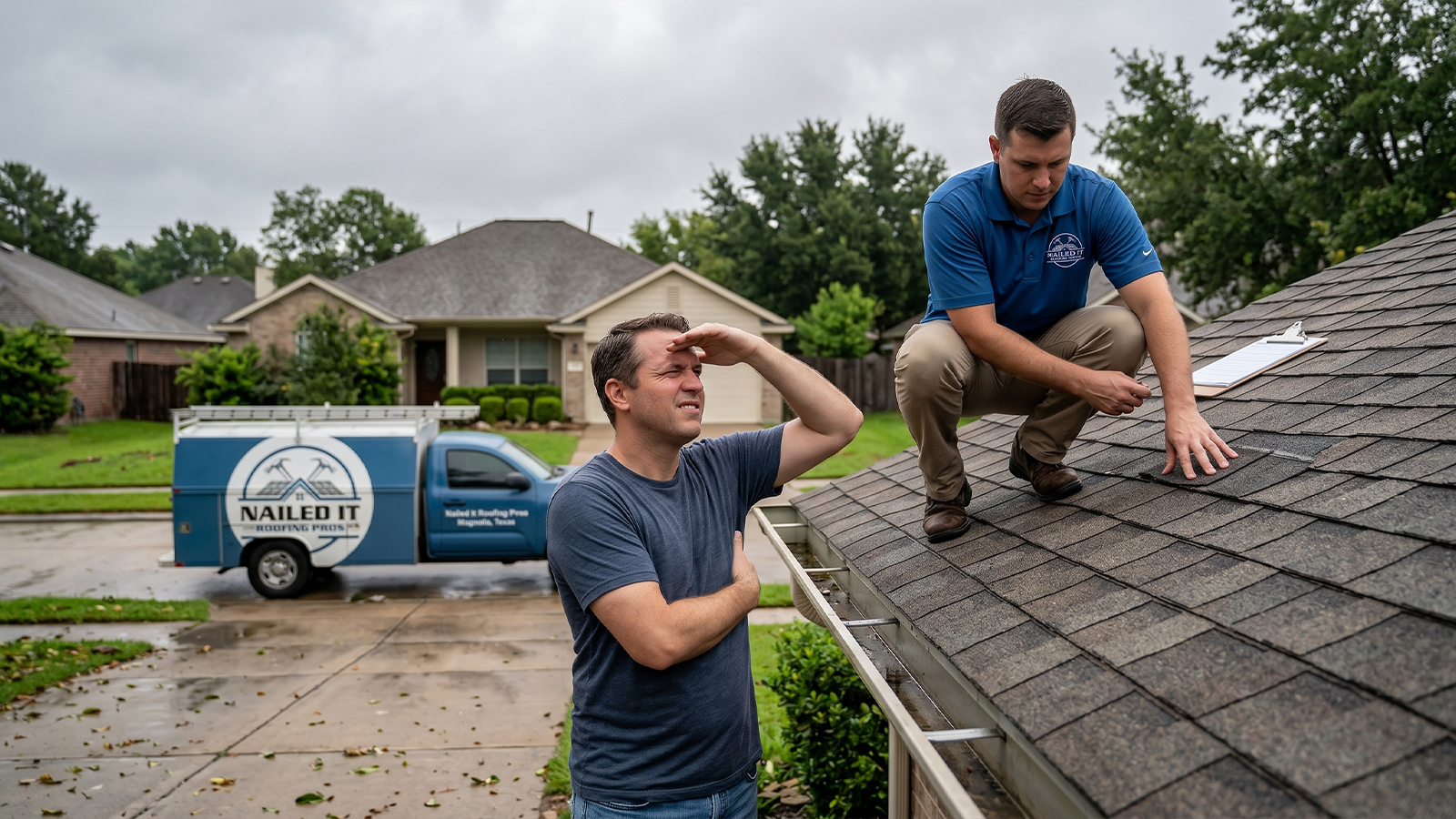
You stepped outside after the storm. Roofline looked normal. No missing shingles, no gutters hanging loose, no debris on the porch. That instinct to look and judge is reasonable — if something were catastrophically wrong, you’d expect some sign of it.
Here’s the problem. The damage most likely to trigger a leak, a denied insurance claim, or a structural failure months from now is exactly the damage a homeowner standing in the driveway will never see.
High winds can lift shingles just enough to break the factory adhesive seal without shifting them visibly. The shingle sits exactly where it was. The roof looks fine. But the bond that kept moisture out is gone, and every rain event from this point forward reaches the deck beneath.
Hail works differently but produces the same invisible result. When hailstones strike an asphalt shingle, they displace the protective granule layer without cracking the surface. The shingle looks intact. But the asphalt beneath is now exposed to UV degradation, and water infiltration has already begun. A ceiling stain may not appear for sixty to ninety days — long after the insurance window has narrowed.
Other failure points are never detectable from street level. Cracked flashing around chimneys, fractured shingle matting beneath an undamaged surface, broken adhesive seals along ridge lines — none of it shows from the driveway. Visible damage from the ground is simply not a reliable standard for deciding whether your roof needs attention after a storm.
Magnolia sits squarely in Texas’s most active hail corridor. Storms moving through Montgomery County regularly produce hail that causes shingle damage with no obvious surface marks. That’s not an unusual outcome here. It’s the typical one.
If you’ve just come back inside after checking the yard and told yourself the roof looks okay, that’s the exact moment to make the call — not because something is definitely wrong, but because the only way to actually know is to get a trained inspector up there.
The Types of Roof Storm Damage Pros Actually Find
A trained inspector examines your roof for evidence a homeowner walking the driveway won’t catch. Understanding what they find is the fastest way to understand why a professional inspection matters.
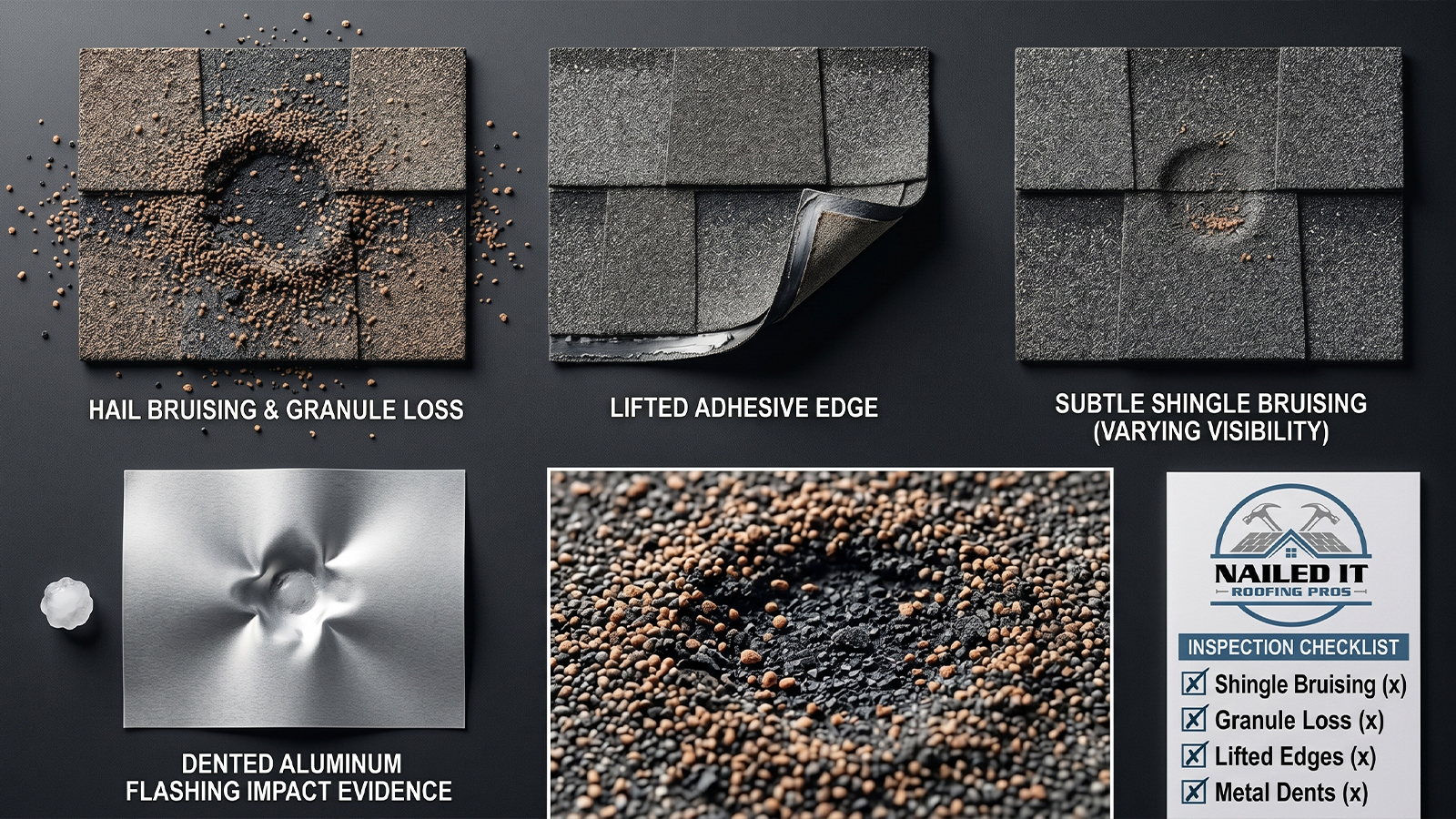
Granule loss from hail impact is one of the most common findings. Those granules protect the asphalt layer from sun and water. Once displaced, the shingle ages fast even if no immediate leak develops — and the roof’s remaining lifespan can be shortened by years from a single hail event.
Dents in gutters, downspouts, and metal flashing serve as evidence of hail size and impact force. When an inspector finds dents in soft metal surfaces at eye level, those marks confirm the hail was large enough to cause hail damage to the shingles overhead, even when the shingles appear intact. Missing shingles from high winds are sometimes visible from the ground, but shingles lifted by wind and settled back into nearly their original position are far more common and nearly impossible to detect without getting on the roof.
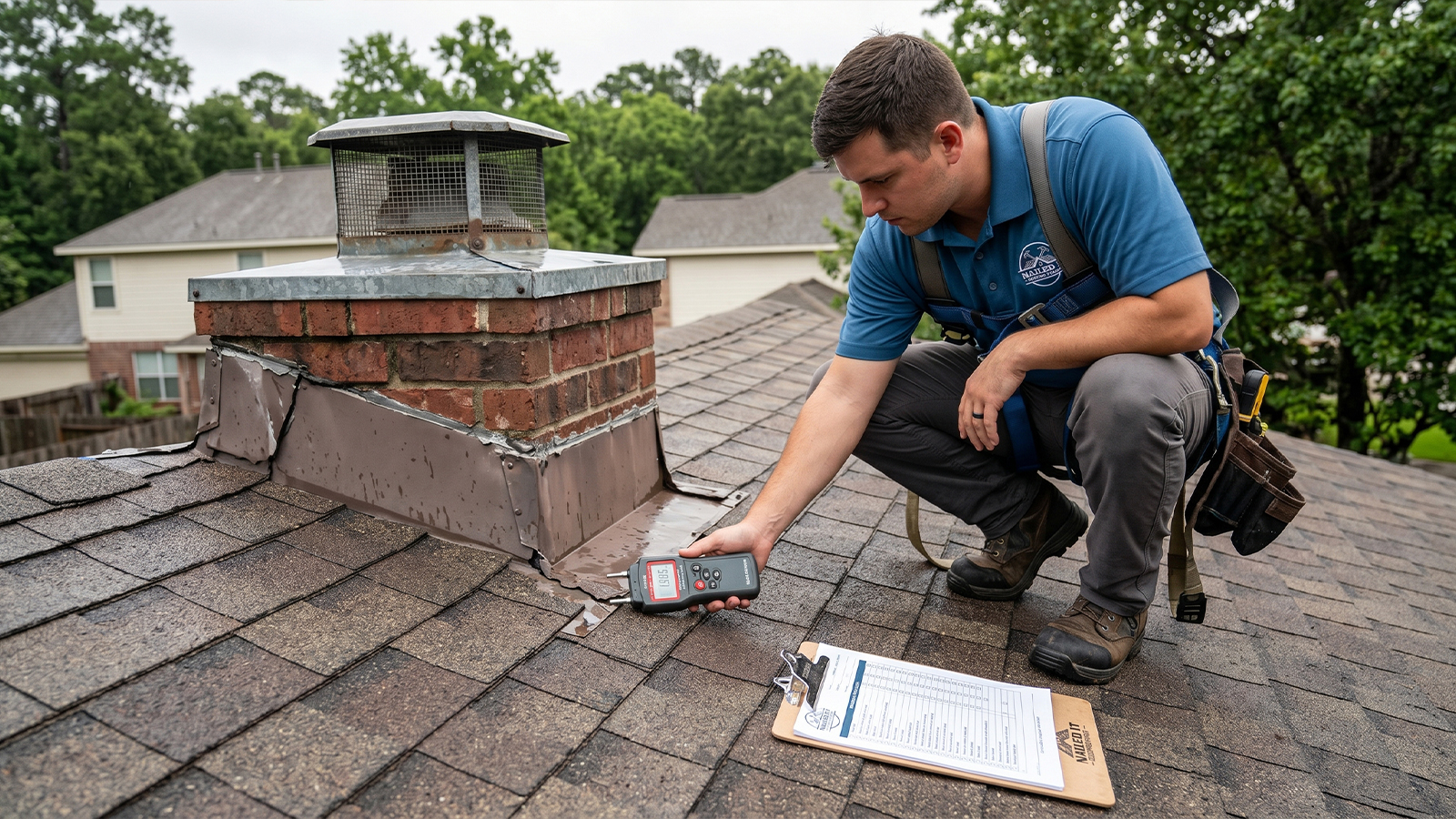
Flashing failures deserve particular attention. Cracked or separated flashing around chimneys, vents, and roof penetrations is among the leading causes of interior leak events after a storm, and it is never visible from below.
| Damage Type | Visible From Ground? | Risk If Missed |
|---|---|---|
| Missing shingles | Sometimes | Immediate water intrusion |
| Hail-bruised granule loss | Rarely | Accelerated aging, delayed leak |
| Lifted or unsealed shingles | Almost never | Deck exposure, recurring leaks |
| Cracked flashing | Never | Interior water damage, mold |
| Gutter dents as hail markers | Yes | Insurance documentation gap |
| Attic moisture intrusion | Never | Mold, structural rot |
Southeast Texas heat and humidity accelerates every one of these problems. What might take months to compound in a drier climate can become a serious mold issue within weeks in Magnolia’s summer conditions. That timeline starts the moment the storm passes.
Why the Insurance Clock Starts the Moment the Storm Ends
This is one of the most misunderstood facts about roof storm damage claims in Texas. Most homeowners insurance policies enforce strict reporting windows after a weather event. Waiting weeks gives the insurance company legitimate grounds to classify damage to your roof as pre-existing wear and tear rather than storm-related loss.
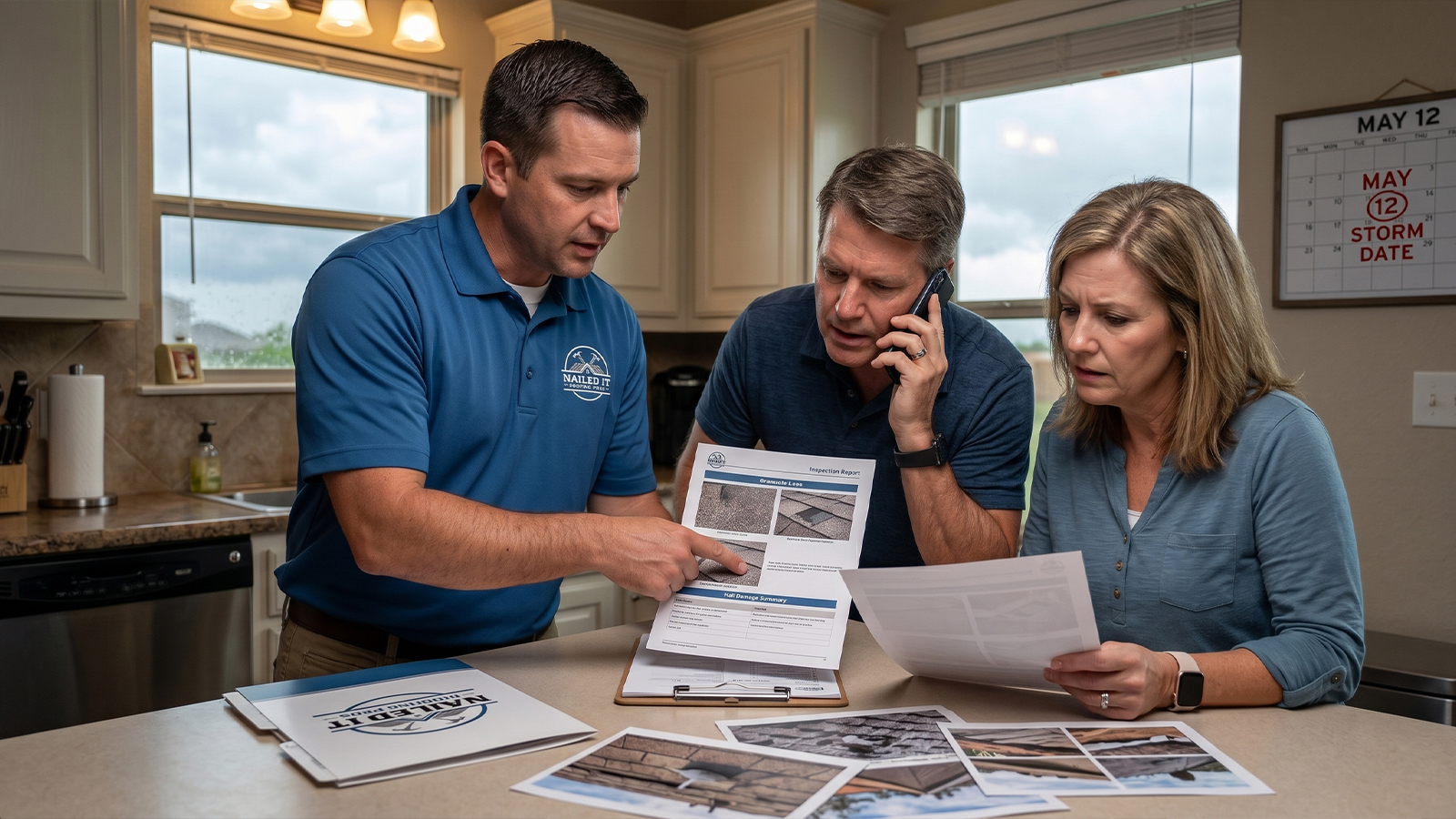
The documentation requirement is specific. Texas carriers require a documented, timely inspection report to validate a storm-related claim. Your own photographs and observations carry no weight in a denial appeal. If that report doesn’t exist, or was created weeks after the storm, the claims process becomes significantly harder to get through.
The financial stakes are real. A covered roof repair typically costs the homeowner only their deductible. An undocumented, denied claim can mean a full out-of-pocket roof replacement running well into the thousands. In neighborhoods across Magnolia, homeowners who experienced the same weather event sometimes see completely different outcomes — some approved for full replacements, others denied. The difference is almost always documentation timing and inspection report quality.
What Your Insurance Agent Needs From You
Your insurance agent and insurance company require a written report from a qualified roofing contractor — not a homeowner self-assessment. That report documents what was found, establishes the cause as storm-related, and gives the adjuster the basis for approving a covered repair. Scheduling an inspection immediately after the storm creates the timestamp the carrier needs. Insurance policies vary in their exact windows, but earlier documentation is always stronger. Always.
What a Professional Roof Inspection Actually Covers
Many homeowners hesitate because a free inspection from a roofing company feels like a sales pitch. That’s a fair concern — and worth addressing directly.
A legitimate professional roof inspection covers the full shingle field for granule loss and impact bruising, all flashing points, ridge caps, valleys, gutters and downspouts for hail dents, fascia boards, and the roof deck from the attic side for early moisture intrusion. The output is a written damage report with photographic documentation — the deliverable that matters for repair decisions, for your insurance claim, and for your own records.
A reputable roofer will tell you honestly if they find nothing. A clean report after a storm isn’t a wasted appointment. It’s documentation that your roof was inspected and found sound, which carries real value the next time a storm comes through.
The storm chaser problem is real in Texas. After any major storm, out-of-town contractors appear quickly and move on just as fast. Working with a local roofing contractor who has a verifiable presence in Magnolia is the straightforward way to avoid that risk. Nailed It Roofing Pros is based here, not following the weather maps from somewhere else.
What Happens If You Wait
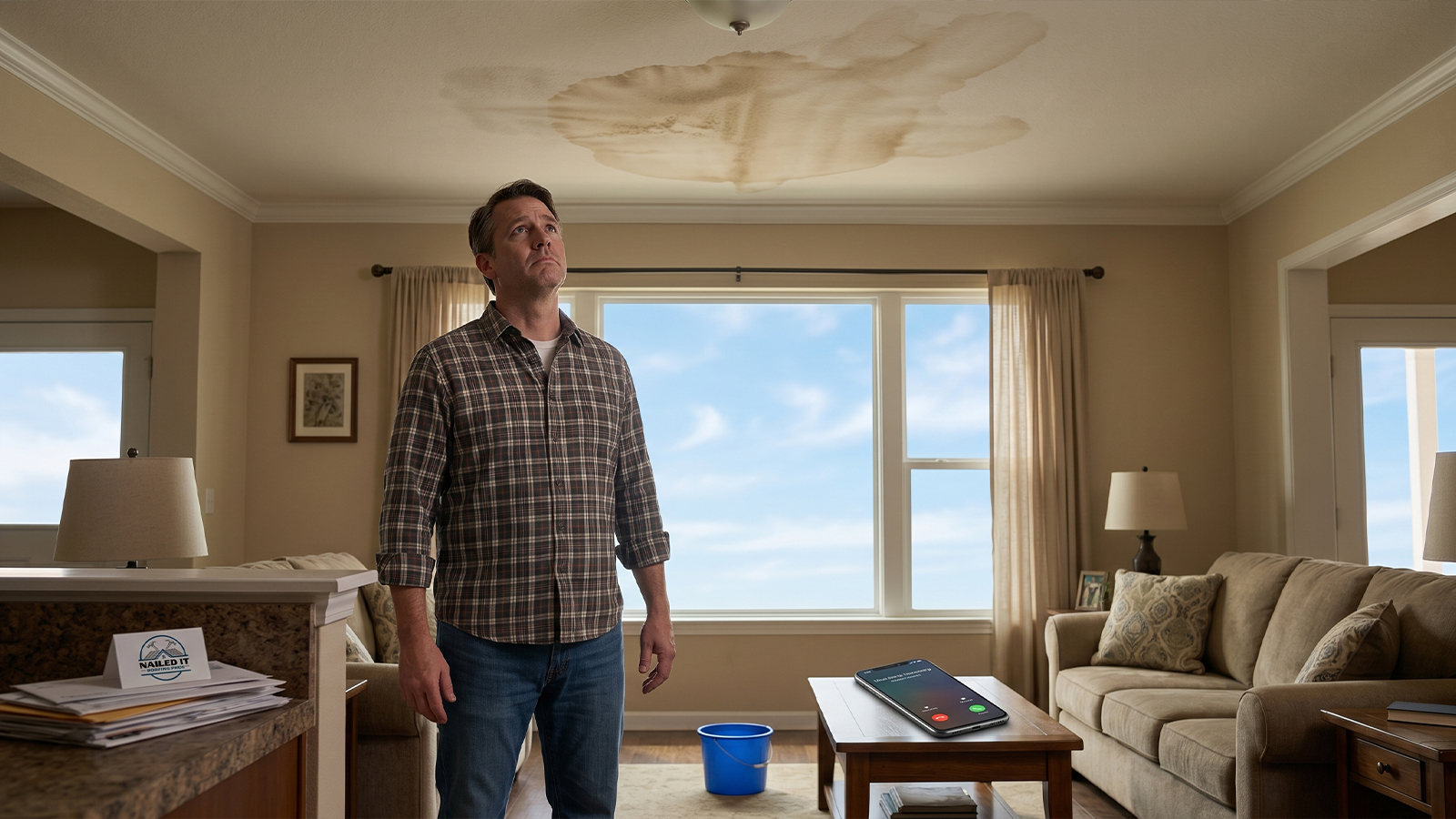
A small flashing gap or an unsealed shingle allows moisture into the roof deck. In Southeast Texas heat, the decking degrades quickly, and mold in the attic cavity can take hold within 48 hours of intrusion. A repair that would have cost a few hundred dollars — ignored through a single Texas summer — can escalate into a decking replacement that costs several times that. If mold surfaces during a future home sale inspection or a visible interior leak finally appears, remediation costs will dwarf what a prompt roof repair would have been.
The coverage loss compounds the financial hit. Once an insurance company categorizes storm damage as pre-existing due to an untimely report, that classification follows the roof. Future claims become harder to approve. The homeowner keeps paying premiums while the storm damage history works against them.
A documented, timely claim costs the homeowner their deductible. Waiting costs potentially the entire repair cost, paid out of pocket. There’s no version of this where delay works in your favor.
Schedule Your Free Post-Storm Roof Inspection in Magnolia
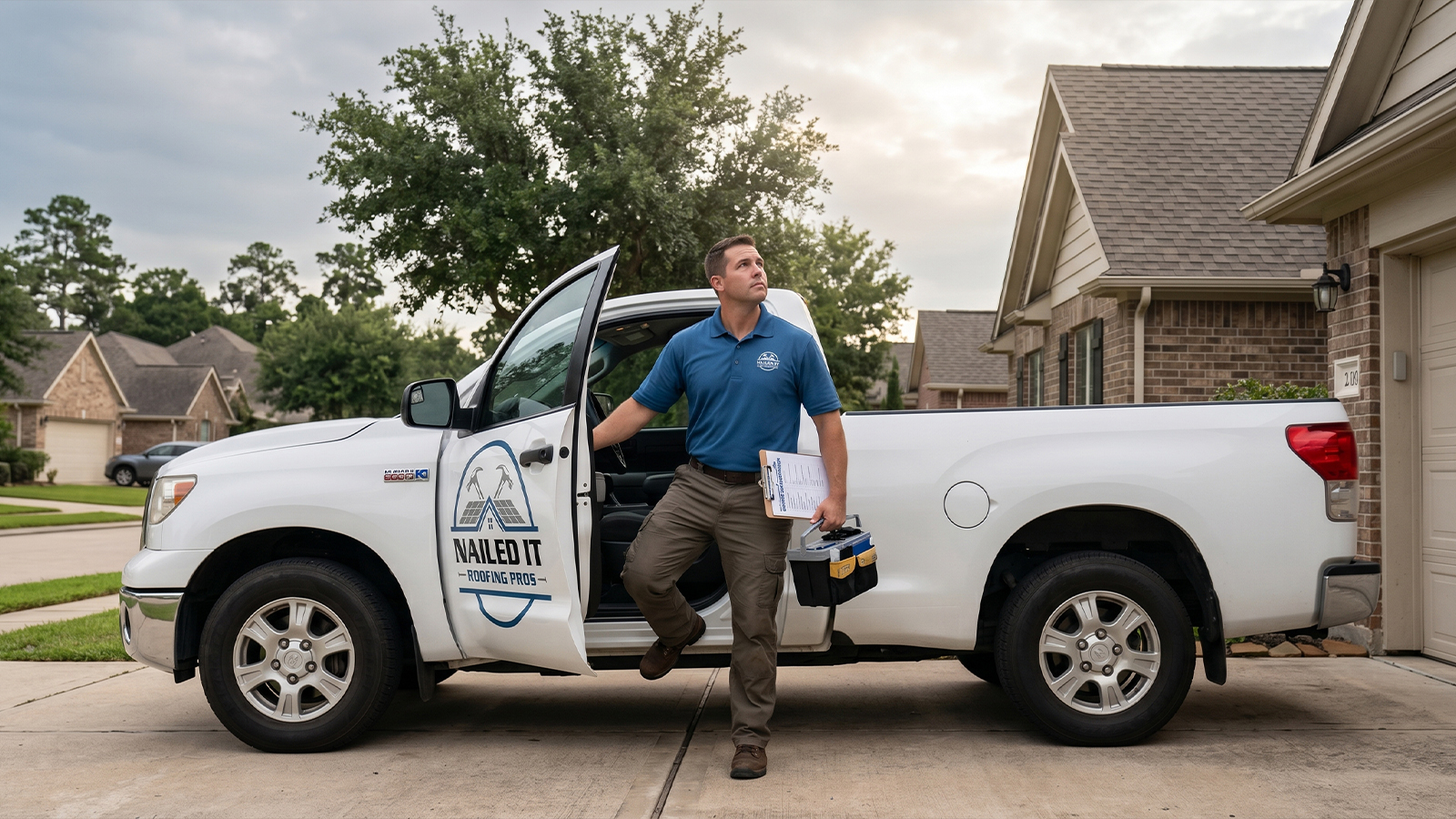
Nailed It Roofing Pros is a Magnolia-based roofing contractor — not a storm chaser, not an out-of-town company following the weather. Every inspection includes a written damage report with photographic documentation you can submit directly to your insurance carrier. Same-day and next-day scheduling is available after major weather events in the area.
If the inspection finds no storm damage, you’ll hear that clearly, with no pressure to file a claim or commit to repairs. That report has value regardless of what it contains — it documents your roof’s condition at a specific point in time, and that record matters whether you’re filing a claim today or protecting your position on the next storm. To protect your home and preserve your insurance claim window, schedule your inspection at our roof inspection service page or call (713) 909-0480 today.
Conclusion
If you’re still in the driveway, squinting at a roofline that looks fine, that’s exactly who this article was written for. Looking fine and being fine are two different things after a Texas storm — and the gap between them is where expensive, avoidable damage lives.
Schedule the inspection. The insurance clock is already running. Repair costs only go up with time. A local contractor who gives you a written report and honest findings, regardless of outcome, is one of the lowest-risk decisions you can make after a storm. The window to protect yourself is open right now.
FAQ
Do I need a roof inspection if I cannot see any damage from the ground?
Yes. Most hail and wind damage is not visible from street level. Granule loss, flashing failures, and broken adhesive seals all require a trained inspector on the roof surface to detect. Ground-level observation is not a reliable way to rule out storm damage after a significant weather event.
How soon after a storm should I schedule a roof inspection?
Within days, not weeks. Texas insurance carriers enforce reporting windows, and delays give carriers grounds to reclassify covered storm damage as pre-existing wear. Documentation created immediately after the storm is far more valuable to the claims process than documentation created after the damage has had time to compound.
What does a storm damage inspection look for that I would miss myself?
A professional inspector examines the shingle field for granule loss and impact bruising, checks gutters and downspouts for hail dents that indicate impact force, looks for lifted or unsealed shingles along ridges and edges, inspects all flashing points around penetrations, and checks the roof deck from inside the attic for early moisture intrusion. None of these are detectable from the ground.
Will my homeowners insurance cover roof storm damage repair?
Most homeowners insurance policies cover storm-related roof damage when the claim is properly documented and reported in a timely manner. The critical requirement is a written inspection report from a qualified roofing contractor. Homeowner observations and personal photographs do not satisfy the documentation standard that insurance policies require for a valid claim.
What happens if I wait and the roof damage gets worse?
Hidden moisture in roof decking compounds quickly in Southeast Texas heat and humidity. A minor repair left unaddressed through a single season can escalate sharply in cost, and mold remediation adds significant expense if attic intrusion goes undetected. Undocumented damage also risks being reclassified as pre-existing by the insurance company, which weakens your position on future claims.
Are free roof inspections from contractors trustworthy?
They can be. The key is working with a local, established contractor rather than an out-of-town storm chaser. A trustworthy inspector provides a written damage report regardless of what they find and does not pressure the homeowner to file a claim or commit to repairs. Nailed It Roofing Pros is locally based in Magnolia and provides written documentation with every inspection, with no obligation attached.