
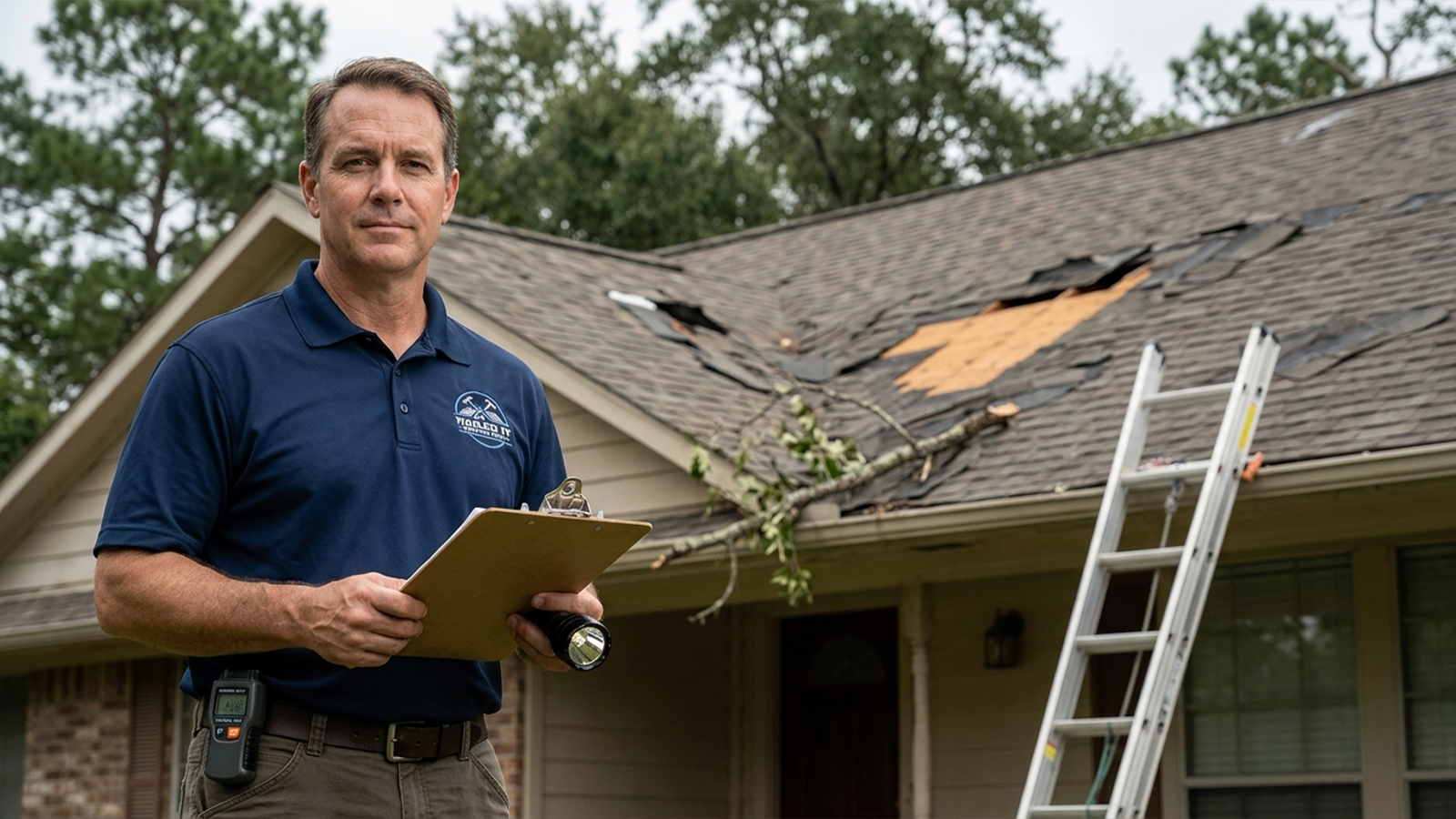
It’s 9 p.m. on a Saturday, water is tracking down your living room wall, and a branch is poking through your ceiling after the storm rolled through Houston.
Take a breath: you already have a next step, and it’s a simple one.
Emergency roof repair is the urgent stabilization of active roof damage. It’s meant to stop water from getting in and keep the problem from spreading before a permanent fix. When a leak is letting water in tonight, getting professional emergency roof repair on the way is the difference between a contained fix and a gutted ceiling. A fallen tree, missing shingles, a sudden leak: none of it waits for business hours, and neither should you.
Key Takeaways
- Emergency roof repair services stabilizes active storm damage fast so water stops spreading into your ceilings, insulation, and framing.
- What looks minor on the surface often hides soaked decking, compromised rafters, and hidden attic breaches only a pro can detect.
- Improper DIY tarping can trap moisture and trigger mold growth within 24 to 48 hours, and it can sink your insurance claim.
- In Houston’s humid, storm-prone climate, every hour of water intrusion multiplies the damage footprint and the final cost.
- A same-day professional assessment protects both your home and your insurance payout.
What Counts as a True Roof Emergency
Not every roof problem needs a midnight phone call, but a surprising number do. The simplest test: is water actively getting into your home right now, or is your roof open to the elements in a way that could let water in before you get a permanent repair? If the answer is yes to either, you’re facing an emergency. The table below helps you sort your situation in under a minute.
| True emergency, call now | Usually can wait until morning |
|---|---|
| Active leak or spreading ceiling stain | A few cosmetically curled shingles |
| Fallen tree or limb through the decking | A clogged gutter with no leak |
| Missing shingles exposing the decking | Minor granule loss in the gutters |
| Sagging roofline (structural damage) | Small surface scuffs after light wind |
| Water near electrical fixtures or panels | Old caulk that needs routine attention |
Active Water Intrusion and Structural Openings
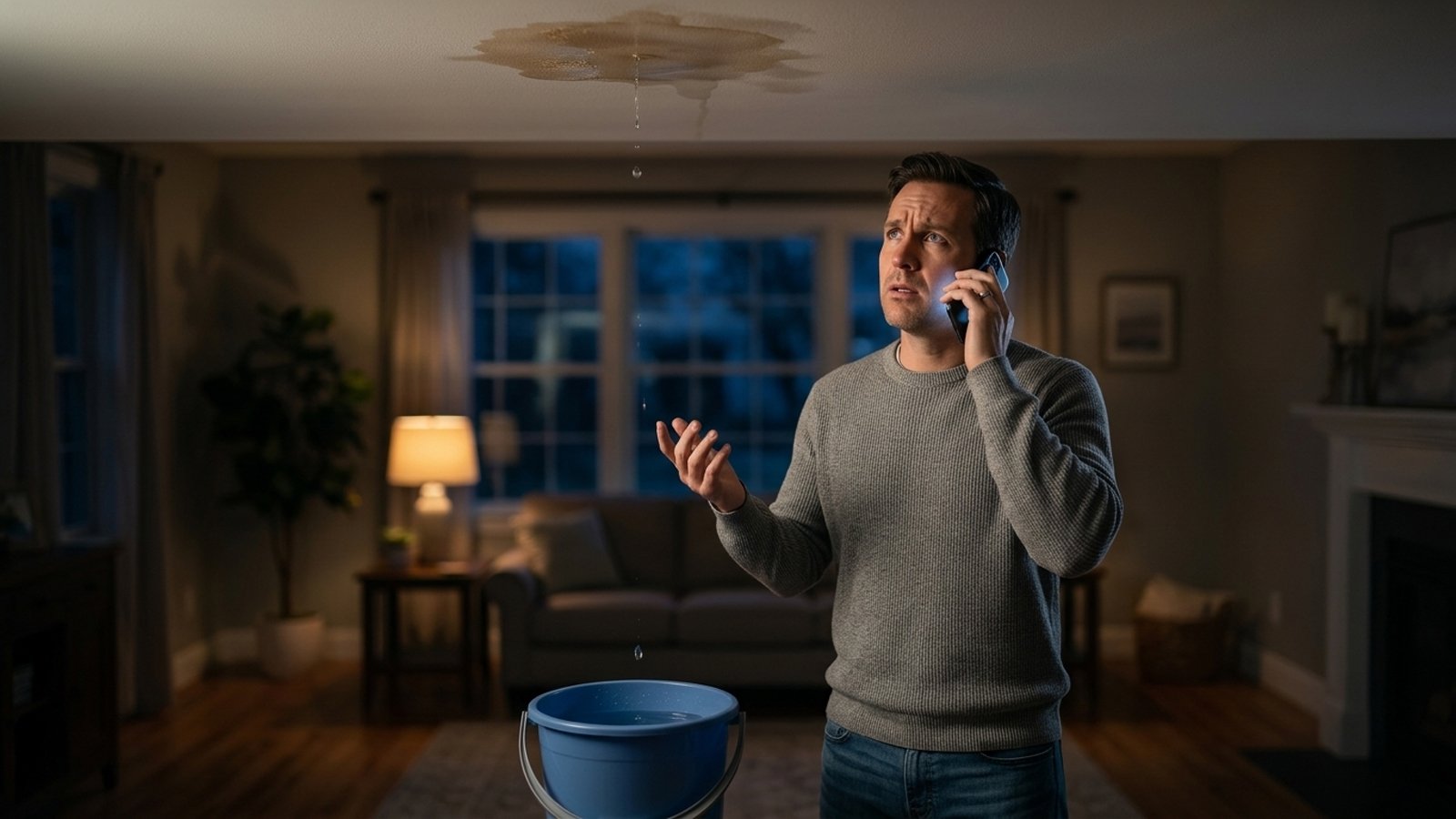
A visible roof leak, a stained ceiling that’s spreading, or water dripping into a bucket means the inside of your home is already taking on water damage. Water travels along framing, soaks insulation, and pools where you won’t notice it until the drywall sags.
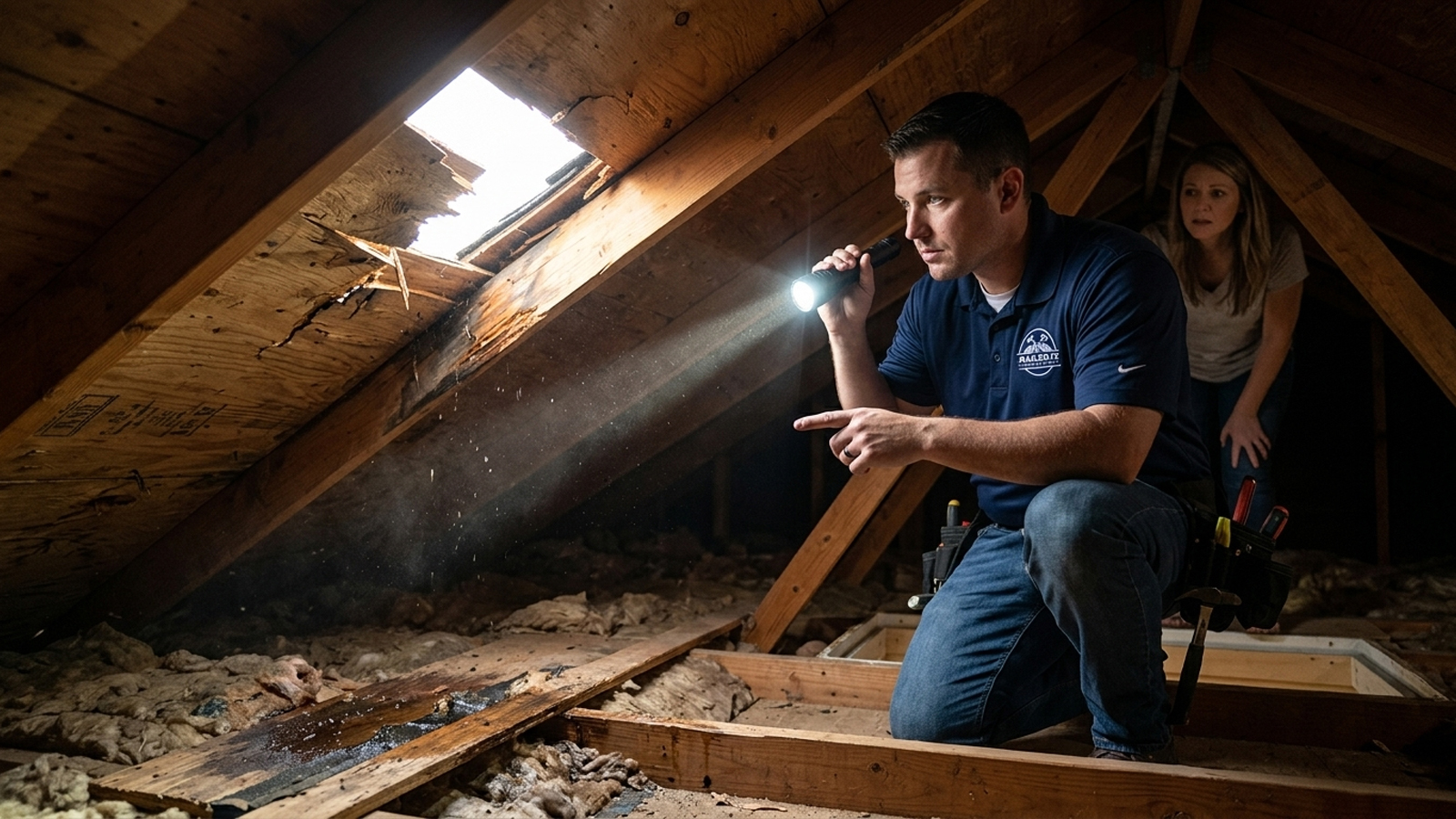
A fallen branch, a limb through the decking, or damaged shingles torn off by wind leaves your roof open. Even if it isn’t raining now, Houston weather turns fast, and an exposed opening invites the next round of rain, wind, and pests. If you see daylight through your roof or attic, treat it as urgent and keep clear of anything near electrical fixtures that water may have reached.
When You’re Genuinely Not Sure
This is the most common situation, and where homeowners make the costliest mistakes. A small puncture or a few missing shingles can look harmless from the ground while hiding compromised decking, soaked insulation, and early rot underneath.
You can’t diagnose that from your driveway, and honestly, neither can most homeowners from a ladder.
When you’re unsure how bad the condition of your roof really is, that uncertainty is itself a good reason to call a roofer before the weekend passes. If you can describe the damage over the phone, we can usually tell you fast whether it qualifies as an emergency.
Why Waiting Until Monday Is a Bigger Gamble Than It Feels
The temptation to wait is understandable. It’s late, it’s the weekend, and the damage looks contained for now. But roof damage doesn’t pause for your schedule, and the math works against you every hour.
Mold and the Growing Damage Footprint
Mold colonies can establish in saturated drywall and insulation in as little as 48 hours after water intrusion. That’s the difference between a roof repair and a full remediation project with torn-out walls and replaced insulation. Meanwhile, every hour of active water expands the damage. Ceilings, electrical systems, insulation, and structural framing all sit in the path of moving water, and repair costs multiply quickly. A leak that could have been stabilized Saturday night becomes a far larger emergency repair by Sunday afternoon.
Why Houston’s Climate Raises the Stakes
In our humid, storm-prone area, an unsecured roof opening invites pest intrusion, additional wind damage, and accelerated wood rot that can compromise the entire roofline. The local climate is a big reason a temporary opening here is riskier than the same opening would be in a drier place.
We see it constantly after Harris County storms: a homeowner near the I-45 corridor put off a small ceiling leak over a weekend, and by the time we arrived Monday the saturated decking and insulation had turned a quick fix into a multi-room repair. Waiting doesn’t keep things the same. It actively makes them worse.
Why DIY Emergency Repairs Usually Backfire
When you’re staring at a leak, climbing up there yourself feels like taking control. In practice, it’s one of the fastest ways to turn a manageable roof issue into an expensive one, and sometimes a dangerous one. Here’s what most homeowners don’t realize until it’s too late:
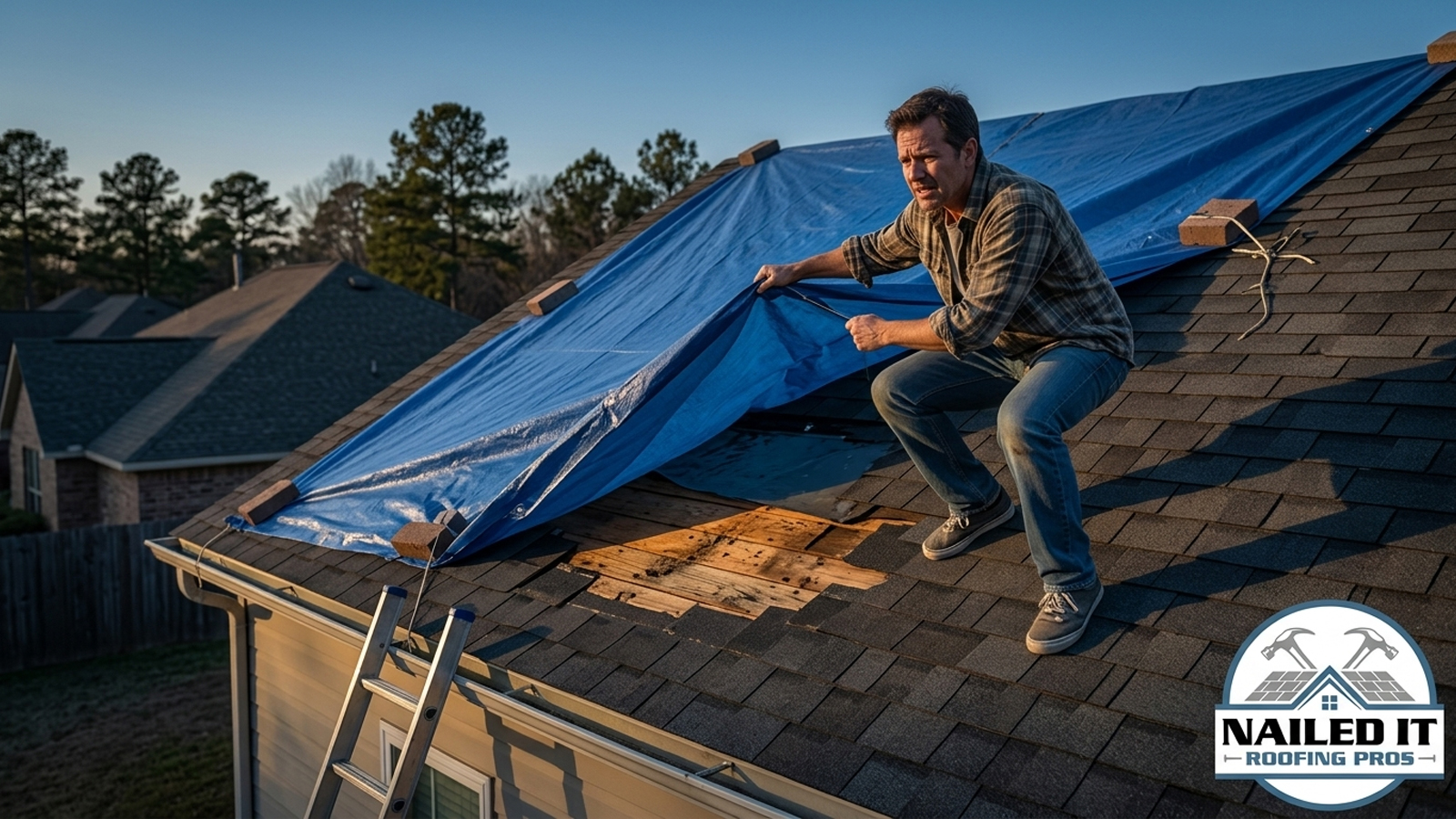
- Tarping a damaged roof incorrectly can trap moisture against the decking and accelerate mold growth within 24 to 48 hours, the opposite of what you intended, and a loose tarp or sheet of plastic sheeting can become a wind sail that enlarges the breach.
- Surface damage hides what matters. A small puncture can sit above compromised decking, soaked insulation, and rotted rafters that only a trained eye and the right tools detect.
- Insurance carriers often deny claims when unauthorized or improper temporary repairs are documented, so a well-meaning DIY fix can quietly kill your payout.
- Working on a wet, damaged, or steep roof without professional equipment is one of the leading causes of fatal home-improvement falls, which is why you should never climb onto a damaged roof.
- Secondary damage points like flashing separations and attic breaches are easy to miss, and left unaddressed they compound repair costs within days.
What You Can Safely Do, and What to Leave to Us
None of this means you’re helpless tonight. From the ground, you can move furniture and electronics out of the affected area, place buckets or containers under the drip, and document the damage with photos for your records. The roof itself is a job for a professional roofer with the gear and training to spot what you can’t.
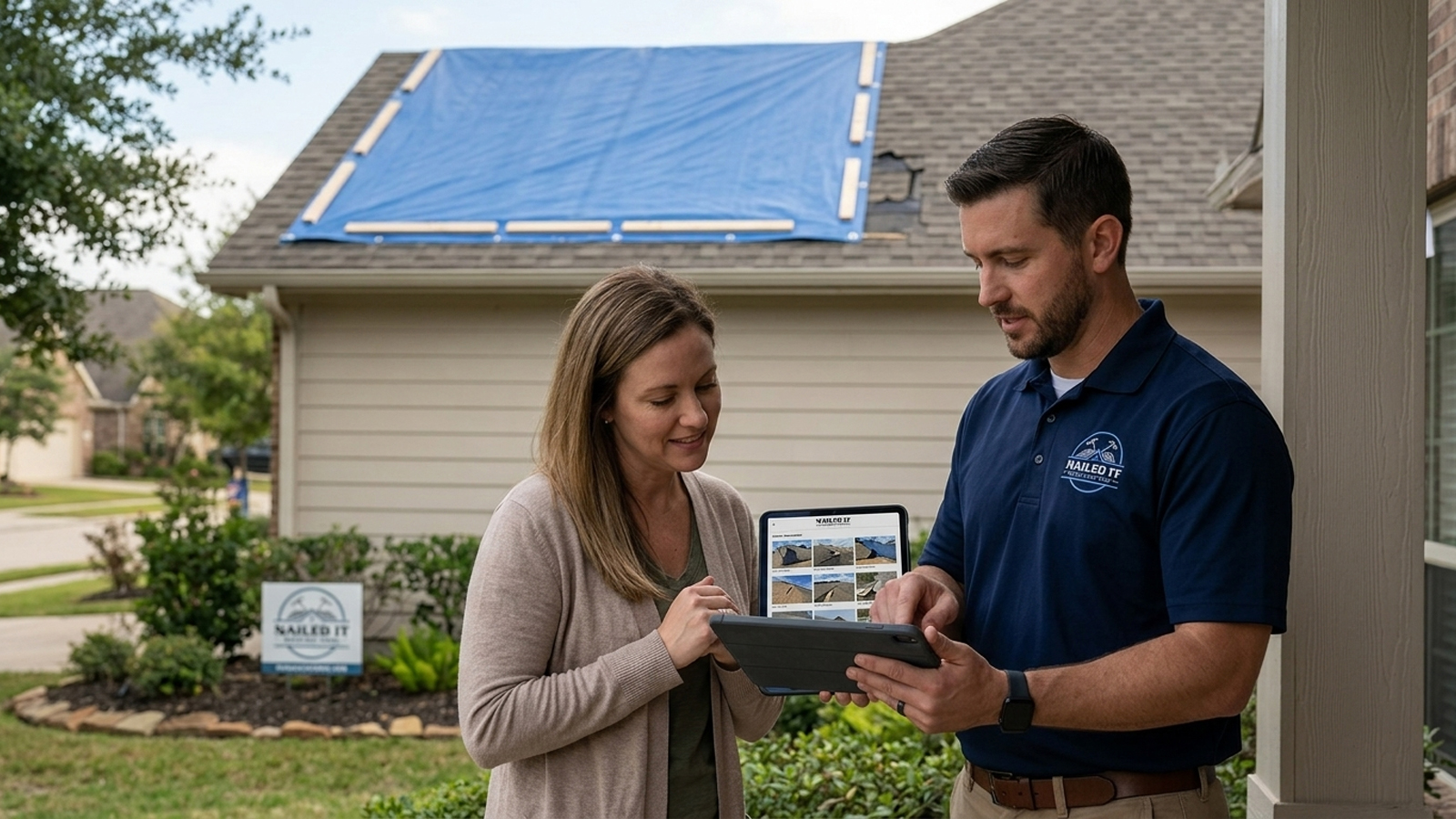
When a roof needs securing before a permanent roof repair, it has to be done in a way that keeps water out without trapping moisture underneath, and a proper temporary fix is the difference between protecting your home and quietly growing mold behind it. Adjusters also look for evidence of failure to mitigate; if you waited too long or attempted an improper repair, your insurance claim can be partially or fully denied. A professional documents the damage and the protection correctly, which keeps your claim intact.
When your roof is breached, every decision in the next few hours either protects your roof and your claim or makes both significantly worse. This is not the moment to guess, and you don’t have to. A quick call to Nailed It Roofing Pros at (713) 909-0480 gets a Houston roofer headed your way with clear answers instead of more uncertainty, and we’ll handle any City of Houston or Harris County permitting so you don’t have to. As a rooted local roofing contractor, we’re here long after the out-of-town storm chasers move on.
Conclusion
Right now, hesitation is the only real risk left. You know the stakes, you know DIY is off the table, and you know one phone call ends the guessing. If you need emergency roof repair tonight, getting professional help on the way is the single action that protects your home.
Call Nailed It Roofing Pros now at (713) 909-0480 for a same-day emergency roof inspection and assessment in Houston, TX. We’ll find the full extent of the damage, apply professional temporary protection if needed, and document everything so your insurance stays intact. No obligation, no pressure, just answers when you need them most, day or night.
Frequently Asked Questions
How quickly should I call about active roof damage?
A same-day call is almost always the right move for active roof damage. Because mold can establish within 48 hours and the damage footprint grows by the hour, waiting for normal business hours after a storm gives the problem time to spread. As soon as you notice water getting in or an opening in your roof, that’s the signal to reach out.
Can’t I just throw a tarp up there until Monday?
DIY tarping is riskier than it looks. An improperly placed tarp can trap moisture against the decking and accelerate mold growth, and climbing onto a wet or damaged roof is a leading cause of serious home-improvement falls. Improper temporary repairs can also jeopardize your insurance claim, so it’s worth having a professional handle the stabilization.
Will an emergency repair affect my insurance claim?
An emergency repair can affect your claim in both directions. Proper professional documentation of the damage and any temporary protection helps support it, while unauthorized DIY repairs can be read as failure to mitigate and lead to a partial or full denial. Getting it documented correctly from the start is one of the best things you can do for your payout.
What can I safely do myself while I wait for help?
The ground is the only place you should be working. Move furniture, rugs, and electronics out of the drip zone, set out buckets to catch water, and take clear photos and videos of the damage for your records. Leave anything that involves getting onto the roof to a professional with the right equipment and training.
Is a small leak really an emergency?
A small leak can be more serious than it appears. A minor visible leak or a few missing shingles often sits above compromised decking, soaked insulation, or early rot you can’t see from the ground. When you’re unsure how serious it is, that uncertainty alone is a good reason to have it assessed before more damage develops.