
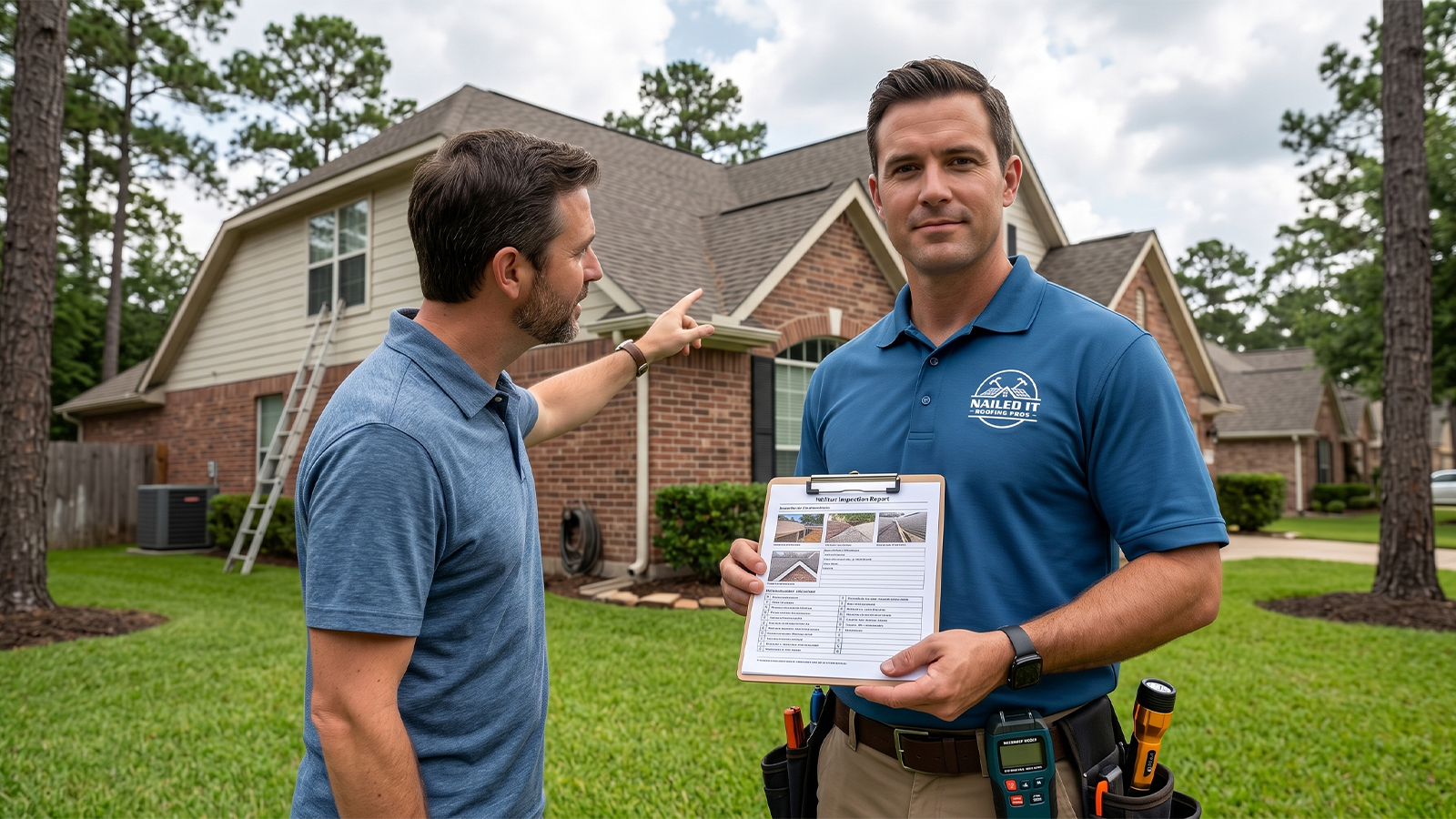
A licensed roof inspector checks the exterior shingles, flashing, gutters, fascia, soffit, ridge vents, chimney, and skylights, then moves inside to examine attic ventilation, insulation, decking, and signs of moisture intrusion — typically completing the full process in 45 to 90 minutes. If you’re scheduling a professional roof inspection in Magnolia TX, knowing exactly what happens during that visit puts you in control before anyone sets foot on your roof.
Magnolia homeowners have dealt with documented hail and high wind events every few years since 2015. That kind of repeated exposure makes understanding the roof inspection process more than curiosity. It’s practical self-defense.
Key Takeaways
- A full professional roof inspection follows seven distinct stages, from a ground-level visual sweep through a complete attic interior review, and no legitimate inspection skips any of them.
- The NRCIA (National Roof Certification and Inspection Association) and NAHI (National Association of Home Inspectors) both define minimum standards that go well beyond what a general home inspector covers during a standard walk-through.
- Magnolia’s climate introduces variables most national guides never mention: pine debris accumulation, high humidity, and tropical moisture intrusion.
- The only acceptable output from a legitimate inspection is a detailed written report with time-stamped photographs and severity ratings — not a verbal summary, not a replacement quote on a business card.
- Inspectors certified through programs like GAF Master Elite Certification or the Owens Corning Preferred Contractor Program follow documented grading standards that protect you from guesswork.
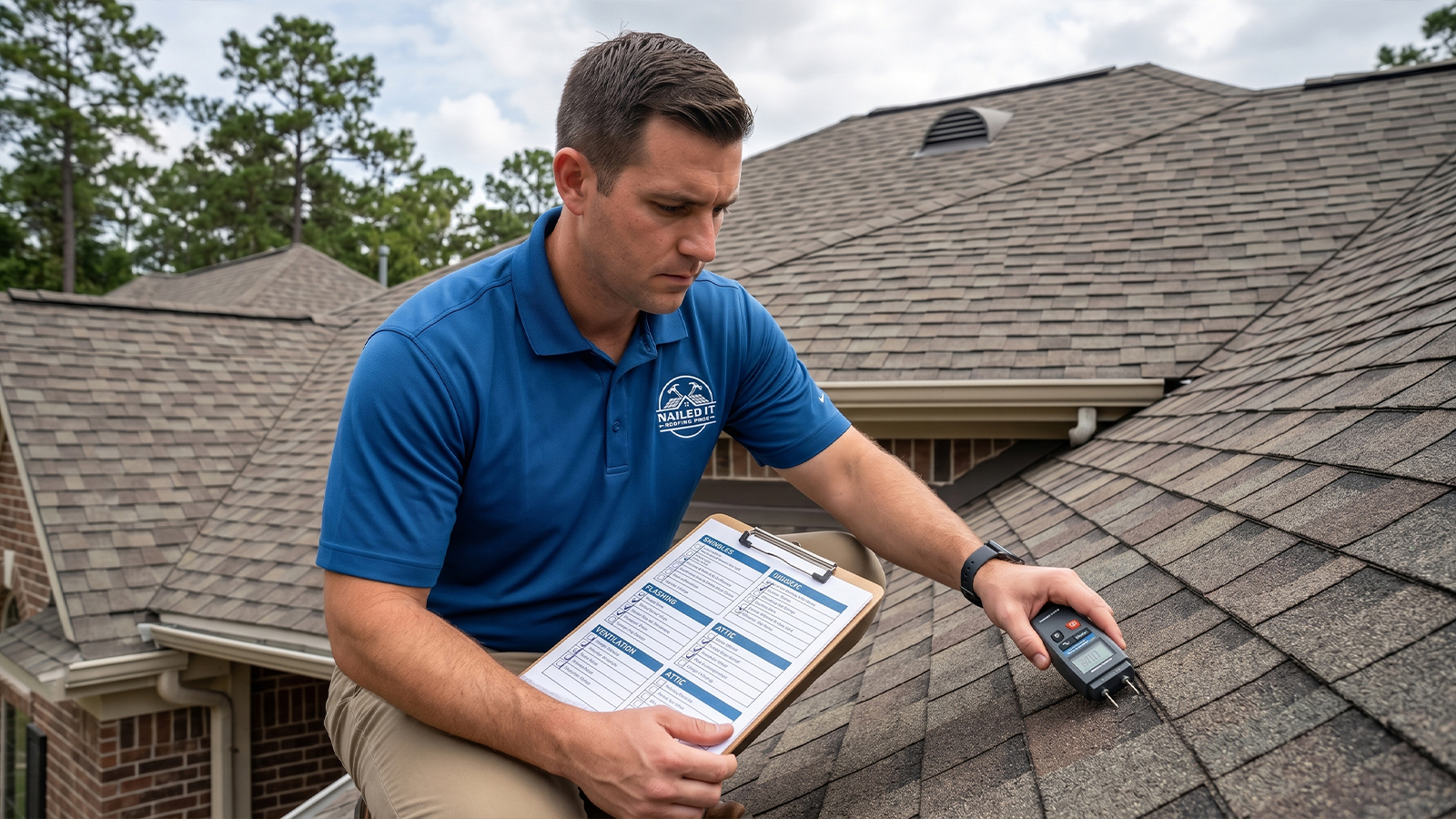
What Does a Roof Inspector Actually Check During an Inspection?
A certified roof inspector doesn’t walk around and eyeball things. The roof inspection process is systematic, stage by stage, and governed by established standards including IRC Section R905, which defines what constitutes proper roofing material installation and what deviations from that standard look like in the field.
The NRCIA sets the professional benchmark for residential roof inspection, and that standard is meaningfully different from what a general home inspector covers. A home inspector reviews the roof as one component among dozens. A dedicated inspector treats the roofing system as the entire scope of work. The table below shows what each type typically covers.
| Inspection Area | Roof Inspector | Home Inspector |
|---|---|---|
| Shingle condition grading | Full surface assessment | Visual overview only |
| Flashing at penetrations | Individually checked | Noted if visible |
| Attic decking and moisture | Physically accessed | Sometimes skipped |
| Ventilation adequacy | Measured against code | Generally noted |
| Moisture meter readings | Used on suspect areas | Rarely used |
| Written report with photos | Required | Included in full home report |
Magnolia’s combination of intense UV exposure, humidity, and storm cycles accelerates wear patterns a trained inspector is specifically looking for — patterns a casual visual scan will miss every time.
Stage 1 — Pre-Inspection Setup and Safety Check
Before climbing anything, the inspector reviews available property history, prior repair records, and any permit documentation. On steep-pitch or multi-story roofs, drone technology may be deployed first to survey the full surface safely. This stage sets the scope and protects both the inspector and your property.
Stage 2 — Ground-Level Visual Assessment
The inspector circles the home on foot. From the ground, look for signs of sagging, visible storm damage, missing shingles, and separated gutters and downspouts before a single ladder goes up. Granule loss along the eave line, lifted shingle edges, and nail pops often reveal themselves at this stage, shaping everything that follows.
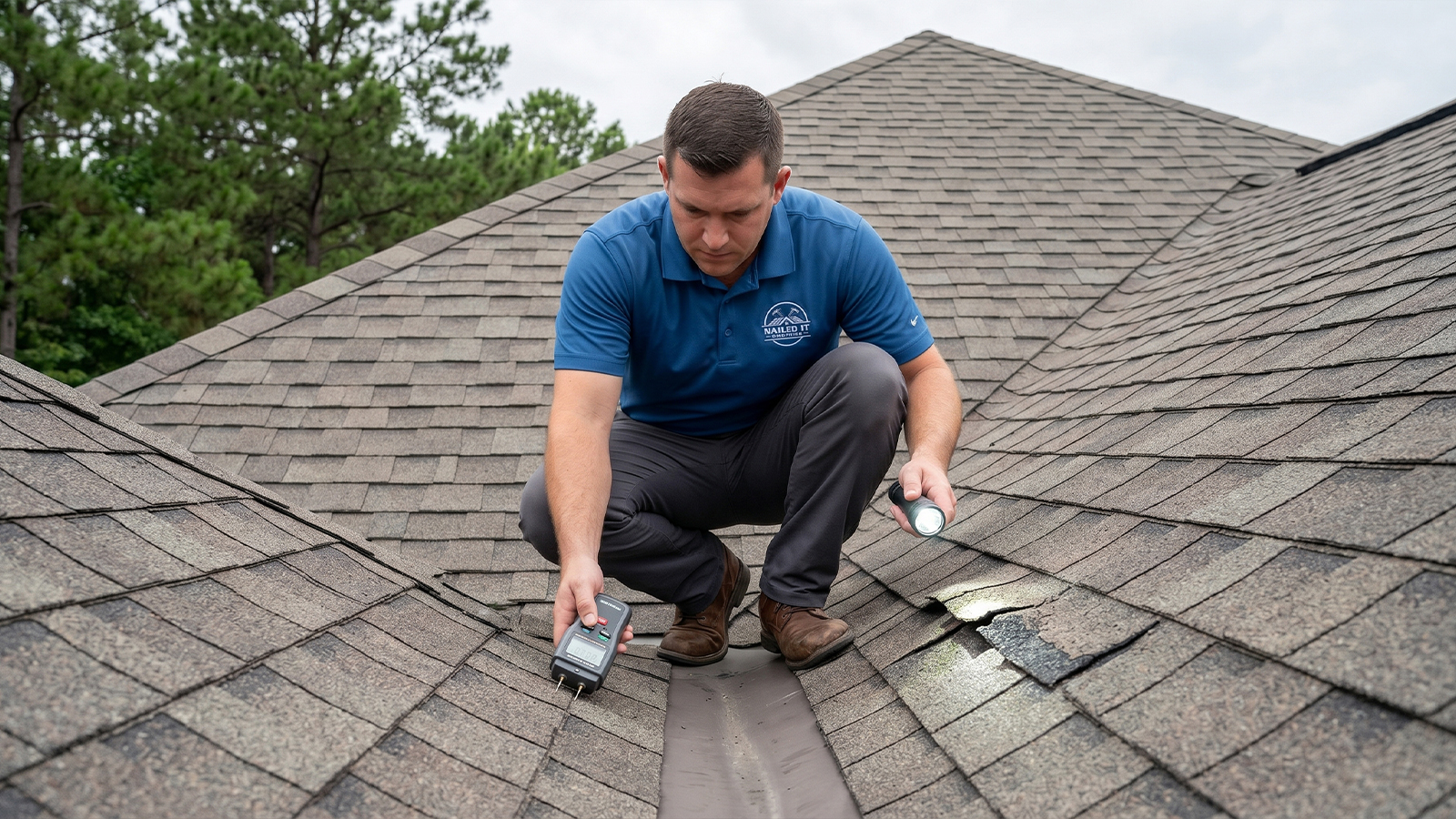
The Exterior Roof Inspection: Surface, Ridges, Hips, and Valleys
Stage 3 — Shingles, Ridges, Hips, and Valleys
This is the longest stage. The inspector physically accesses the roof and examines every plane of the surface, documenting curling shingles, missing shingles, cracked roofing material, and granule loss individually. Curl is treated as a specific failure indicator, not cosmetic wear — it signals a shingle approaching the end of its protective function.
Ridge caps, hip lines, and valleys receive particular attention because these zones bear the highest stress from wind uplift and water channeling. After high winds, valley flashing and ridge caps are frequently the first areas to show separation. Inspectors trained under the GAF Master Elite Certification and Owens Corning Preferred Contractor Program grade shingle condition against documented deterioration scales. A moisture meter may also be used to detect subsurface saturation that looks dry on the surface but is already compromising the decking beneath.
Magnolia homeowners should know: hail damage rarely creates an immediate opening. It bruises the roofing material, weakening the granule layer and the underlying mat. Those impact points become leak pathways one or two seasons later, which is exactly why a post-storm inspection is not optional even when the roof looks intact from the driveway.
Stage 4 — Gutters, Fascia, Soffit, and Drip Edge
The inspector examines gutters and downspouts for blockages, granule buildup inside the channel — a reliable indicator of shingle breakdown — separation from the fascia board, and improper slope. Soffit and fascia are checked for rot, pest intrusion, and paint failure, all of which signal water migrating from the roof surface into the perimeter structure. Drip edge alignment and condition are verified against IRC Section R905 requirements.
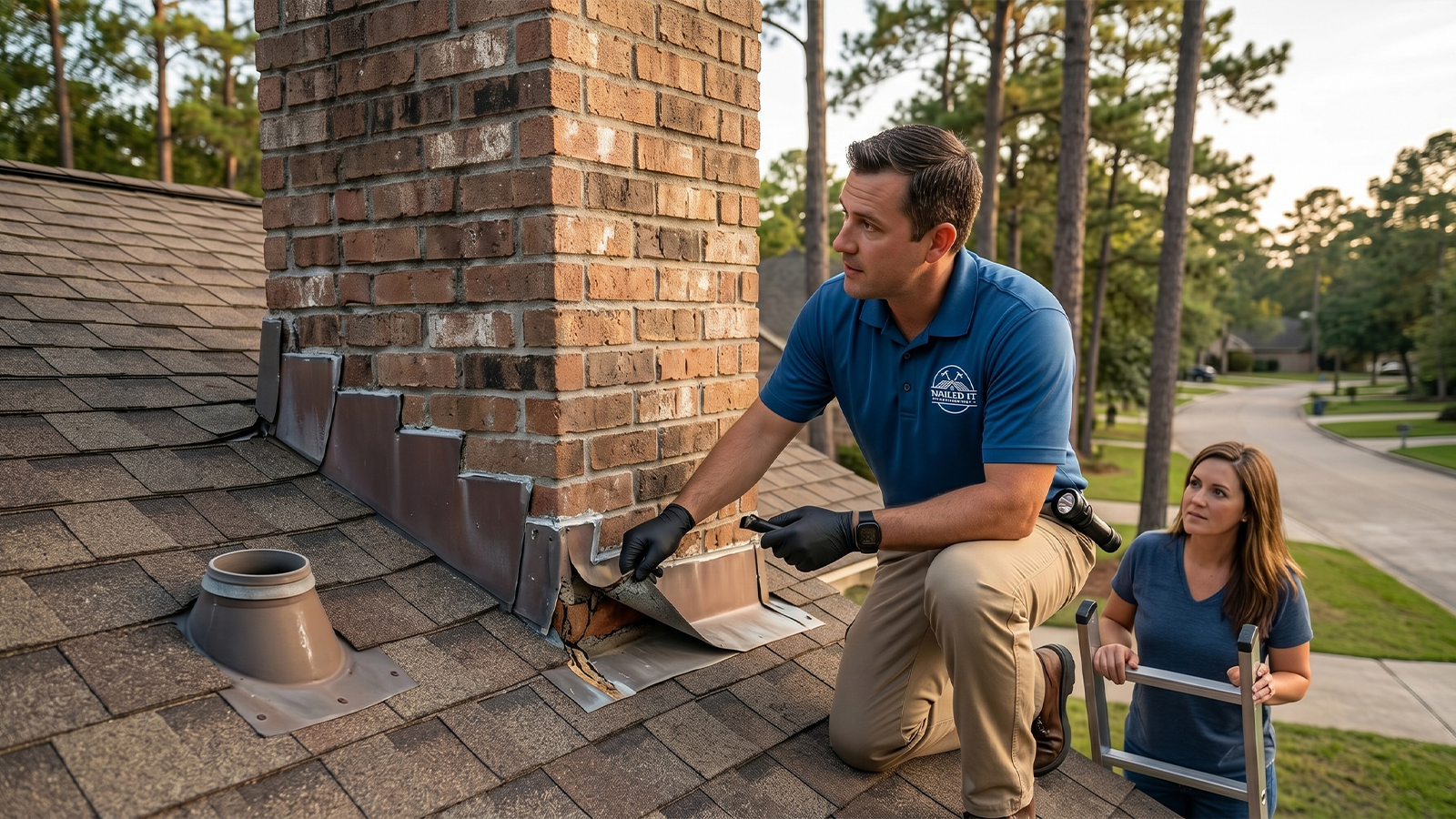
Penetrations and Perimeter Seals: Chimneys, Skylights, Vents, and Pipe Boots
Stage 5 focuses on every point where something penetrates the roof surface — because that is where most leaks actually begin. The inspector examines flashing around chimneys and vents as a primary focus, inspecting chimney flashing, counter-flashing, and step flashing individually. Pipe boots, skylight curbs, and exhaust vent collars are checked for cracking, separation, and sealant failure using both visual inspection and moisture meter readings.
Thermal expansion from Texas heat cycles is a major driver of flash failure. IBHS (Insurance Institute for Business and Home Safety) research identifies penetration sealing failures as a leading contributor to interior water damage claims across Gulf Coast states. In Magnolia, high humidity combined with pine debris settling around pipe boots and chimney bases accelerates sealant breakdown faster than national averages suggest.
Inside the Attic: What Inspectors Find That You Cannot See from the Roof
Stage 6 — Attic Decking, Ventilation, and Insulation
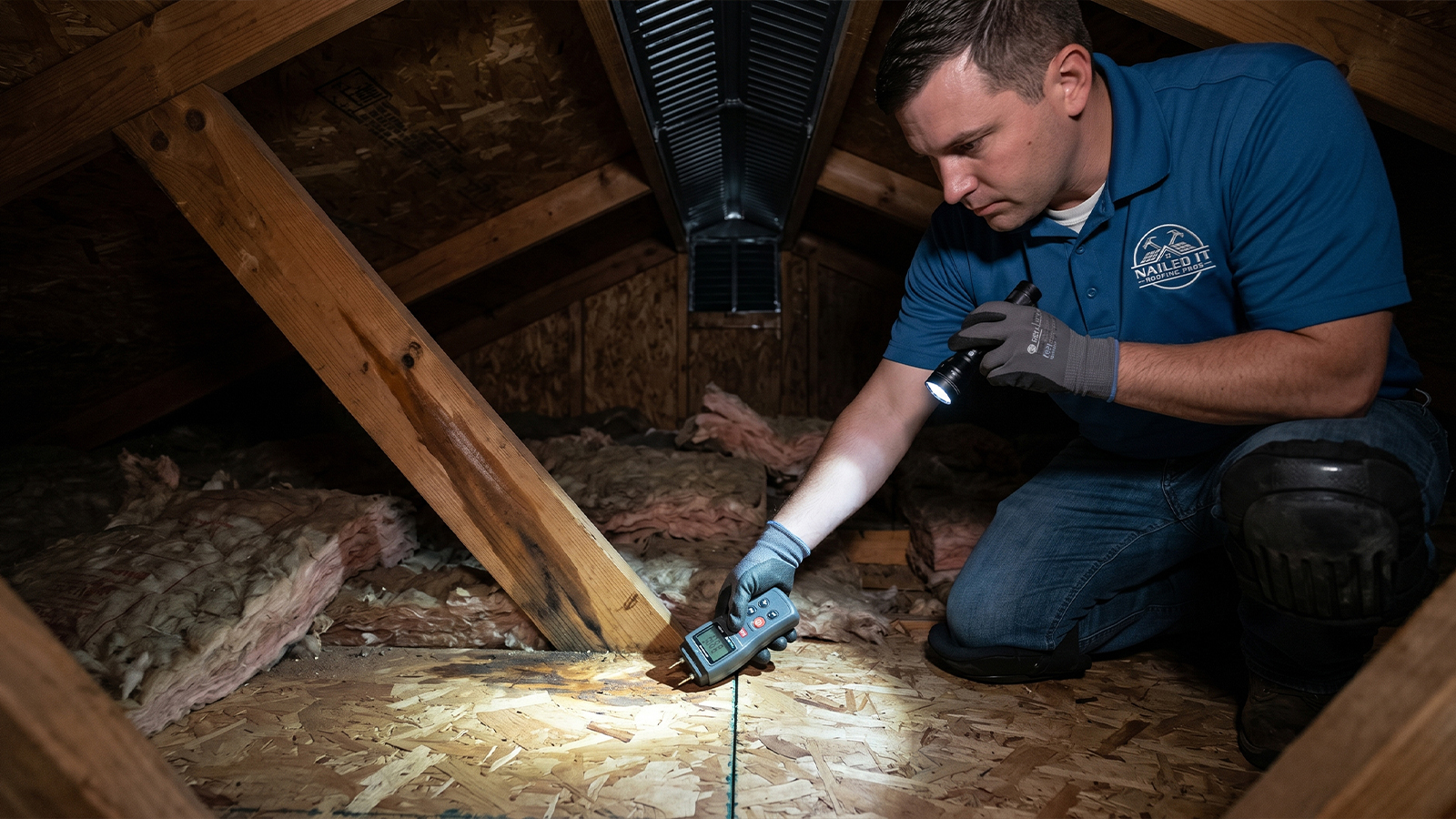
This stage separates a real inspection from a surface-level one. The inspector accesses the attic directly, examining the decking for soft spots, rot, and delamination — structural failures that are completely invisible from the exterior and frequently missed by inspectors who never go inside.
Insulation levels and distribution are checked for compression or moisture saturation, both of which reduce thermal performance and indicate an active or historic leak pathway. Ventilation is measured against IRC requirements, with ridge vents, soffit vents, and baffles confirmed functioning and clear. Ventilation failures accelerate lifespan reduction from the underside because heat and moisture build up and degrade both the decking and the shingles simultaneously.
Water stains on decking boards, rafters, or top-plate framing are documented photographically and cross-referenced with exterior findings. Moisture travels along framing before dripping, so interior mapping matters. Magnolia’s subtropical humidity makes attic moisture management a year-round concern, and homes with dense tree canopy often have compromised soffit vent airflow from debris accumulation. If your last inspection didn’t include an attic visit, it wasn’t complete.
What Happens After a Roof Inspection — What Does the Report Include?
Stage 7 — The Inspection Report
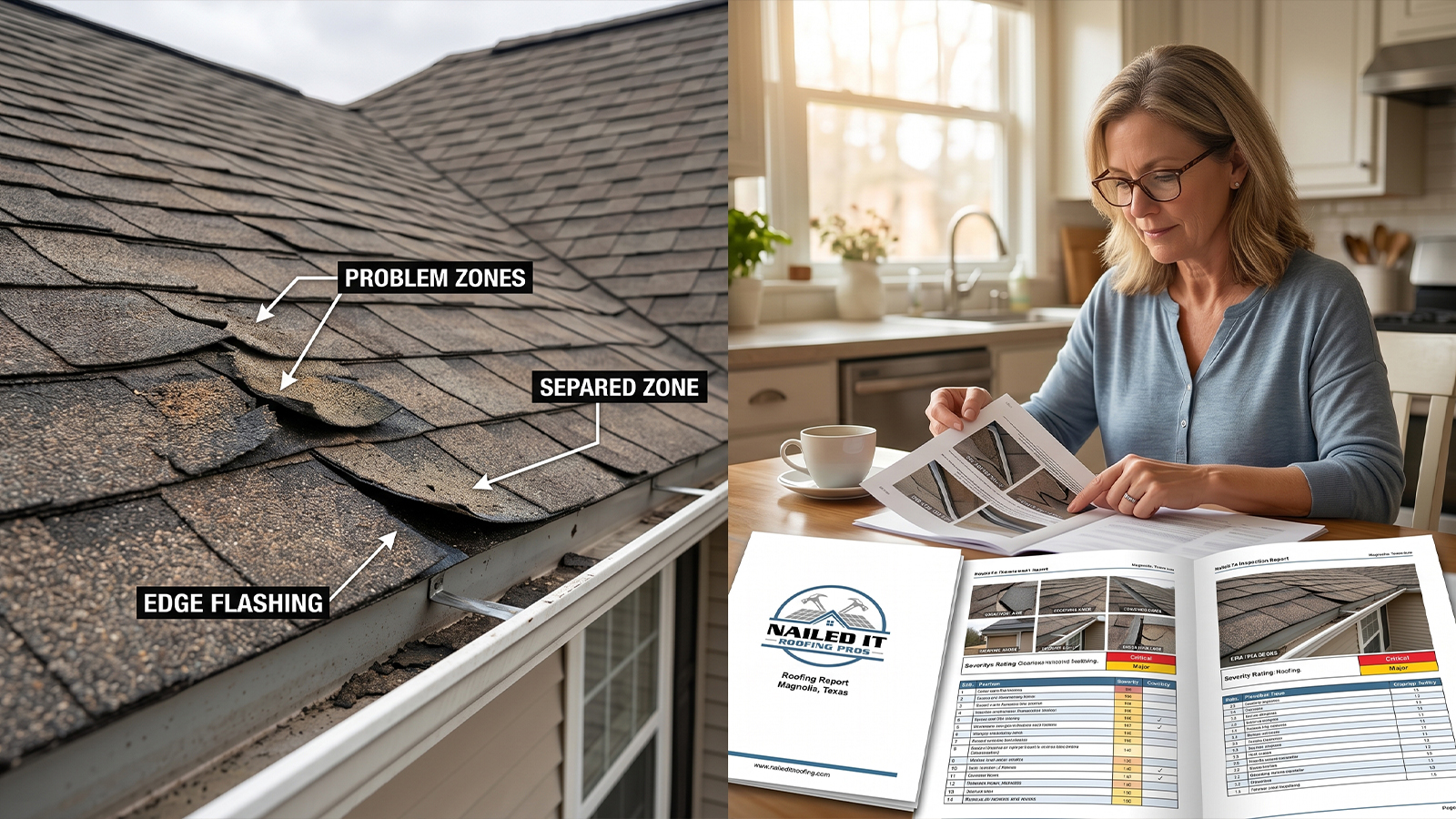
A detailed report of inspection includes time-stamped photographs, a location map of findings, and severity ratings for each documented issue — typically categorized as monitor, roof repair, or replace. Minor issues are identified separately from urgent structural or waterproofing failures. Every recommendation is backed by a specific photograph, not a general impression formed from memory.
Homeowners should use this report to make informed decisions about timing, budget, and contractor selection on their own timeline. The Texas Department of Insurance accepts inspection reports as supporting documentation for storm damage claims, making a properly documented report a financial asset. A roofing company that won’t provide a written report after completing an inspection has not performed a professional roof inspection.
At Nailed It Roofing Pros, every inspection ends with a written report in hand before anyone leaves the driveway — that’s not a differentiator, it’s the standard.
How Often Should Magnolia TX Homeowners Schedule a Roof Inspection?
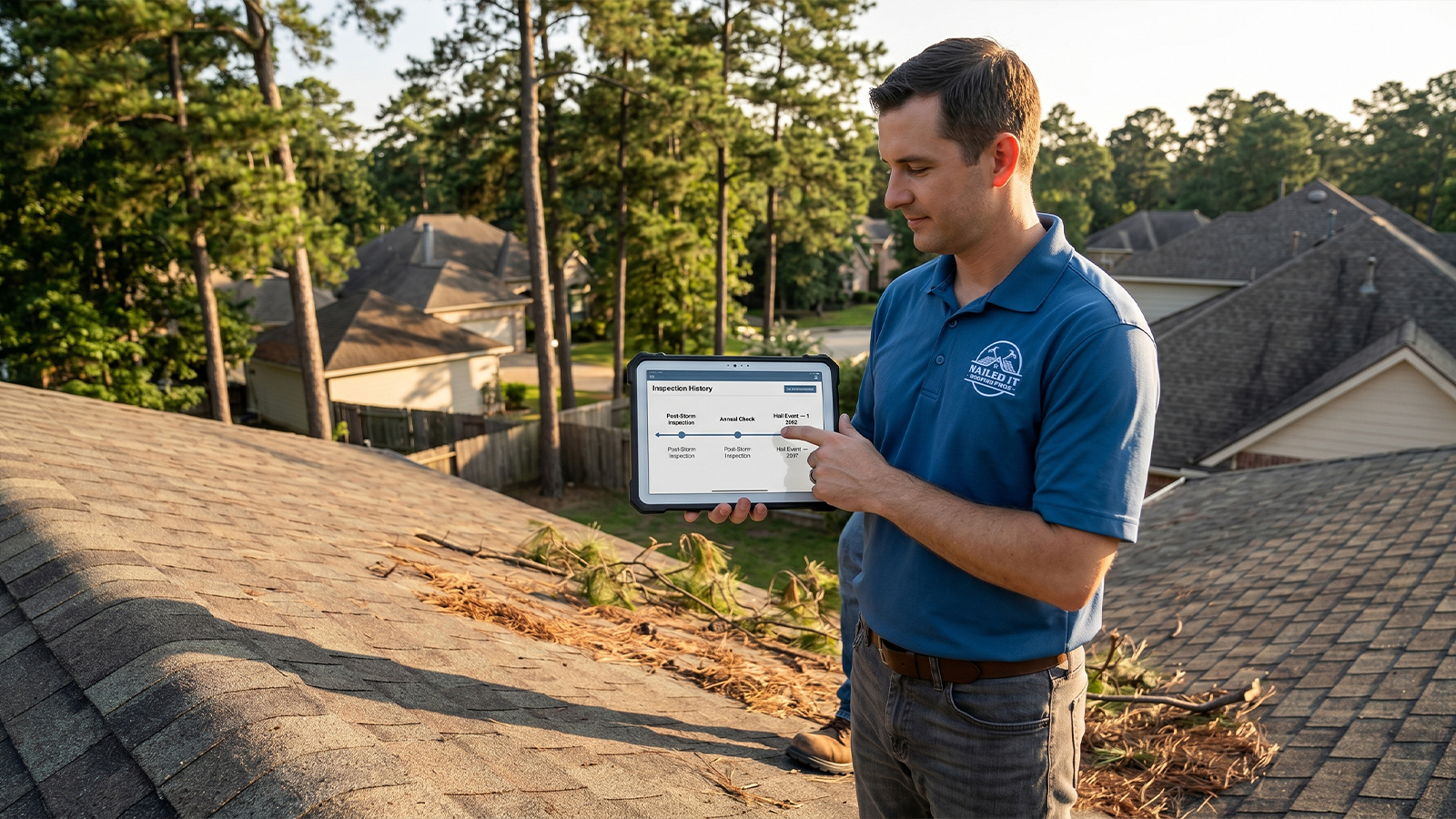
The importance of regular roof inspections comes down to one principle: catching issues before they escalate into costly repairs or a full roof replacement. The NRCIA recommends inspection once every one to three years for roofs under ten years old, and annually for roofs over fifteen years. After any hail event, high winds, or tropical system, an inspection should happen within days.
In Magnolia’s climate, the practical lifespan of an asphalt shingle roof runs 15 to 20 years on average — shorter than what most national guides cite because Texas heat and humidity accelerate degradation. The National Association of Home Builders notes that lifespan varies by roofing material: asphalt shingles average around 20 years, wood shake around 30, and metal or slate systems can reach 50 years or more. For most Magnolia homeowners, annual inspection after year 12 is a defensible and cost-effective standard.
Regular inspections also protect your home at resale. A clean inspection report prevents last-minute renegotiation at closing. For insurance-triggered inspections, documented findings from a credentialed inspector carry more weight with adjusters than a homeowner’s verbal account. If your roof is past year 12 and hasn’t been inspected recently, that’s worth a call to Nailed It Roofing Pros at (713) 909-0480.
Is a Free Roof Inspection Really Free — Or Is It a Sales Tactic?
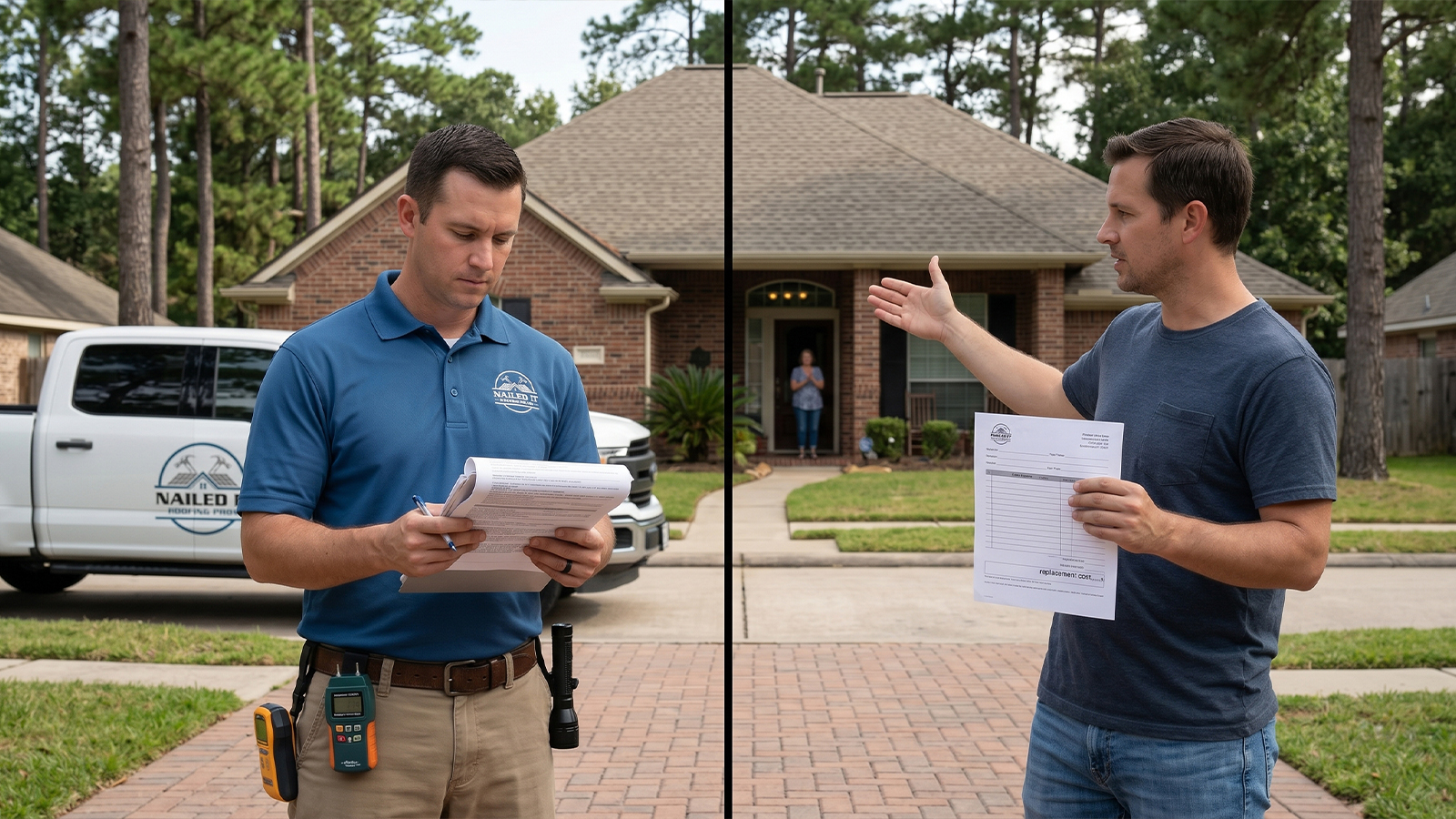
A free inspection from a legitimate roofing contractor like Nailed It Roofing Pros is standard practice. It becomes a scam when the only output is a verbal pitch and a replacement quote delivered in the driveway. BBB Scam Tracker documents repeated reports of storm-chasers targeting the Magnolia corridor after major weather events — arriving within days of a storm and pressuring homeowners into signing contracts before a claim is even filed.
The red flags are specific. A roofing contractor who spends fewer than 20 minutes on-site, doesn’t inspect the attic, uses no moisture detection tool, and requests an immediate signature is running a sales call, not an inspection.
A legitimate contractor explains each finding on-site, welcomes questions at every stage, and hands you a written report before any conversation about repairs or replacements begins. Homeowners should verify contractor licensing through the Texas Department of Insurance database before allowing anyone access to the roof.
Conclusion: What a Real Roof Inspection Does for Magnolia Homeowners
A professional roof inspection is the first line of defense against expensive, preventable damage. The seven-stage process — from ground-level assessment through attic interior review and final written report — is what a qualified inspector follows every time. Anything shorter, anything without an attic visit, anything without a written report is not a complete inspection.
For Magnolia homeowners managing aging roofs, storm exposure, and insurance renewals, regular inspections are risk management, not optional maintenance. Treat the inspection as a diagnostic tool that gives you documentation, clarity, and options. When you’re ready to protect your home with a full inspection, choose a roofing contractor who will hand you a written report before they leave your driveway. That’s the standard Nailed It Roofing Pros holds on every job. Questions about what the process looks like for your specific roof? Call (713) 909-0480 — ask before committing to anything. That’s what peace of mind actually looks like.
FAQ
How long does a roof inspection take in Magnolia TX?
A standard residential roof inspection takes between 45 and 90 minutes for a typical single-story home. Larger roofs, steep pitches, multi-story structures, or properties with extensive prior damage may extend the process. Any inspection completed in under 30 minutes on a standard home almost certainly skipped one or more stages.
What is the difference between a roof inspection and a home inspection?
A home inspector covers the roof as one component among dozens during a full property review, typically from the ground or eave line. A dedicated roof inspector treats the roofing system as the entire scope of work, physically accessing the roof surface, checking every penetration, and inspecting the attic interior using tools like moisture meters that general inspectors rarely carry to determine the condition of your roof.
Do I need to be home during the inspection?
You don’t need to be present during the exterior portion, but being home for the attic access stage is genuinely useful. It lets you ask questions directly and understand what the inspector is documenting before the report is finalized.
What are signs I need a roof inspection right now?
Visible curling shingles, missing shingles anywhere on the surface, water stains on interior ceilings, granule buildup in your gutters, and any recent hail or wind event in the area are all triggers for an immediate inspection — not a wait-and-see response.
What should I do if the inspection report recommends repairs?
Request a written repair scope with line-item costs before agreeing to any work. A professional report will identify which repairs are urgent and which can be monitored, giving you a way to prioritize spending without pressure. Never sign a contract the same day as the inspection.