
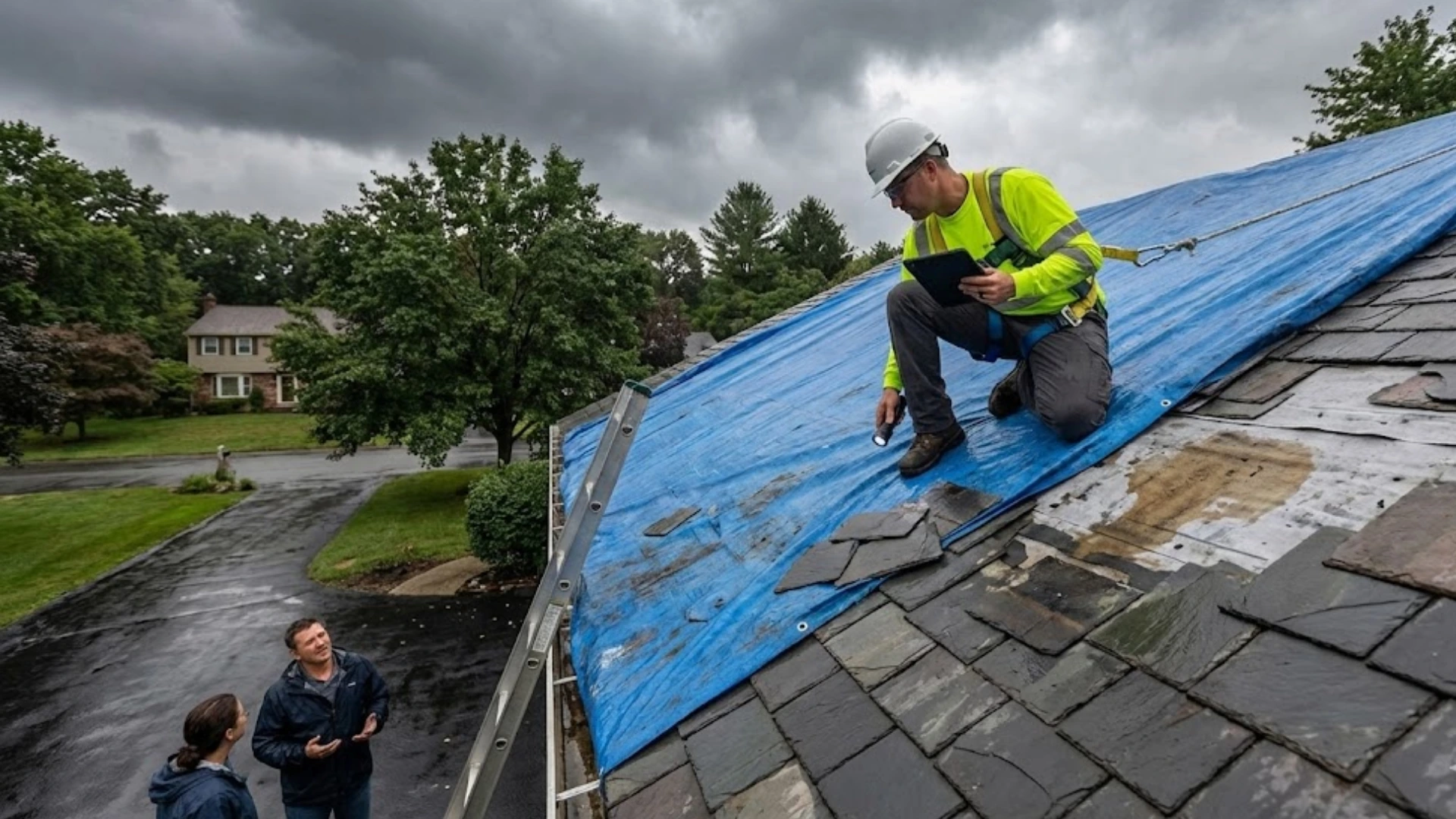
Extreme weather could be rough on your house and your roof is one of the parts that are frequently affected by the storm. Storm damage roof repair comes first on the list when the weather is over whether it has hailed or blown a gale or then that torrential rain. A broken roof has potential causes of leakages, water damages and costly repairs in case of unimmediate response.
So, what do you do after a storm is on you and you think that you have a broken roof? This is a step-by-step illustration of what to do to repair the roof, after it has been damaged by the storm, and the way it helps to avoid the big problems in the future.
Table: Quick Storm Roof Repair Checklist
| Damage Type | Signs to Look For | Immediate Action |
| Missing Shingles | Look for patches where shingles are missing | Temporarily cover with a tarp and contact a roofer |
| Leaks Inside Home | Water stains on ceilings or walls | Move valuables, cover leaks with plastic sheeting |
| Damaged Flashing | Bent or detached flashing around vents or chimneys | Secure with temporary sealant and schedule repairs |
| Clogged Gutters | Debris obstructing gutter flow | Clear out debris to prevent further water damage |
| Hail Damage | Dents or cracks in shingles or roofing material | Document the damage, schedule a professional inspection |
1.Begin with a Post Storm Roof Inspection.
Once you are done with any harsh weather, the first thing you need is checking whether there was a roof damage that needs repair. And you should examine your roof as much as is safely possible, looking at it as best you can, when you are on the ground, and see whether there is any observable damage, such as missing shingles or broken gutters, or debris that has been accumulated on the top.
What to Look For:
Missing or broken shingles – Shingles may be loosened, cracked or blown away by the wind or by hail.
Leaks or water stains on the roof inside – In case you observe a water mark on the ceiling or on the walls, this might be an indication that water is leaking through the roof.
Bent or broken flashing – Flashing in boundaries that surround chimneys, vents, or skylights may be bent or torn away, and water is allowed to percolate through.
Blocked or broken gutters – When your gutters are blocked or broken water can not drain off your roof.
It may happen that you cannot see something significant directly above when you are on foot, but you should also think about having it professionally inspected in order to see the whole picture of any damage that will not be perceived immediately.

2.Make Temporary Roof Fixes:
Should there be visible damage, e.g. a big hole, or missing shingles, one needs to do something as soon as possible. Temporary repairs to roofs that have been damaged by storms can minimize problems that may arise before skilled personnel can have a chance to inspect them.
what you can do:
Cover open spaces: A piece of plastic sheeting that is heavyweight or tarp should be used to cover the big holes or portions of your roof which are open. Wrap it very well with ropes or duct tapes to ensure rain is locked out.
Clear gutters: You should clear your gutters by removing the debris on it as it will only make the water flow freely and will avoid more damage to your roof by water.
Bring things inside: In case you are experiencing a leak, take all the things into your house that might be damaged such as furniture and other gadgets that might be found under the affected place.
These will not last long but will be able to mitigate any further damage and will buy you a chance to call professional roof repair service on board.
3.On-the-Phone Your Insurance Provider
After getting your roof tiled, it is time to call your insurer. Most of the homeowners insurance policies cover roof damages caused by a storm though you will be happy to know what is covered by your policy.
what to do:
Claim: Immediately after the damage, contact your insurance company to file the damage. Make sure to give them a roof storm damage assessment in order to prove your case.
Take photos: Capture images of the damage by taking clear photos of the impacted places. This will facilitate the process of claiming.
Check your policy: You have to know what is covered and you need to know whether you will have to pay a deductible in case of storm repair.
The faster you initiate the process of getting the insurance process the less you will be out of pocket and the sooner the process will be initiated to repair your car.
Professional Roof Repair Schedule
Having finished with the immediate aftermath, it is now time that you get a professional roof check up. Although it is possible to attempt to determine the level of damage on your own, specialists are there to detect something that may not even be obvious to an amateur. Having professional roof repair services may also provide you with a clear image of the damage, and possible solutions in the long run.
Why go professional?
Experience: Roofers are conversant with the exact harsh weather roof damages that are brought about by various forms of storms like hail or strong winds.
Safety :It is dangerous to climb onto the roof, and it is particularly dangerous to rise to it following a storm. Roofers possess the equips and know how to conduct the job safely.
Long-term solutions: Not only the professionals will repair the damage, but they will also seek the possible weaknesses that would cause future problems.
By having a roof inspection guide with a pro, you would be in a better position to know the extent of the damage and have them fixed properly.
Maintain Your Roof in Excellent Condition
After repairing, do not ignore the maintenance of home roof in the future. An annual routine of checking your roof should not be considered an exception to keeping your roof in the best possible condition, as well as preventing future breaches.
Tips for regulaar roof care:
Find the loose shingles: Once a year examine your roof checking on the loose or broken shingles, particularly following a difficult weather condition.
Check flashing: The flashing around the chimneys, vents, and skylights should be checked.
Cleared gutter: Clean your gutters and down spouts regularly to avoid water damage.
Find moss or algae: When you see moss or algae on your roof, then there is the potential that it could be holding water, which may be damaged.
An inspection checklist of roof maintenance will keep you organized and will save you the money of paying high costs of repairs in future.
How often should I inspect my roof?
You should perform a roof health check at least once a year with Nailed It Roofing Pros, and immediately after severe weather, to ensure your roof is in good condition.
Conclusion:
Once the storms cause permanent effects on your roof, it can be fixed, but you should move soon enough and do what is needed to reduce the consequences. Doing any one thing after the storm has occurred as simple as a roof check up, makeshift repairs, calling your insurance, and then replacing and repairing your home professionally: It is time to move fast to save a home.
Besides, don’t forget, another way of preventing the damage that may come in future and keeping your roof strong are regular roof inspections and continuous roof maintenance which can keep your roof strong long enough to live to see the next generation. Your home will be prepared against all the odds that the weather will bring looking after it correctly.
FAQs
- How do I know if my roof has storm damage?
Look for missing shingles, water stains inside your home, or visible cracks in your roof. If you notice these signs, schedule a roof inspection after storm damage to get a professional evaluation. - What should I do immediately after roof damage from a storm?
Temporarily cover any exposed areas with a tarp and clear out gutters to prevent further damage. Then, contact your insurance provider and arrange for a professional roof inspection. - How much does a roof inspection cost?
The cost of a roof inspection can vary, but it generally ranges from $150 to $400, depending on the size of your roof and the extent of the inspection needed. - Is roof repair covered by insurance after a storm?
Many homeowner insurance policies cover storm damage, but you’ll need to check your specific policy. File a claim and provide photos of the damage to start the process.